

“Off-Grid” to Net Zero: Building Off-Grid with a Hybrid Inverter, Whole House Battery and Ultra-Tight SIPs
Prelude:
Author and Legend Homes' client Brent Hartwig, owner of Neptune Beach House, is an professional electrician and chose to do all the electrical and solar installation for their home. His solar installation is different from Legend Homes' standard installation and very compelling and innovative. So, Legend Homes asked if he would share the details of his system in this blog for others to learn from.
This solar installation is especially great for off-grid living and places that have very frequent power outages.
When we started out constructing a modern, high-performance home, one of the most frustrating logistical bottlenecks, electrically speaking, is waiting on utility interconnection schedules, net metering approvals, and final grid hookups. Months can pass where a fully built structural shell with operational solar sit unused while relying on temporary construction power—or worse, relying on loud, inefficient gas generators.
When our rooftop solar photovoltaic array went live in December, we took a different path. Rather than letting the array sit idle while waiting for utility permission to backfeed the grid, we configured our system to operate in a self-contained "island" mode. From December through final project completion and net metering approval in June, our energy infrastructure ran almost completely off-grid, supplying clean power for heavy construction tools, mechanical testing, and finish work.
Residential Solar Systems
As of 2026 there are basically two major options for solar build outs that are grid tied on a residential structure. Either you generate in DC and convert to AC at the panel using micro inverters, or you generate in DC and send all the power down to a hybrid inverter and do all of your conversion to AC there. There are pros and cons to each system with the micro inverters being more cost effective but unable to be utilized in a power outage or off-grid scenario and hybrid inverters being more expensive but offering greater control and freedom with your generated power system. We went with a Hybrid setup for this house, as I didn’t want to be reliant on a standby gas generator during an outage and I liked the control for time of use metering and charging and usage of my own battery system.
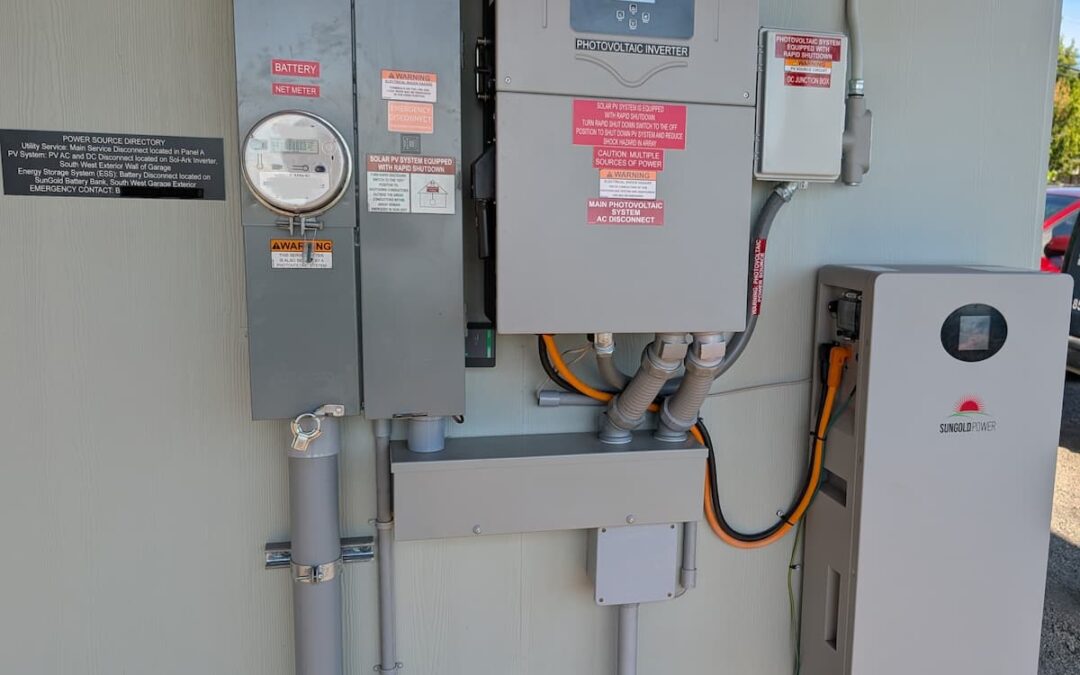
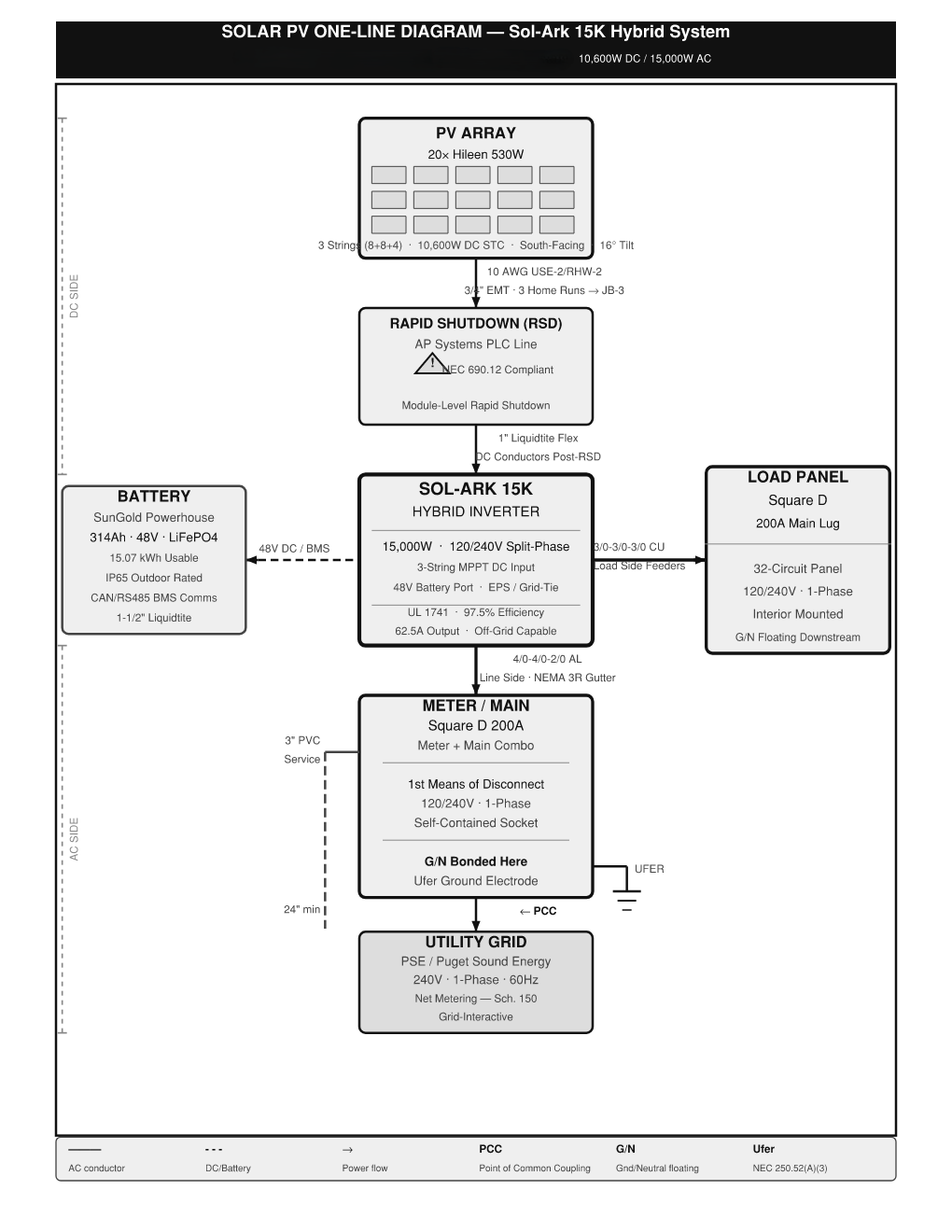
Technical Architecture: The Sol-Ark 15k & SunGold Powerhouse 16.1kWh
At the heart of this power system is a balance between heavy-duty inverter throughput, long-duration energy storage, and ultra-efficient generation.
Heavy Inrush Capacity & Inverter Robustness
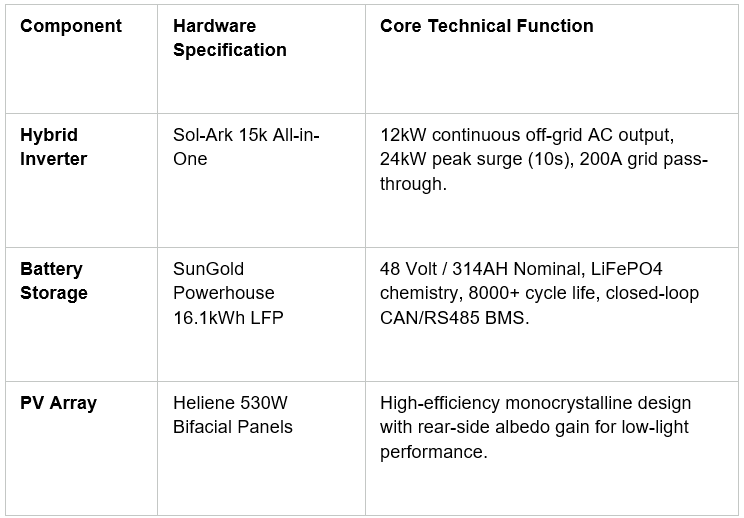
The Sol-Ark 15k is built to bridge the gap between complete off-grid independence and grid-tied net metering. Unlike standard residential string inverters that shut down during a grid power loss, the Sol-Ark acts as a high-capacity microgrid hub. Operating with dual MPPT trackers and an internal 200A bypass switch, it provides a continuous 12,000W of power off-grid, surging up to 24,000W for 10 seconds if needed.
During construction, this surge buffer was critical. High-inrush loads—such as table saws, large air compressors, and induction pumps—create massive initial current draws that easily trip lower-tier inverters. The Sol-Ark absorbed these inductive spikes seamlessly without voltage sag or breaker trips.
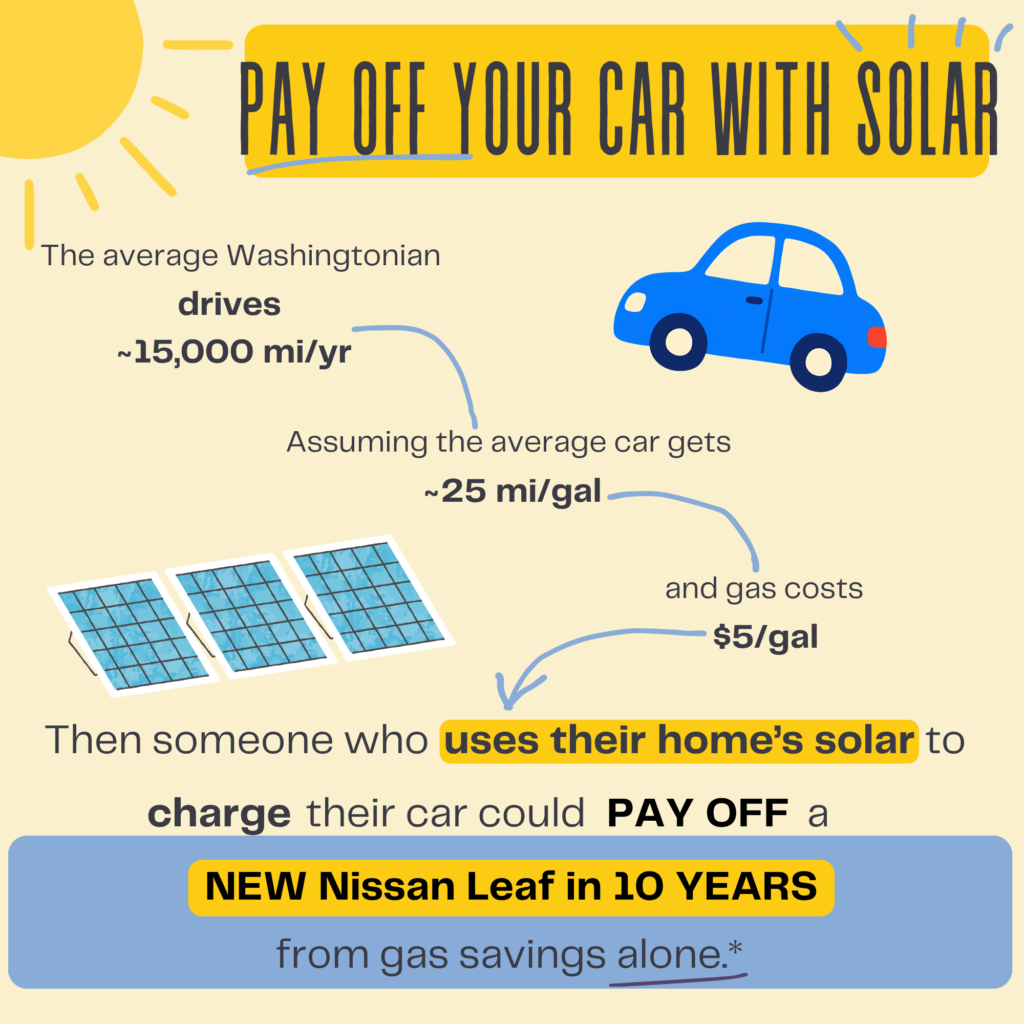
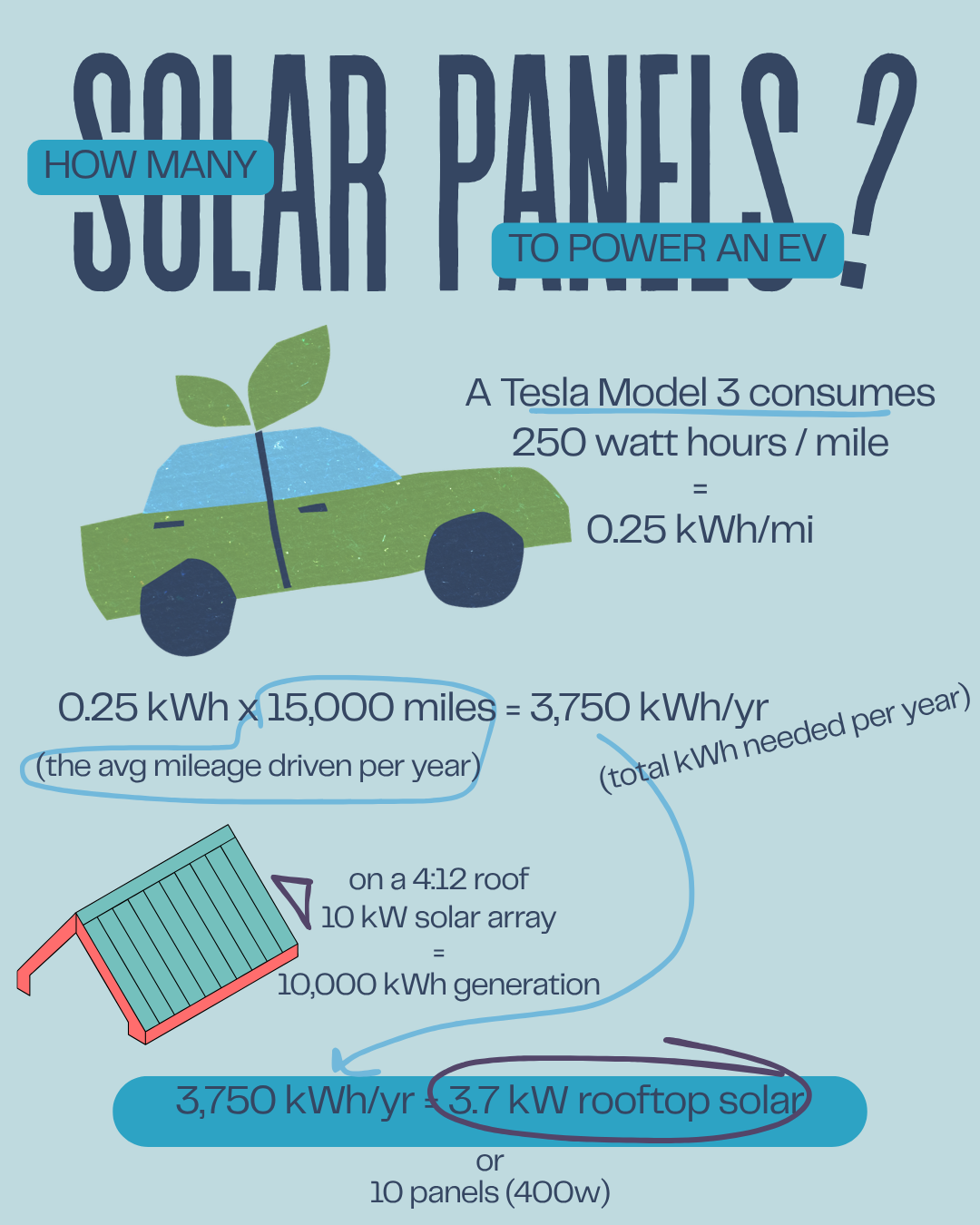
Assuming you’re powering a Tesla Model 3, which uses 250 watt hours per mile, and factoring for 15% loss, then you only need around 3.7kW (10 panels at 400w) of rooftop solar to charge your car. That’s also assuming you drive around 15,000 miles per year. If you drive less then you, of course, could get away with even less solar.
Battery Chemistry & Closed-Loop Intelligence
Paired with the inverter is the SunGold Powerhouse 16.1kWh outdoor rated wall-mounted battery bank. Built with Lithium Iron Phosphate (LiFePO) cells, the unit prioritizes thermal stability and operational lifespan over weight reduction.
The critical factor in this pairing is closed-loop BMS communication. Via a direct CAN bus connection, the SunGold battery continuously transmits real-time cell voltages, temperatures, and state-of-charge (SOC) metrics to the Sol-Ark 15k. The inverter dynamically adjusts its charge curves and current delivery based on live battery diagnostics, preventing overcharging, over-discharging, or cell imbalance without requiring manual intervention.
Navigating Winter Off-Grid Construction (December – March)
Installing solar panels in December introduces an obvious hurdle: 8-hour daylight windows, low solar elevation, and frequent cloud cover. Operating mostly off-grid with a temp power hookup as a backup required strategic power management:
- Zero-Export CT Safeguard: Because backfeeding energy into the grid prior to official utility sign-off is illegal and hazardous to utility line workers, the system ran in Zero-Export / Limited Power to Home Dual Current Transformers (CTs) installed at the main panel monitored power flow, dynamically throttling solar output to match exact site demand and battery charging—ensuring zero current leaked back into the utility lines.
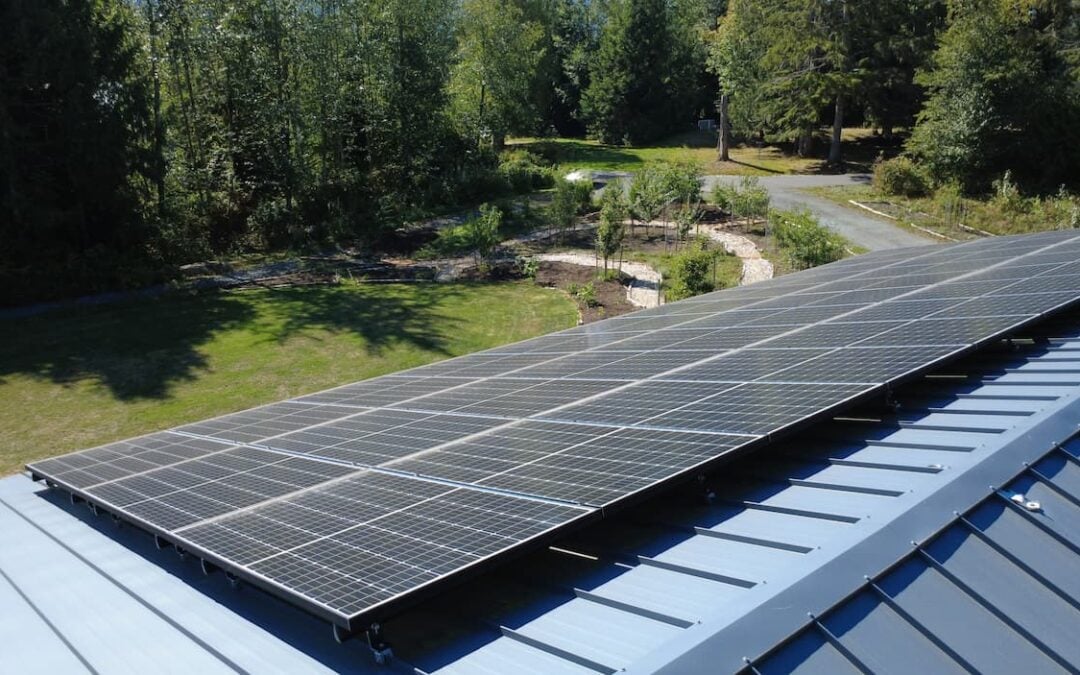
- Bifacial Production Advantage: The ground-reflected light (albedo) captured by the undersides of the Heliene 530W panels delivered extra energy yields during overcast winter afternoons.
- Overnight Base Load Management: The 16.1kWh storage capacity easily bridged the overnight gap, maintaining power for site security, battery tool chargers, and low-draw construction fans.
Interconnection & Transition to Net Metering (April – June)
By spring, solar generation expanded rapidly. The system easily sustained heavy finish-carpentry tools, paint sprayers, heaters and dehumidifiers for drywall and the initial commissioning of major mechanical systems—including the hydronic heat pump and smart home control hardware.
When local utility inspectors granted formal Net Metering interconnection approval in Late May, transitioning the home from an isolated off-grid microgrid to a grid-tied power station took less than five minutes. No rewiring was needed; we simply toggled the Sol-Ark’s software interface from Zero-Export Off-Grid to Grid-Tied Net Metering. Peak summer generation began exporting excess clean energy to the grid for utility bill credits under PSE’s net metering agreement, while the SunGold battery shifted to act as an instantaneous, seamless UPS backup during grid outages.
Annual Energy Balance: Modeling Production vs. Consumption
Because the home features an ultra-tight building envelope—constructed with Structural Insulated Panels (SIPs), achieving an airtightness rating of 1.0 ACH50 and a HERS index of -10—its annual net-energy profile is exceptional.
A HERS rating of -10 signifies that the building produces 10% more energy than a standard Net Zero Energy building consumes on an annual basis.
ANNUAL ENERGY PRODUCTION & CONSUMPTION
Estimated PV Solar Generation (10.6 kW Array in Ferndale WA): ~11,500 - 13,000 kWh
Estimated Whole-House Total Energy Load: ~7,500 - 9,000 kWh
PROJECTED ANNUAL NET ENERGY SURPLUS: +3,000 - 4,500 kWh
1. Predicted Annual Household Consumption (~7,500 – 9,000 kWh/yr)
With an envelope rated at 1.0 ACH50, space heating and cooling thermal loads are reduced by up to 50–60% compared to code-minimum construction.
- HVAC / Thermal Control: Radiating floor loops powered by an air-to-water heat pump paired with a high-efficiency HRV (Heat Recovery Ventilator) require minimal compressor output to maintain setpoint temperatures inside an airtight SIP shell.
- Baseload & Domestic Hot Water: Efficient LED lighting, heat pump water heating, and modern electronics form the majority of the remaining load, resulting in a low, consistent baseline demand throughout the year.
2. Predicted Annual PV Generation (~11,500 – 13,000 kWh/yr)
A residential array paired with a Sol-Ark 15k will experience significant seasonal variation between winter and summer:
- Summer Peak (May – Aug): Monthly production averages 1,400 to 1,800 kWh/month. Peak daily generation frequently exceeds 50–60 kWh/day, easily filling the household demand and exporting substantial credit back to the grid.
- Winter Trough (Nov – Feb): Monthly production drops to 300 to 600 kWh/month. The tight SIPs thermal shell minimizes heating demand during this period, keeping grid demand low.
Final Takeaways
Building off-grid during the construction phase acts as the ultimate real-world stress test for a home’s energy infrastructure. Pairing a heavy-duty inverter like the Sol-Ark 15k with closed-loop LFP battery storage proves that you don't need to rely on fossil-fuel generators or wait on slow utility schedules to build efficiently. Combined with an ultra-tight SIPs building shell, the setup transforms from a temporary construction power plant into an operational Net-Negative energy engine. In the future, with additions of EV’s, sauna and a 4-season greenhouse we are hoping to end the March to March balance sheet with PSE at a very nice 0.
If you’re interested in adding solar to your home and have questions about this array or solar in general, give us a shout.
If you’re interested in building or designing a home, we would love to connect with you! Give us a call at (360) 872-6814 or contact us here.

Recent Comments