This year the TC fam all got Season Passes for Christmas!
In case you didn’t know, we all ski / snowboard… so if we are running a little slow at responding… it’s because we’re probably on the mountain.
Here’s our buddy Jeff Greiner sporting our newest TC merch with Mt Shuksan in the back!
((The same mountain on our logo!))
This summer we hired the infamous mountain graphic artist, Jessica Campbell, to design our logo!
((Thank you, Jessica!! Your work is amazing, and you’re incredible to work with.))
We wanted our logo to represent the PNW, our love for nature, mountains, passion for sustainability… and of course snow sports.
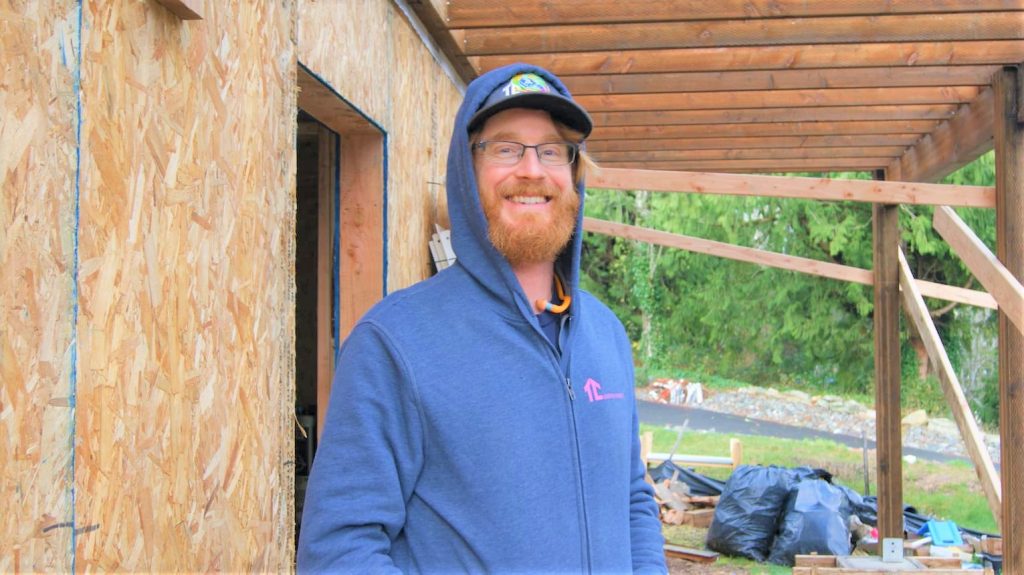
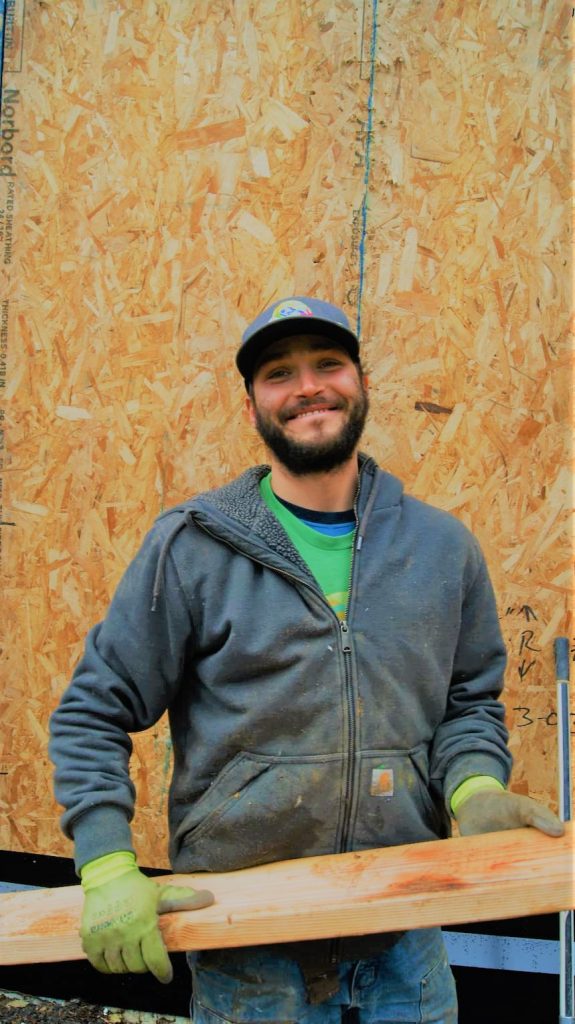
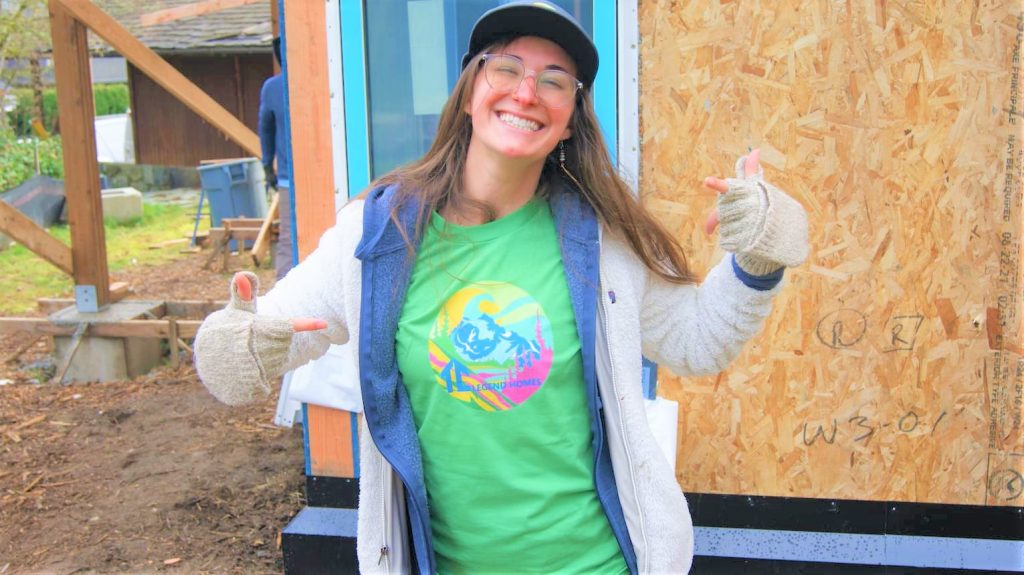
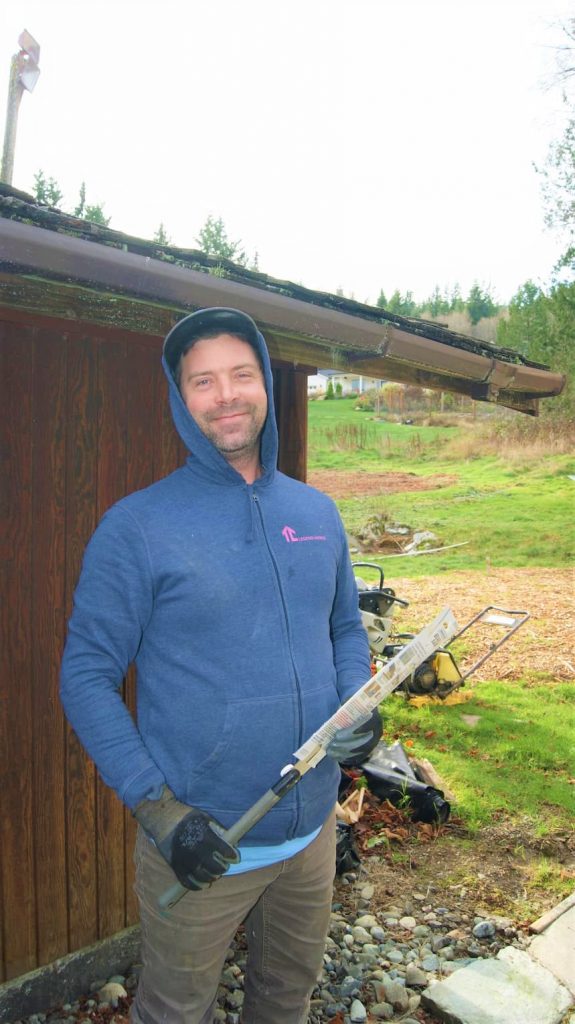
We now have fleece hoodies, baseball hats (as pictured) and t-shirts!
…which is GREAT for the crew…
The ‘holes-in-the-shirt’ look was looking pretty grungy!
We have some extra gear that we’ve been selling if you’d like some TC Legend Homes merch!
Email office@tclegendhomes.com for pricing and available gear! Limited sizing, colors and availability.
See below for images of the crew modeling our gear.
The office has been busy with wrapping up the end of year. We are stoked for a fresh new year, new projects and clients!
Looking back at 2021 we accomplished a ton here at TC LEGEND!
Scaling up and expanding our Design & Construction family
Building four houses at once and wrapping up our 2020 projects
New logo design & merch
Got our Building Plans website launched!!
Winning the 2021 Housing Innovation Award in the Custom for Buyer (>2500 square feet) category!
Winning the 2021 Built Green Hammer Award
We hope you and yours had a wonderful, safe and healthy holiday. We are so grateful for you, our community, amazing clients, and our incredible design & construction crew!
Happy New Year!!
Jeff sporting the TC Hat & sweatshirt!
Miles sporting the TC Hat, coming back from lunch break.
Lee sporting the TC Hat.
Senna sporting the TC Hat, T-shirt & sweatshirt (blue)!
The TC Legend Family is growing! We have hired two new Carpenters and two new Draftsman trainees! Big welcome to Miles, Lee, Talia & Amber! Check out ‘Our Team’ to learn more about them.
We are always excited to grow our team and hire on other passionate individuals who aim to create a carbon neutral future and affordable housing!
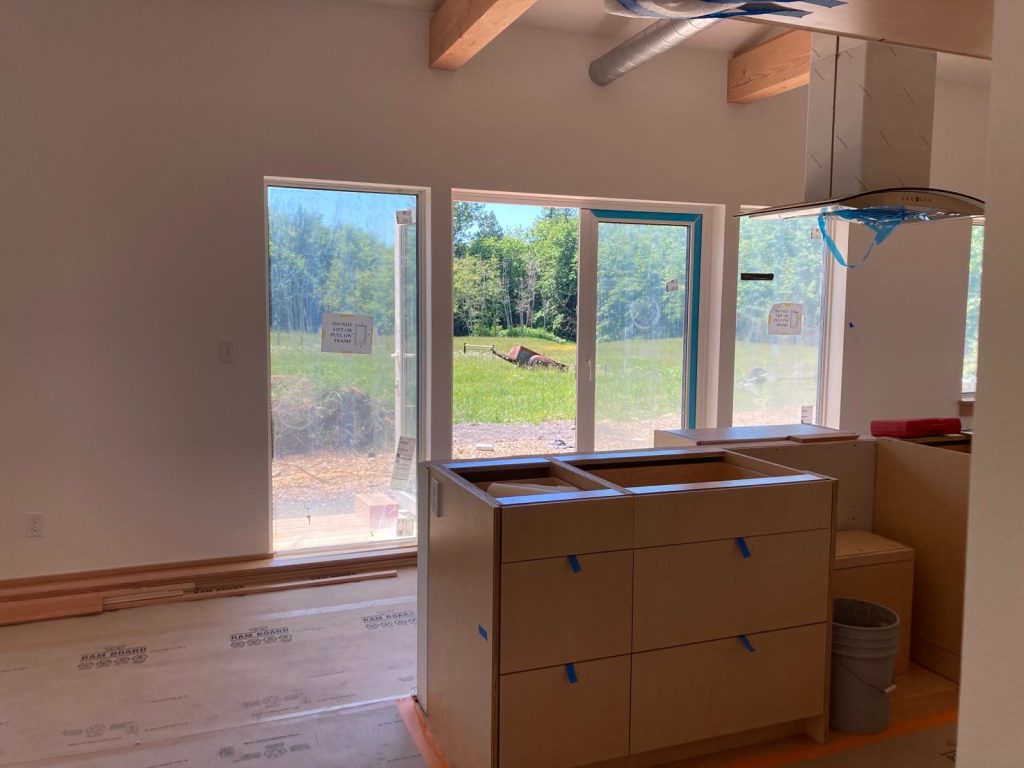
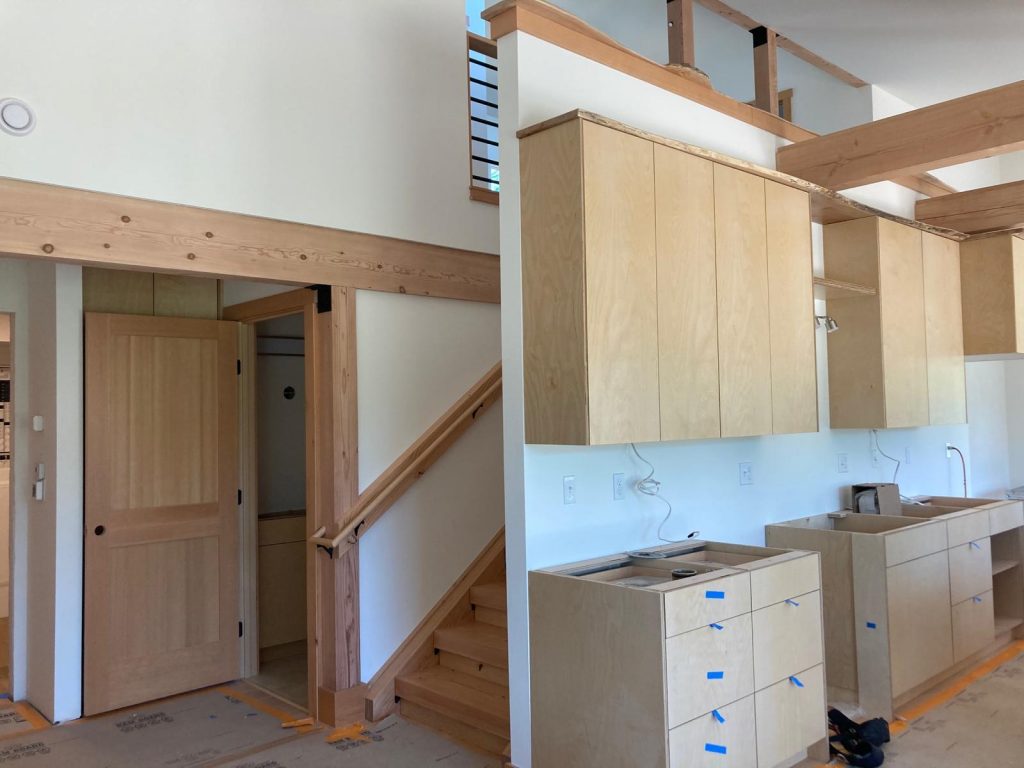
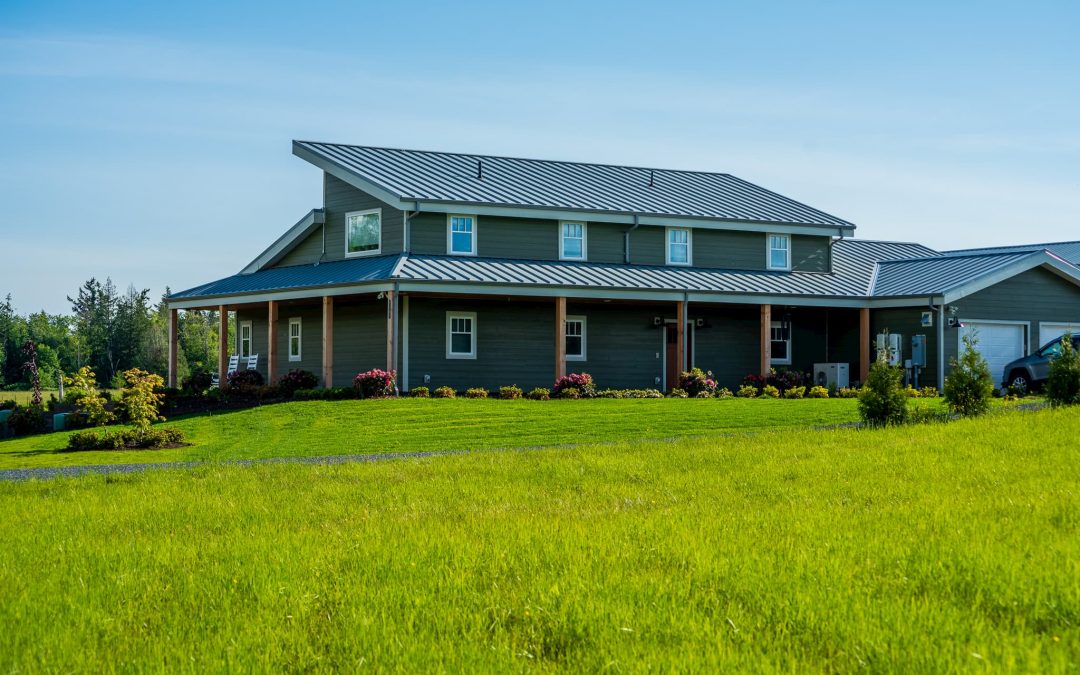
The Bellingham Barn House is coming to an exciting end, and it was a great opportunity to get Senna and Talia out of the office and on-site! (And finally get some headshots of our new crew!)
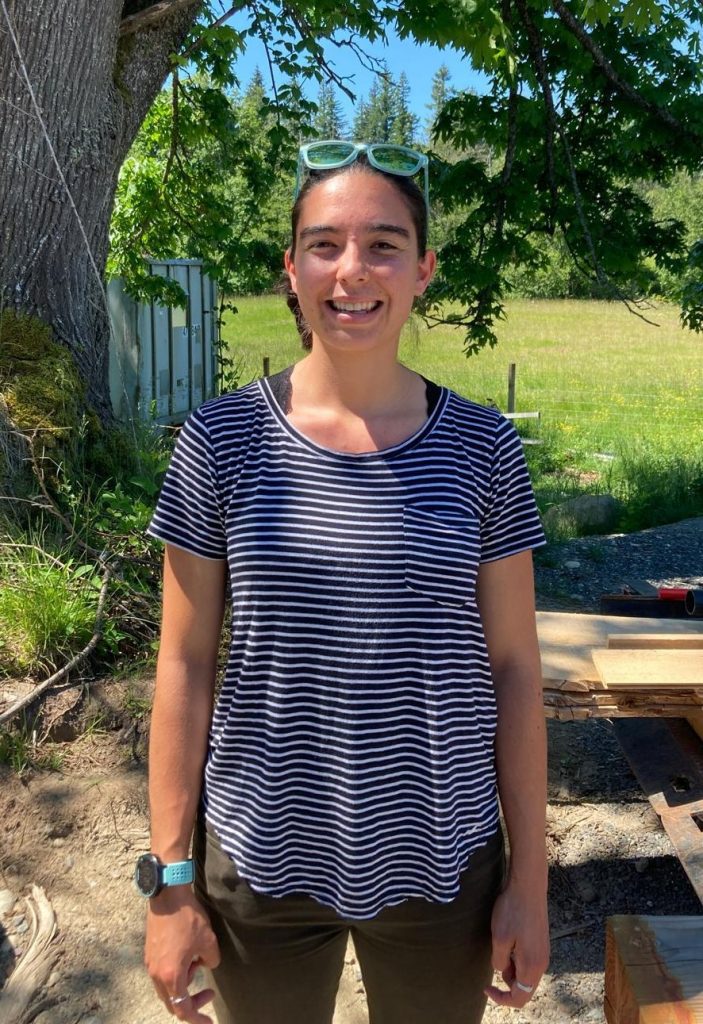
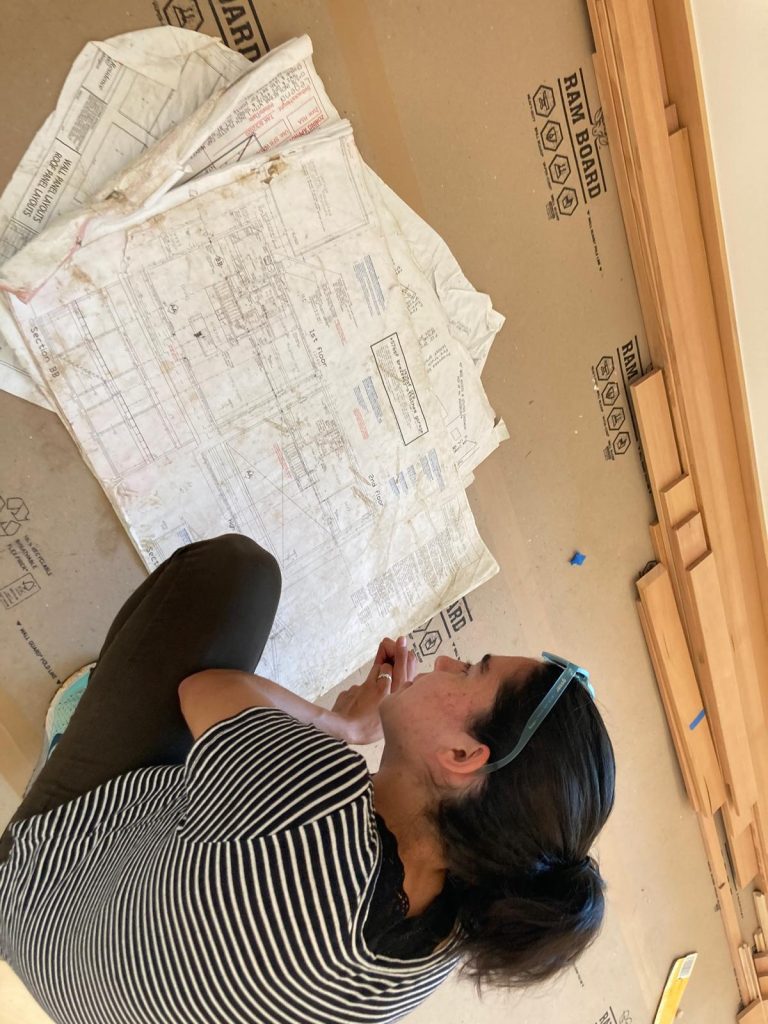
Talia, our first TC Draftsman Intern, got to get her hands on the house plans and review her first TC Legend Home in action.
Here’s what Talia learned and noticed about this exquisite home:
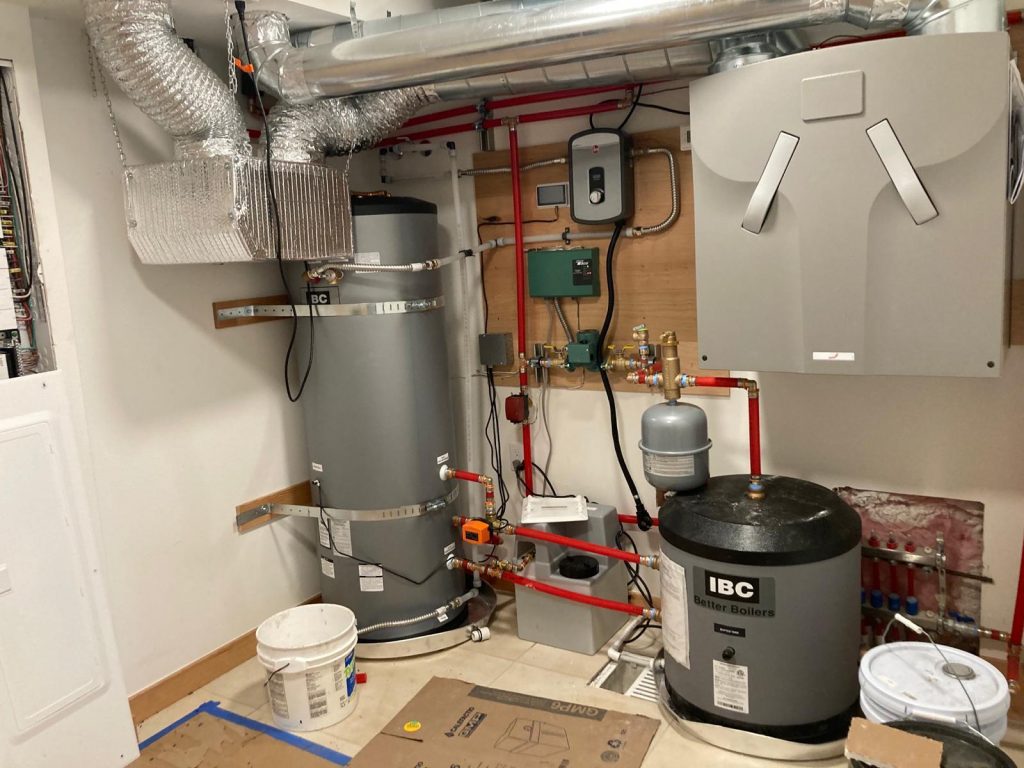
“Visiting the Bellingham Barn House site was a great way to see the paper plans come to life in a real home. It was fascinating to see HVAC and water heating setup in person as well as all the design details that the on site crew carefully constructed.
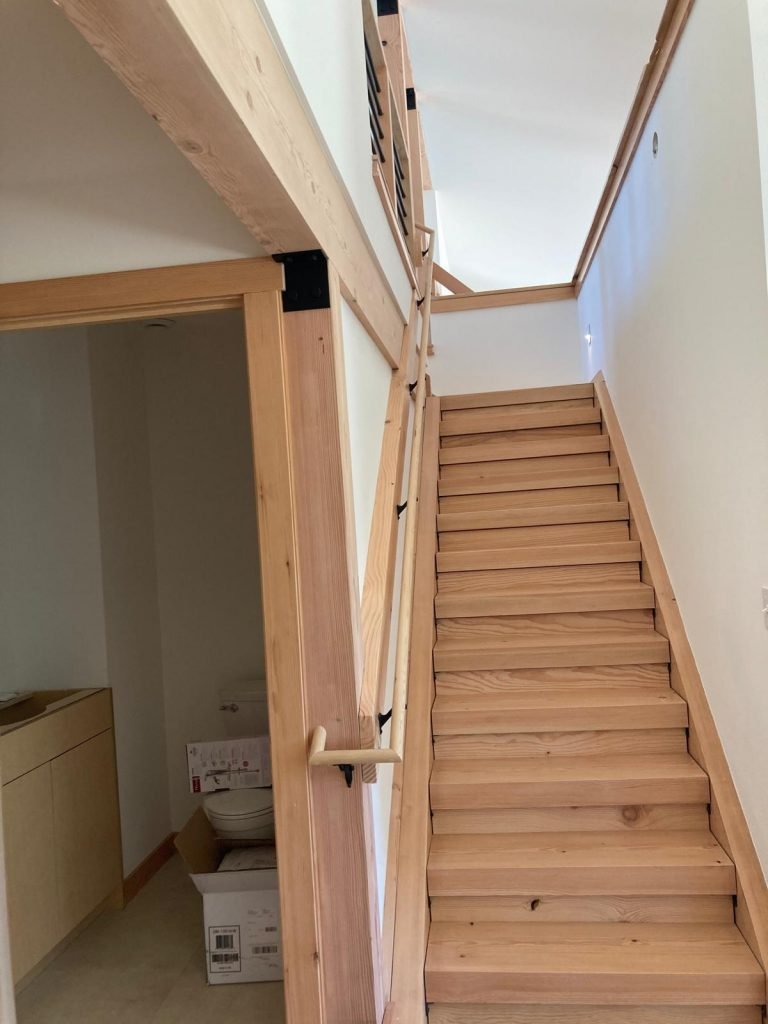
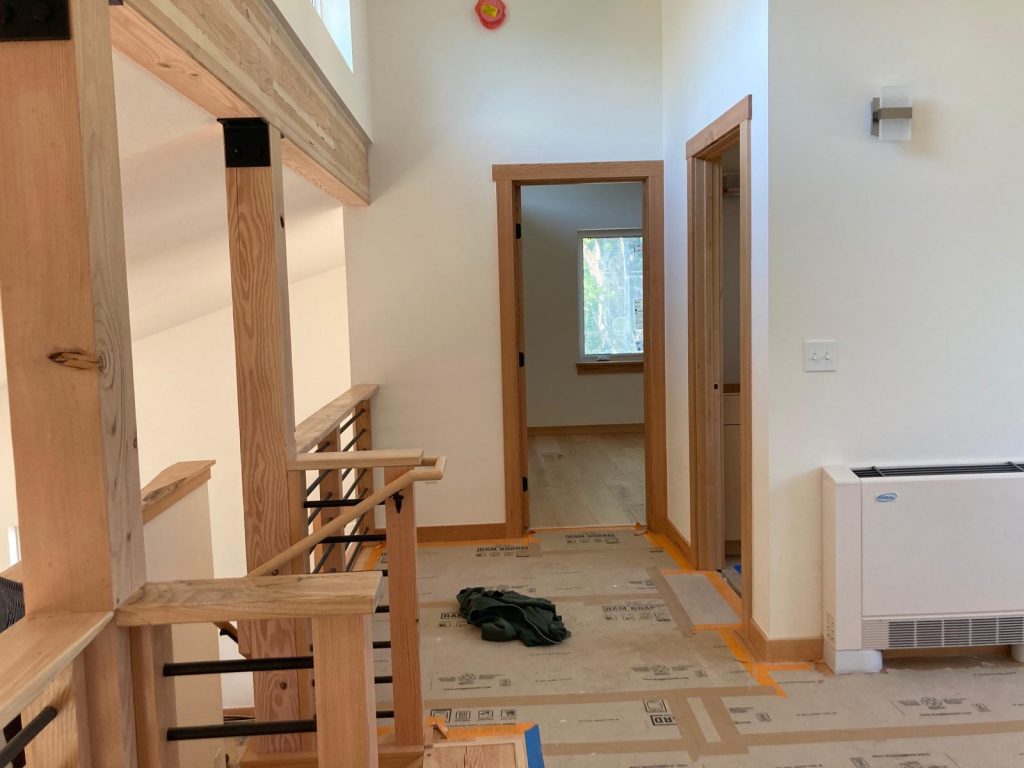
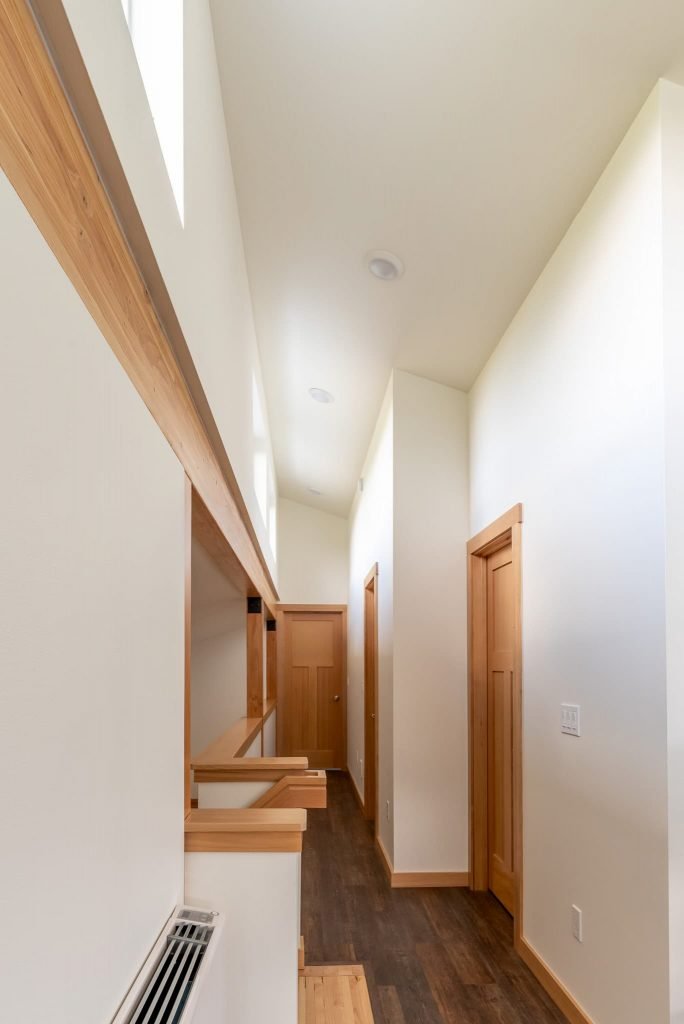
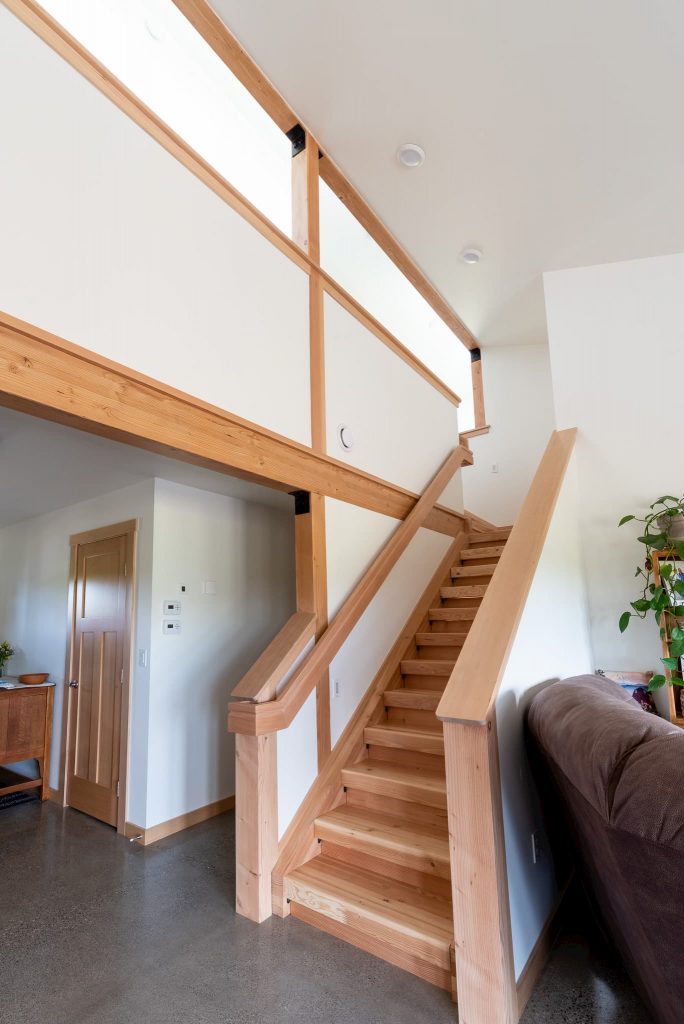
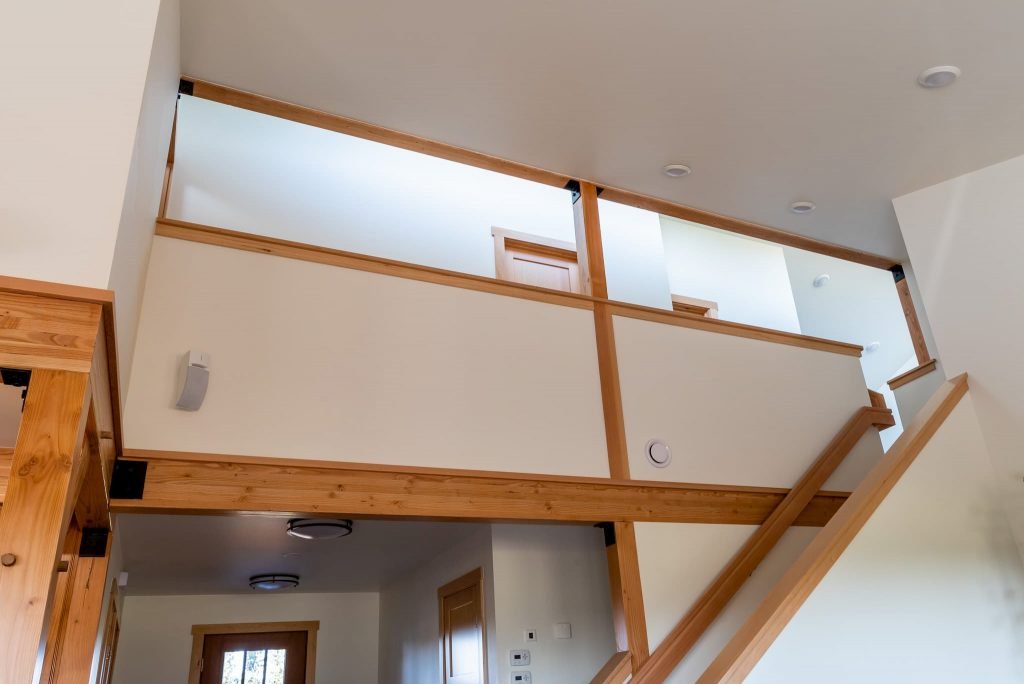
I was particularly excited to see the positioning of the stairs in the middle of the house, serving as a visual and physical separation of the upstairs while keeping a cohesive design and smooth flow of traffic throughout the house.
It was also great to meet the crew and chat about the solar system with Jeff. I walked away having learned and seen a number of new things and I am really excited to be a member of this team!”
Talia has always been interested in building design, architecture, the environment, and renewable energy. When she had the opportunity to combine those interests in the form of an undergraduate course called Energy Efficient and Carbon Neutral Design, she jumped at the chance. After that course, she caught the net zero building bug.
Talia will be graduating in June, 2021 from Western Washington University. One of the incredible things that she did in her undergraduate studies that impressed the TC owners was her participation in an extracurricular competition, the DOE Solar Decathlon, where she designed a functional Net Zero Home for the Tri-cities.
“I’m excited to be making an impact on people’s lives and our environment through designing comfortable, affordable, and efficient homes as a member of the TC Legend Homes team!”
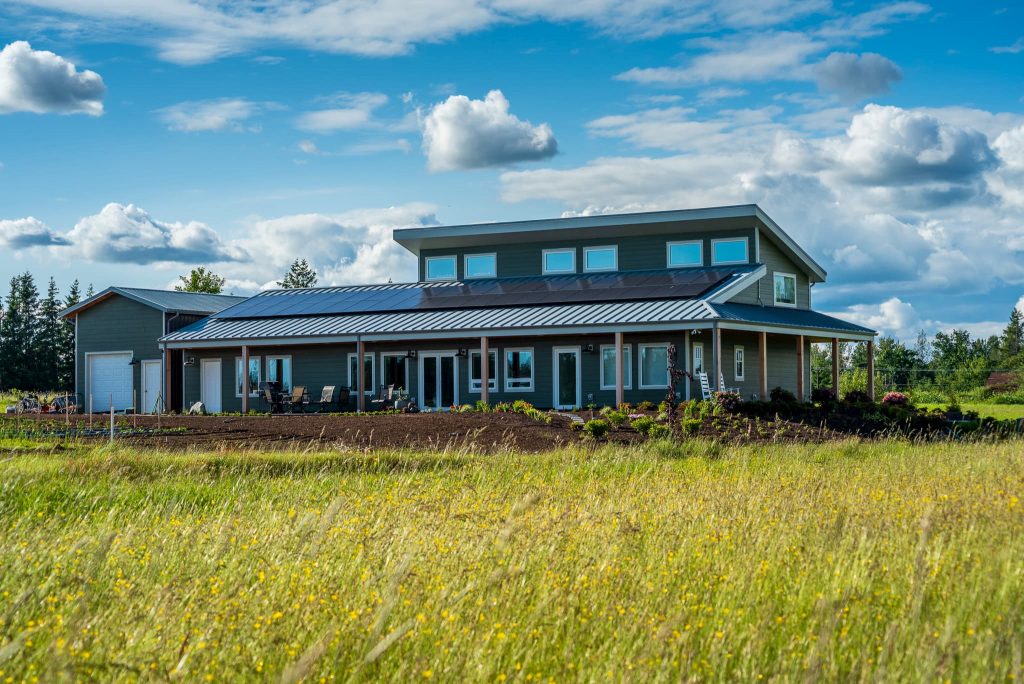
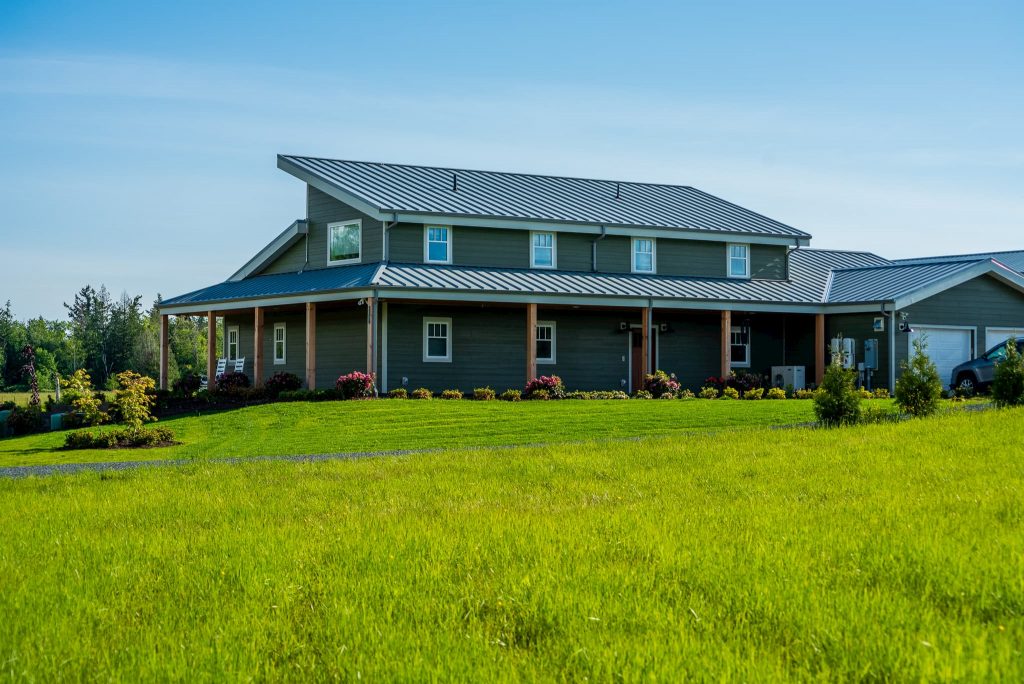
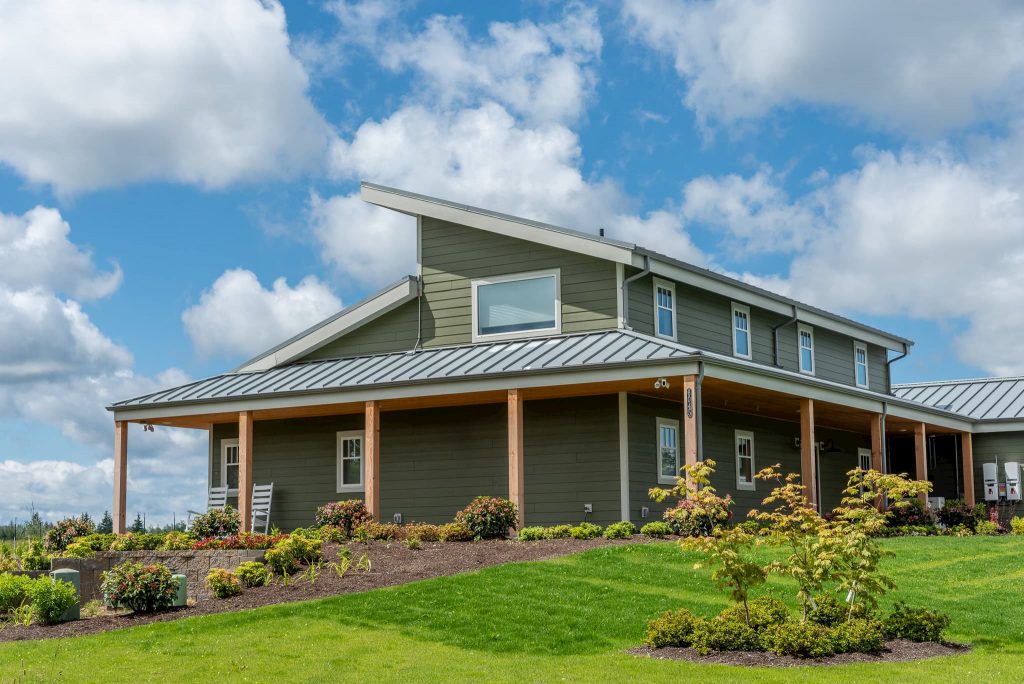
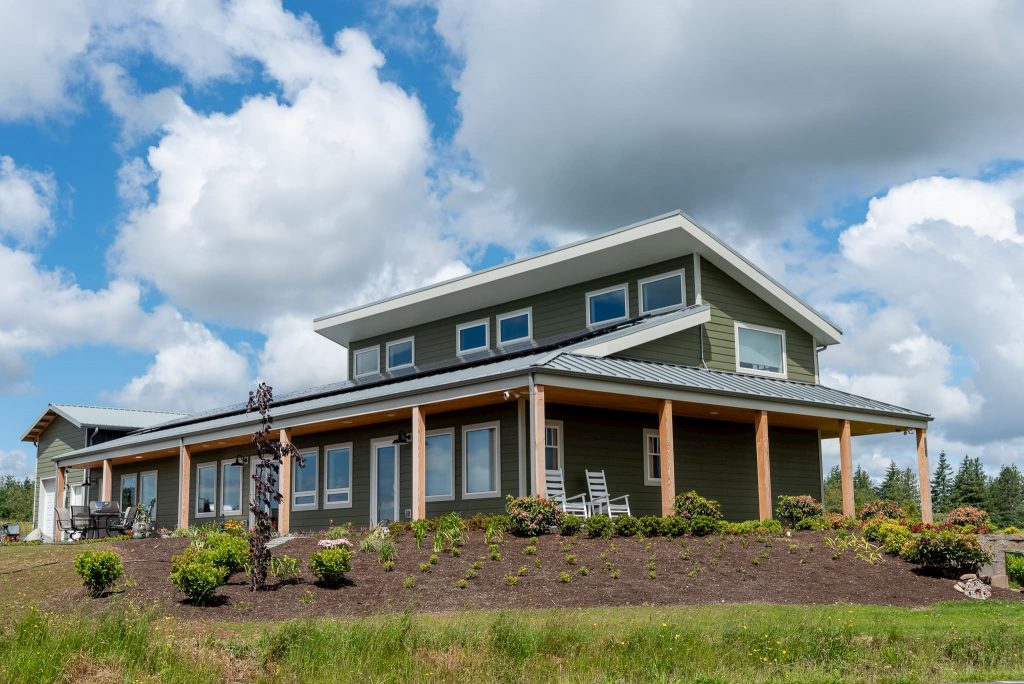
July 2020. The Department of Energy announces that TC Legend Homes wins a Housing Innovation Award in the sub 3000 square feet (sf) custom-home category. The house is located in Everson, Washington State.
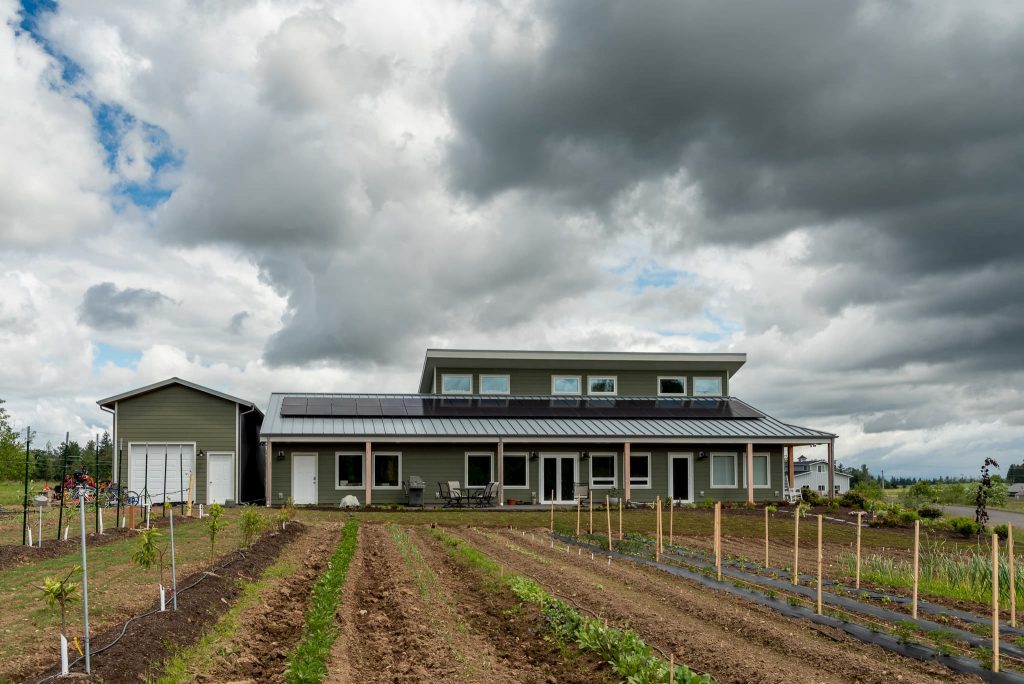
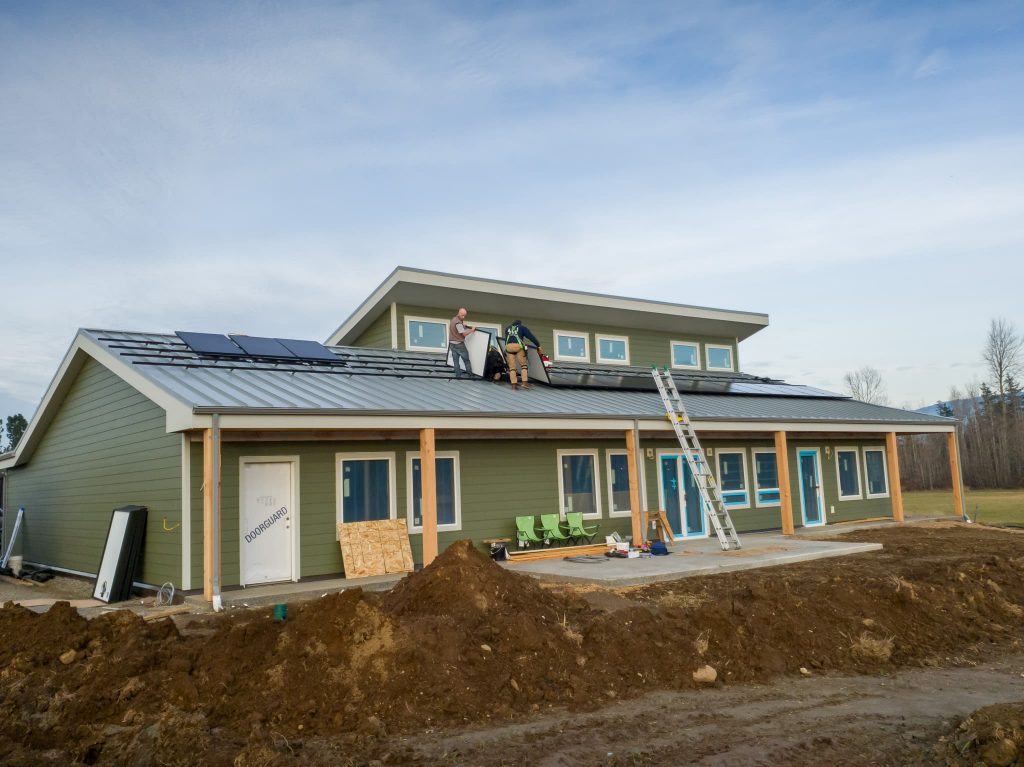
Facing directly towards the sun, the huge south roof collects enough solar power to run the house all year and power an electric car. This house represents the future of Pacific Northwest (PNW) housing. The new homeowner is delighted:
“I am astonished almost every day with how well this house works for us. Of course, it was designed for us but even so, it is a very efficient, real world design. We wanted a house that would run the (electric) meter backwards. If there is a better way to do it; build a house that powers itself, why wouldn’t you…?” – John Trax.
The house is made from SIPs (structural insulated panels). Factory made, the foam sandwich panels arrive on-site with doors and windows already cut-out & assemble fast, a bit like Legos. Triple pane windows and cutting edge mechanical systems enable this home to classify as ‘Net Positive,’ which means it makes all its own power, and excess, over the year.
The competition received hundreds of entries from all over the USA. An exhaustive assessment by the Department of Energy considered a range of factors other than the house energy systems. From wetlands and stormwater conservation, to cutting edge centrally ducted air conditioning and Alexa-controlled lighting and blinds; many aspects of this modest and modern ‘Superhouse’ led to the to the US government award.
“Housing Innovation Award winners such as TC Legend Homes are leading a major housing industry transformation to zero energy homes. This level of performance is the home of the future because it improves the way Americans live by substantially reducing or eliminating utility bills, ensuring engineered comfort way beyond traditional homes, protecting health with a comprehensive package of indoor air quality measures, and helping maximize the largest investment of a lifetime,” – Sam Rashkin, Chief Architect at the U.S. Department of Energy’s Building Technologies Office.
About the US Department of Energy Housing Innovation Awards:
Department of Energy plans to eliminate energy use from American housing. The Housing Innovation Award is a strategy to focus industry and public attention on the reality that energy efficient housing is readily available now.
If there were absolutely no fossil fuels used in the production, or running of this home, it would be a Zero Carbon Embodied Energy building, which is where the Housing Innovation Awards are taking us all.
About TC Legend Homes:
TC Legend Homes is a design-build company based in Bellingham, WA. Designing and building about (5) net-positive SIPs homes a year. Constantly innovating, the company is making significant advances, refining the model for affordable Net-Zero housing in the Pacific Northwest (PNW). The company goal is to research, design and build the standard affordable Net-Zero home for the PNW, ready for volume-construction.
Further details:
Built Green 5 star certified,
HER rating of -19 (with P.V.)
Department of Energy certified Zero Energy Ready Home.
It’s a dark winter evening. You leave the house and as you emerge outside you feel the cold, fresh air and you pop up, feeling sharp, awake, fresh and lively.
The operative word is ‘fresh.’
Sure, the air is cold and that helps, but in reality we’ve been building sealed buildings since the 80’s with gasketed doors and windows, old drafty houses are becoming fewer. Modern housing is very well air sealed to prevent energy loss. However, the ventilation systems have not been developed and installed at the same pace as the air sealing.
So we need to get fresh air into our houses. We’ve needed more fresh air since the 80’s and as a population we’ve become used to poor air quality.
Yes building code does require ventilation, but often it’s switched and folks don’t hit those switches. We need ‘continuous ventilation’.
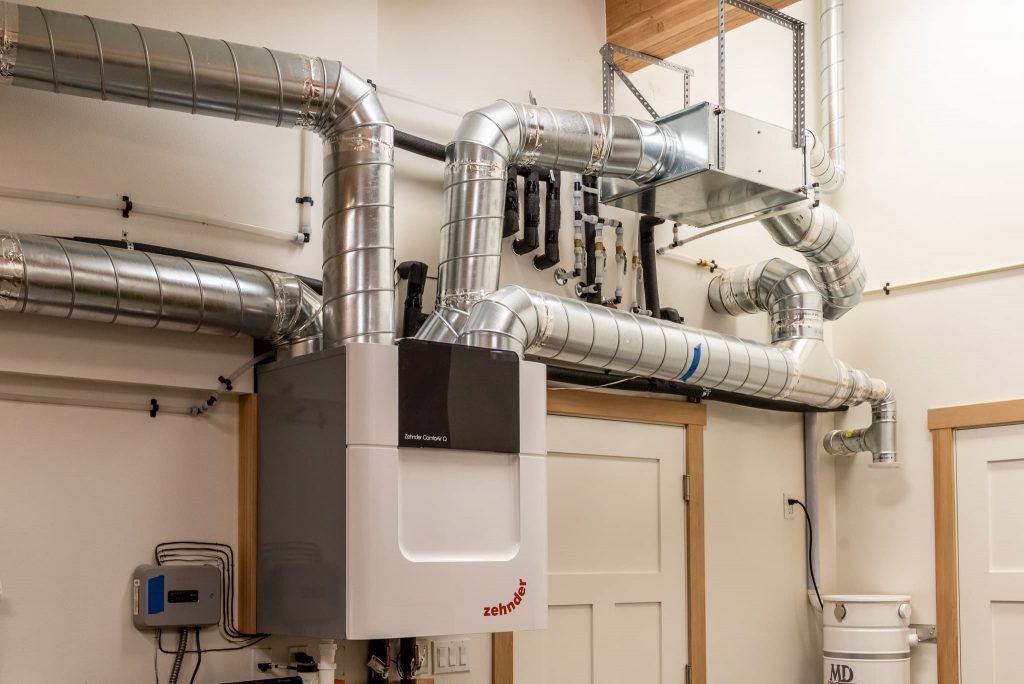
The best system is the Heat Recovery Ventilator (HRV). The outgoing ‘dirty’ air is blown out of the house, but before it leaves the heat is stripped out and imparted into the incoming ‘clean’ air. The HRV is always on, and has filters so the air really is clean. HRV’s can be 95% efficient, and in the Lake Stevens house the HRV reduces the maximum building heat load from 14,450Btu/h to 12,800 Btu/h.
The Zhender HRV’s we fit can have Co2 sensors, so they bring in more air when more folks are inside breathing. Also humidity sensors so moist air, the “building-killer,” is automatically removed. Manual boost switches and wireless control are all becoming standard.
The air is still dirty!
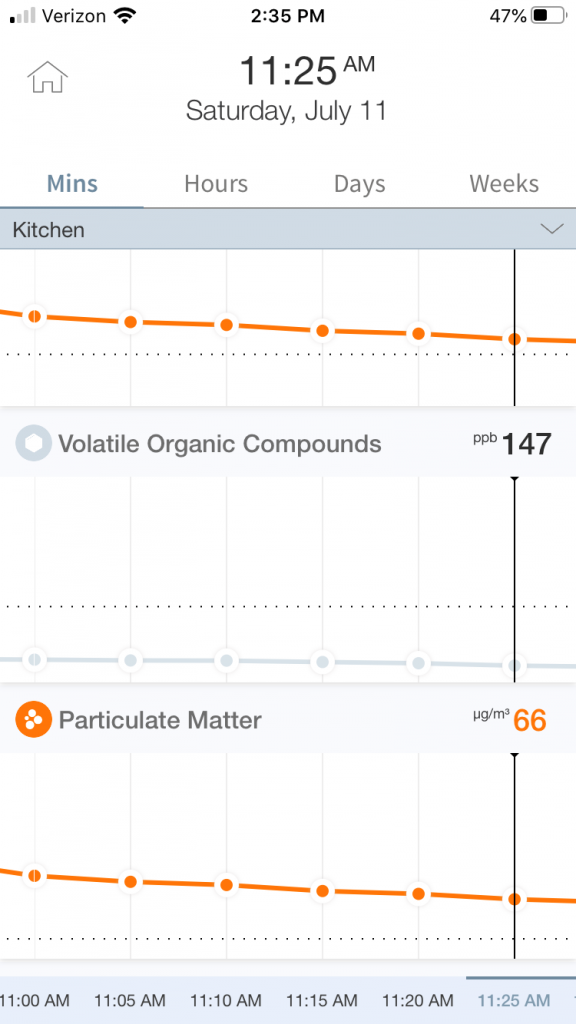
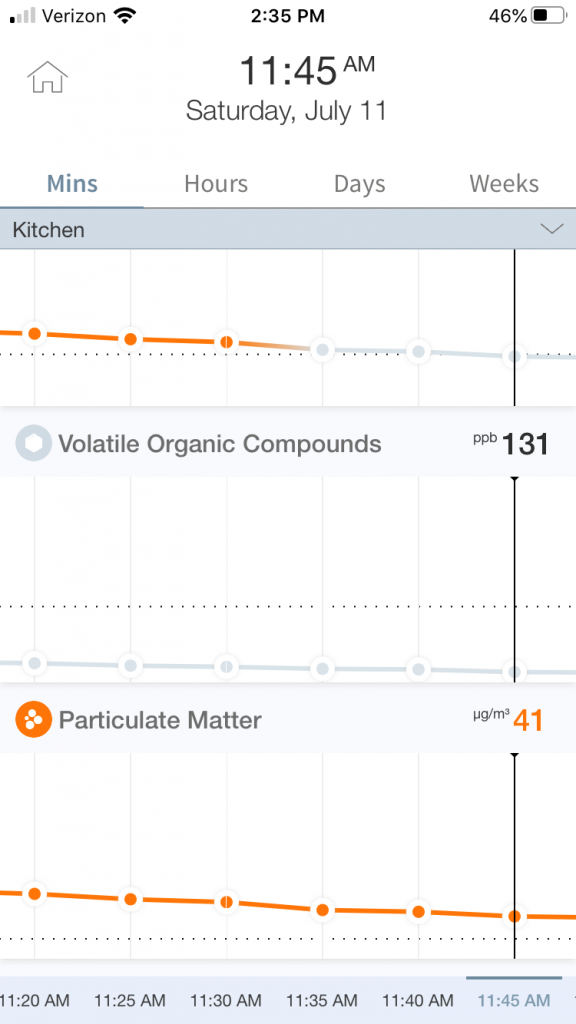
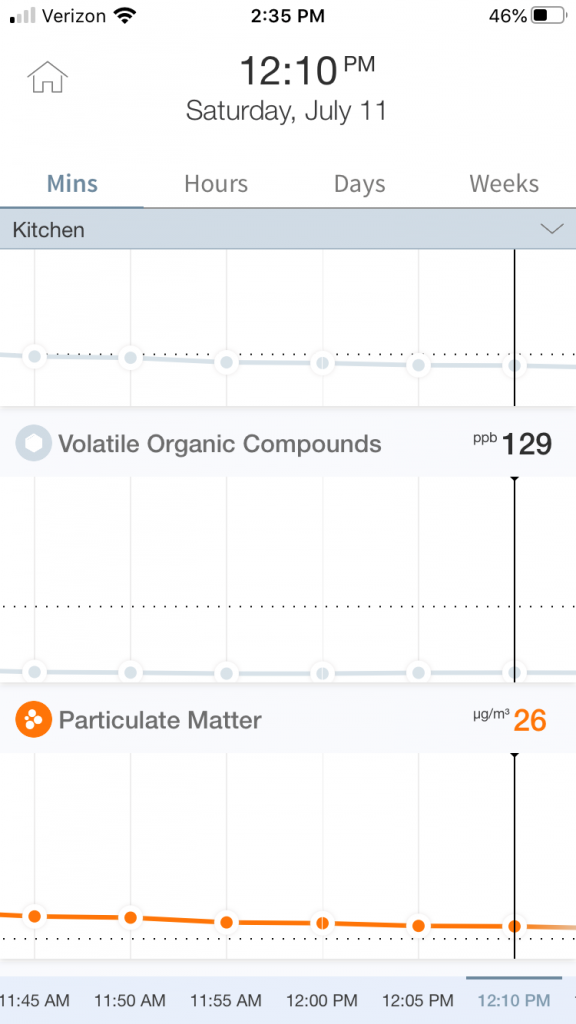
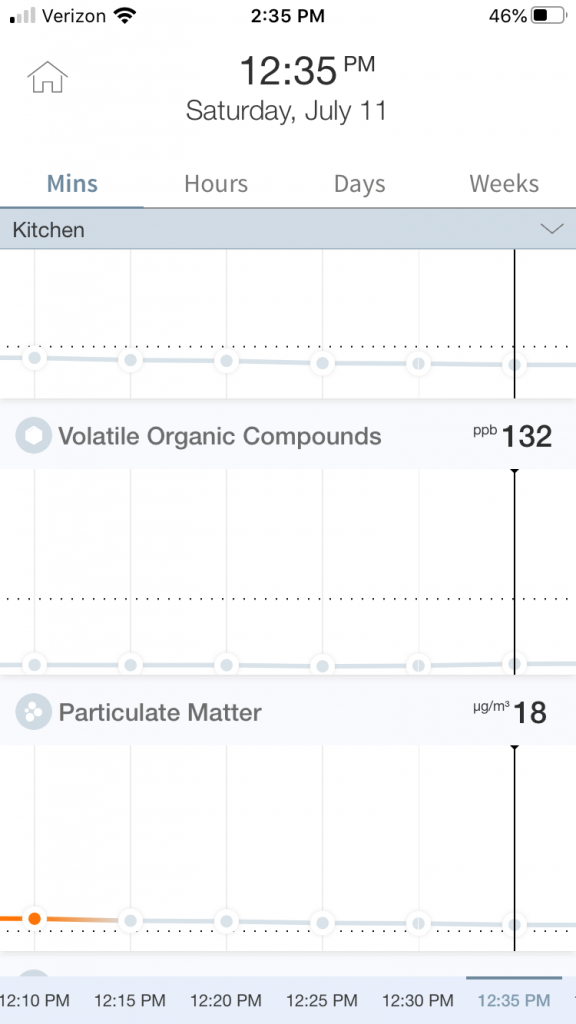
Ted Clifton, Co-Owner and Founder of TC Legend Homes, has an air quality monitor in his home. Cooking is a real problem.
The screenshot from Ted’s Footbot monitor shows that it took over an hour for the 200cfm balanced fan to remove the particulates down to the monitor-defined safe level. Ted was cooking hash browns and eggs on a Saturday morning. It is important to note that Ted’s 200cfm fan has a second 200cfm intake fan so it’s a balanced system and can be interpreted as a 400cfm fan.
The lesson is that range hoods are critical to maintaining indoor air quality and should really be sensor-activated. At TC Legend Homes we will be specifying more powerful units; perhaps 800cfm as standard. The presence of particulates indoors is linked to asthma.
The arrival of home automation will easily address this problem and a quick Google search for wireless range hoods yielded plenty of cost-effective models.
The next part of the test is to cook the same hash browns and eggs next Saturday, leave the range hood off, then we’ll see how long it takes a modern super home (Ted lives in the Bellingham Powerhouse) to clear the air with just the HRV.
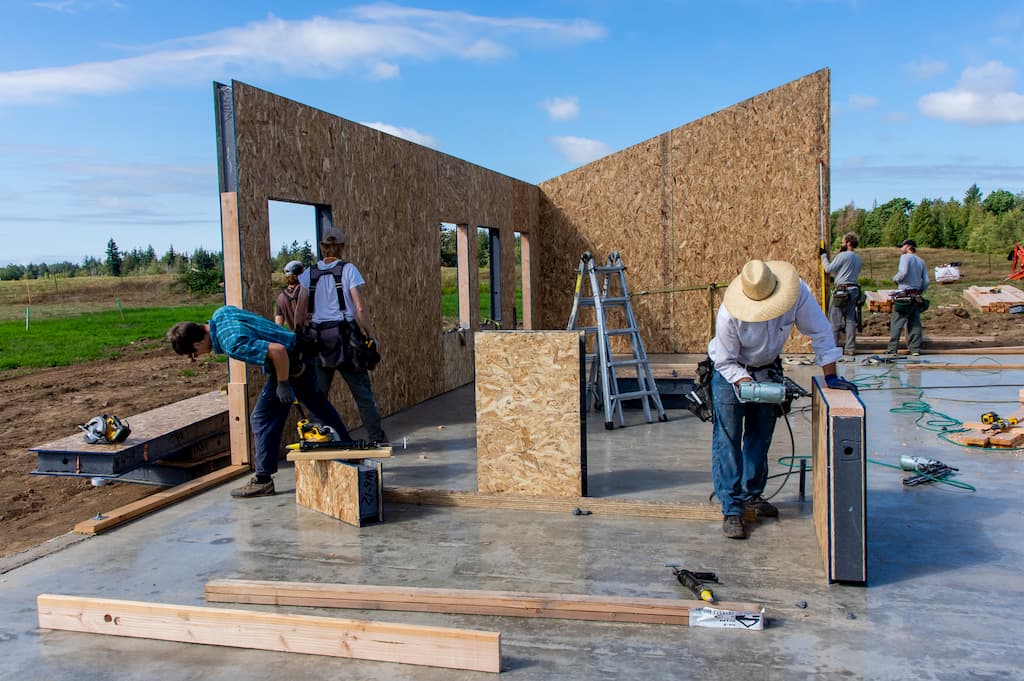
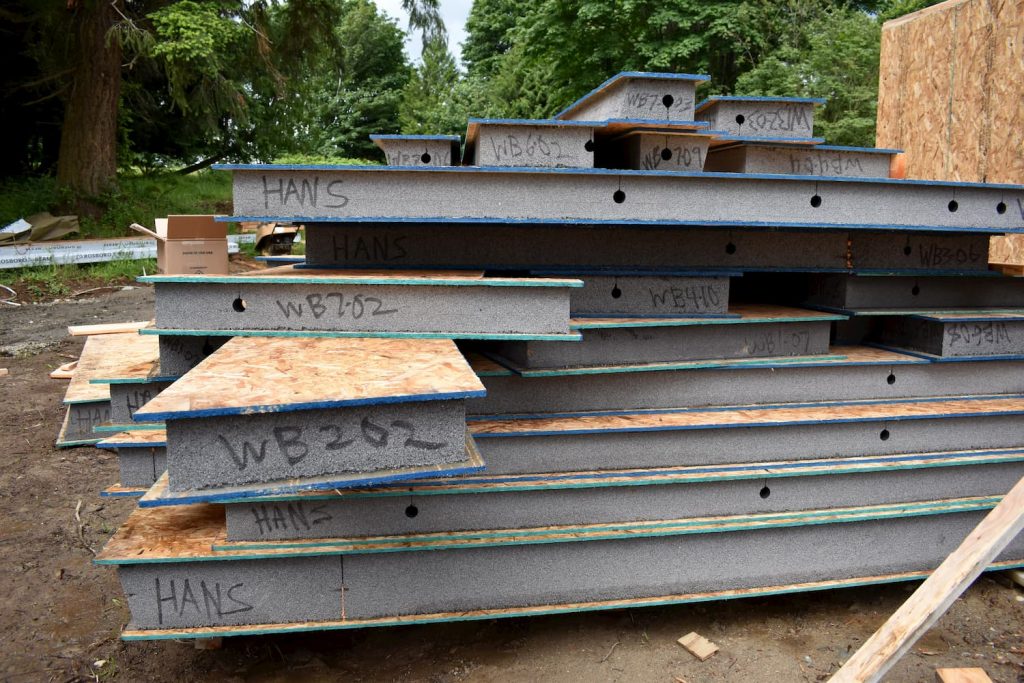
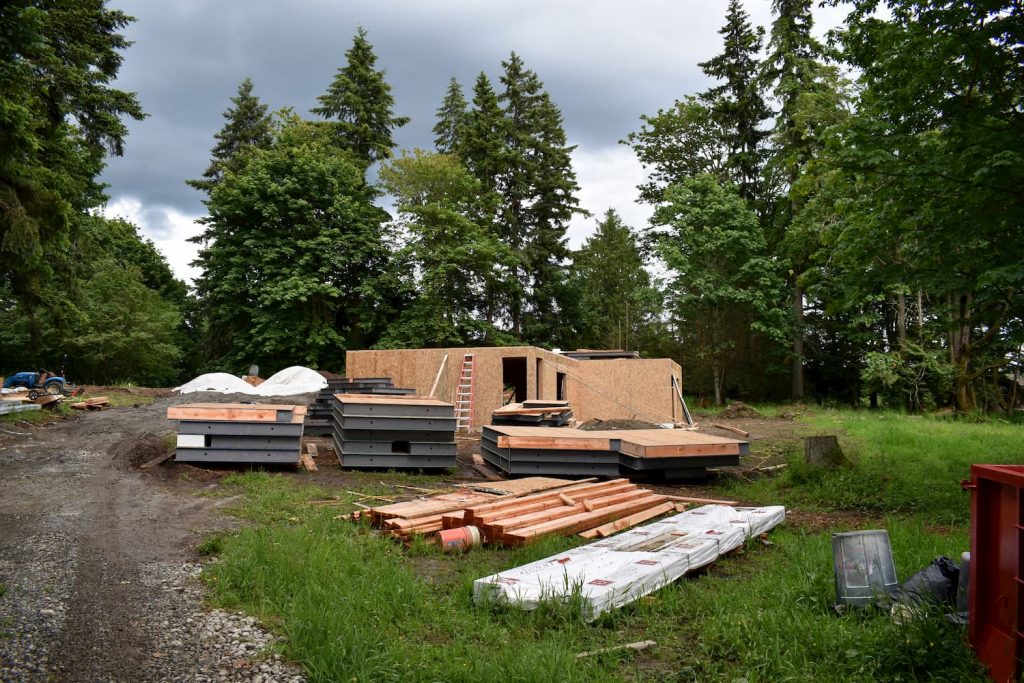
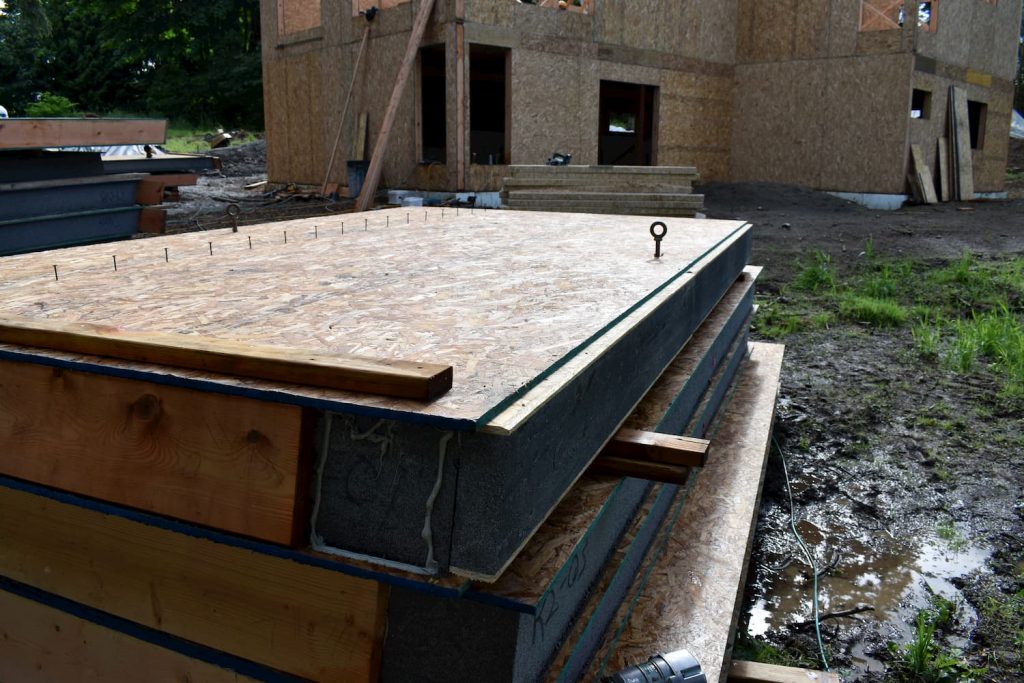
SIPs are wall, roof (and sometimes floor) panels. Fabricated from a slab of foam sandwiched between two plywood sheets. Actually, it’s not ply it’s OSB (oriented strand board).
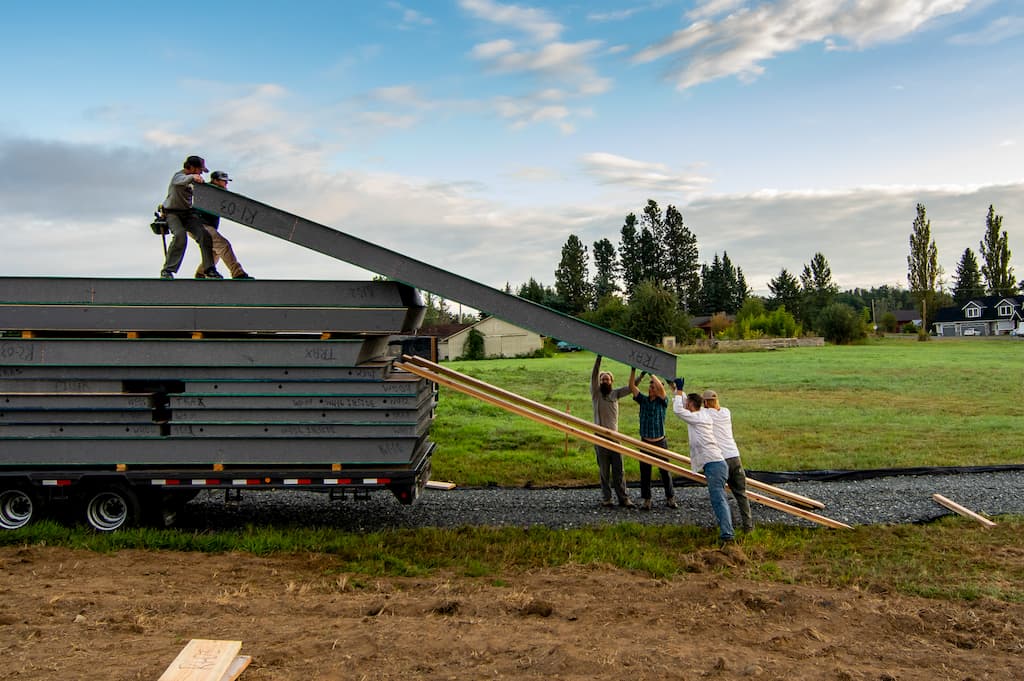
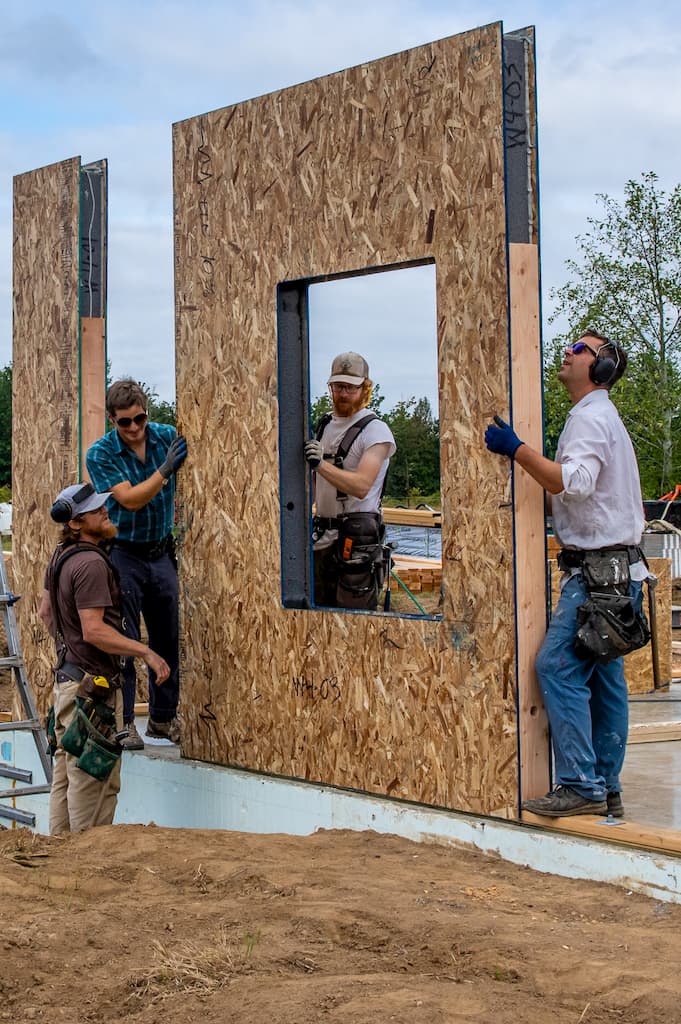
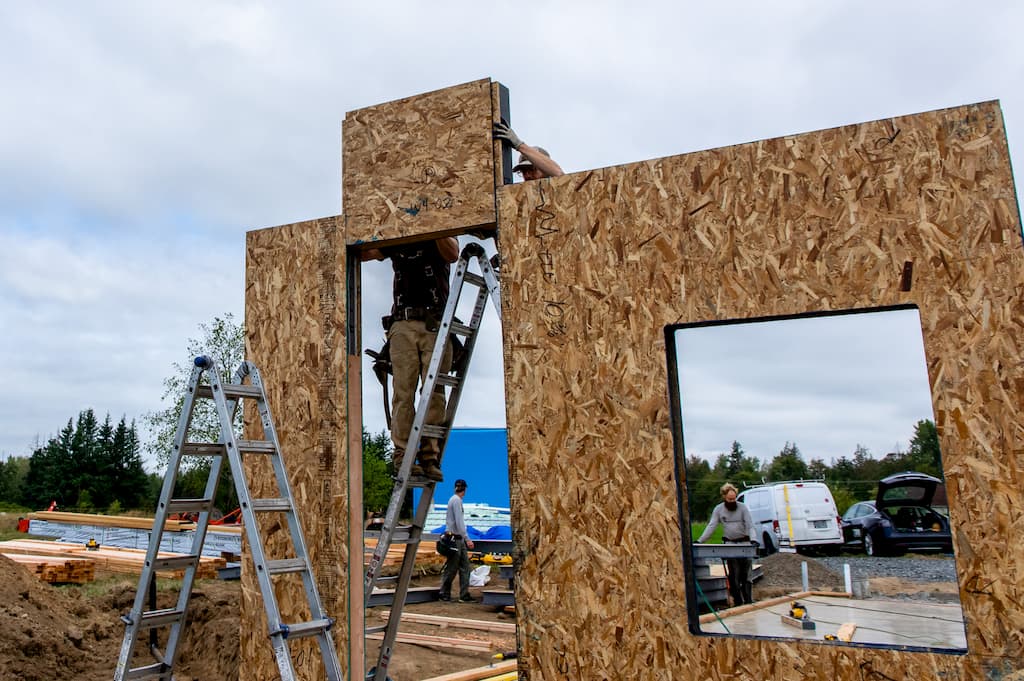
The sandwich-panels can be up to 24’x8’ and are made in the SIPs factory, in our case Premiere-SIPs in Puyallup. The doors and windows are cut-out in the factory, a stack of pre-fabricated house panels are loaded onto a trailer and arrives on-site where the SIPs are assembled… a bit like Legos.
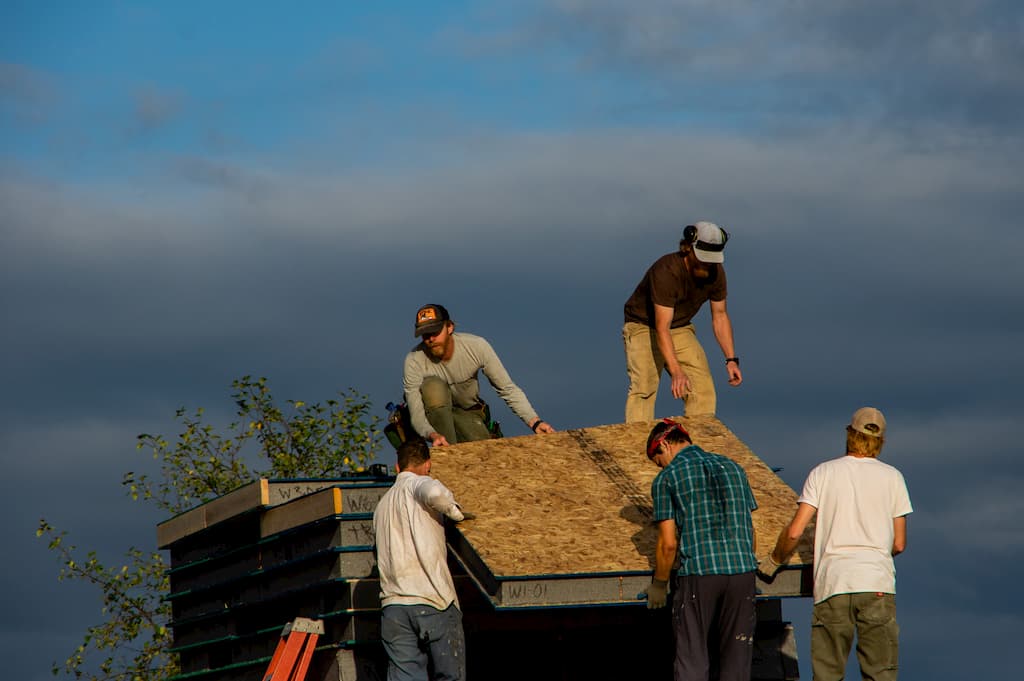
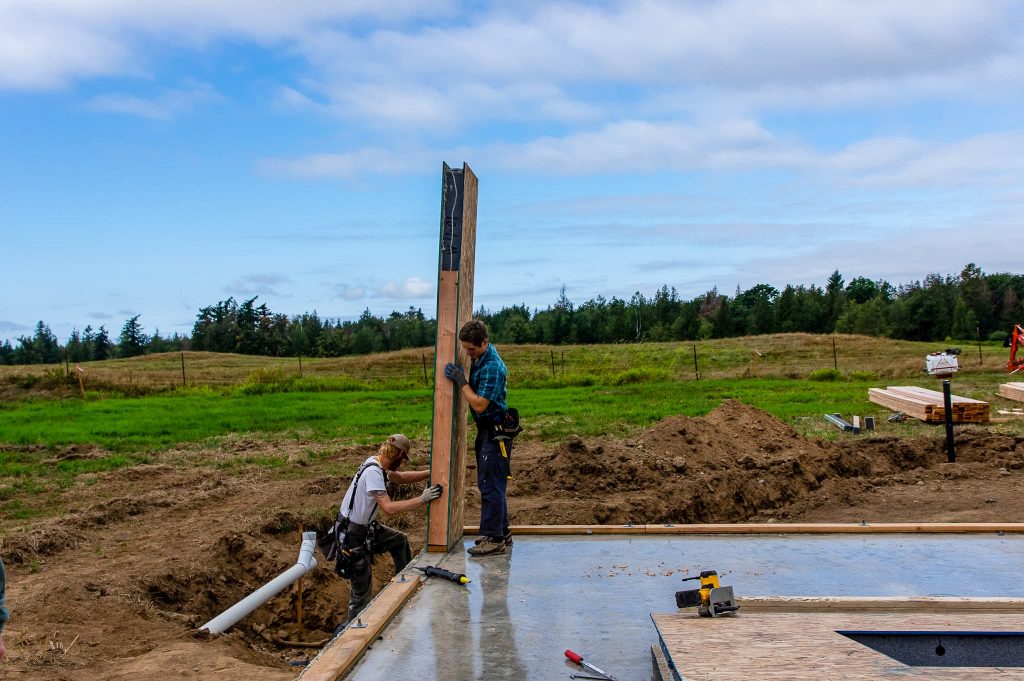
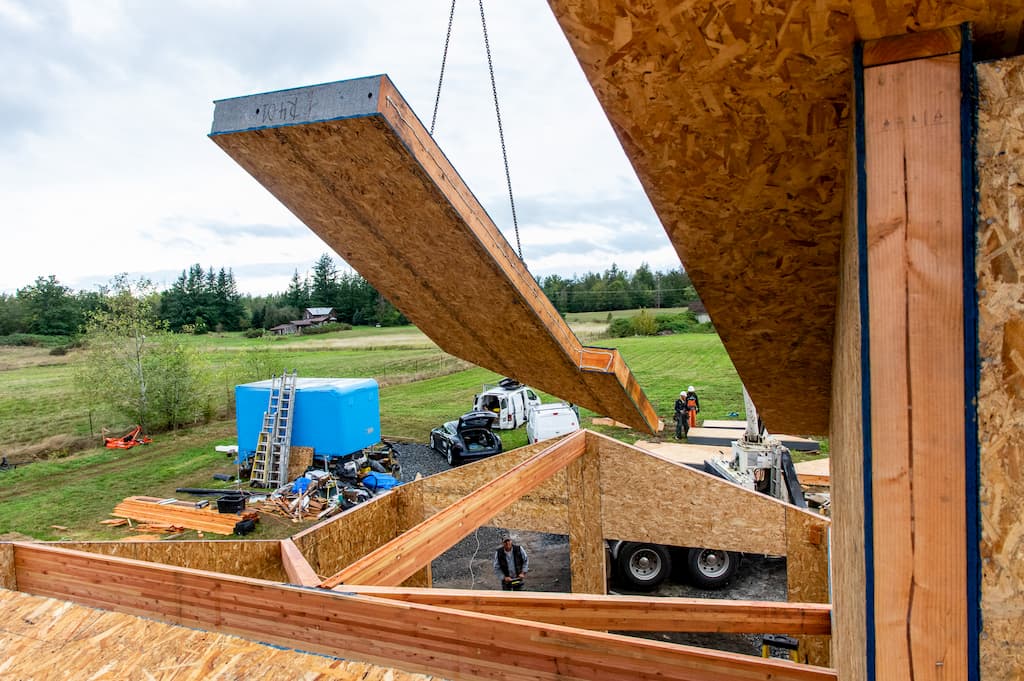
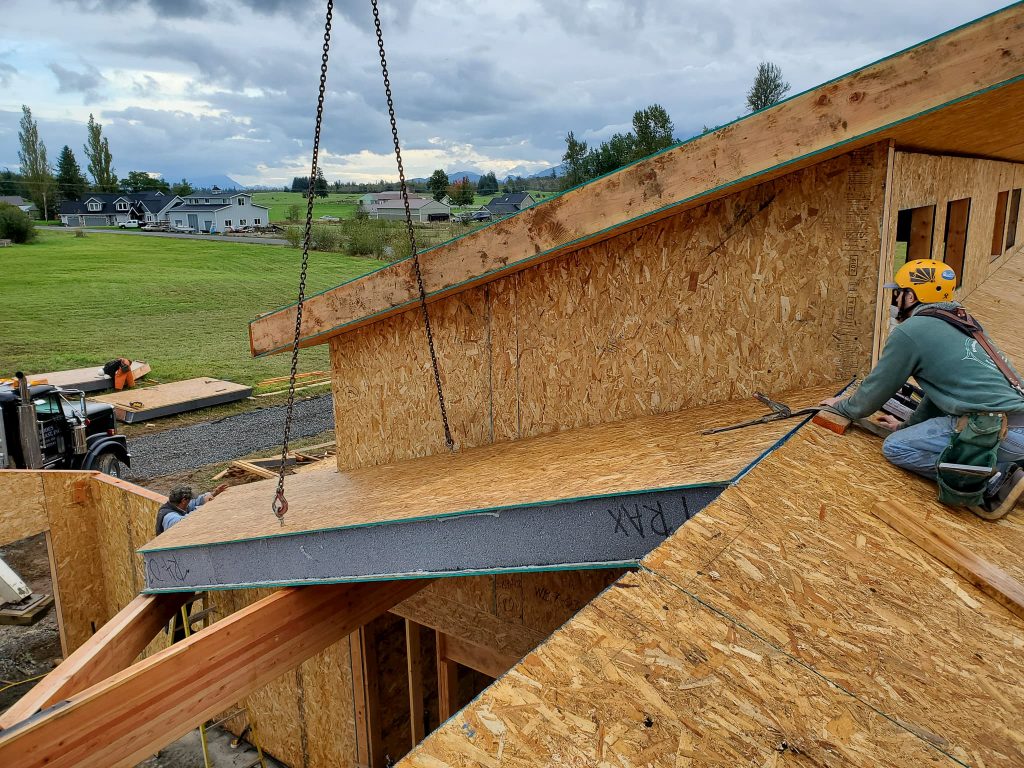
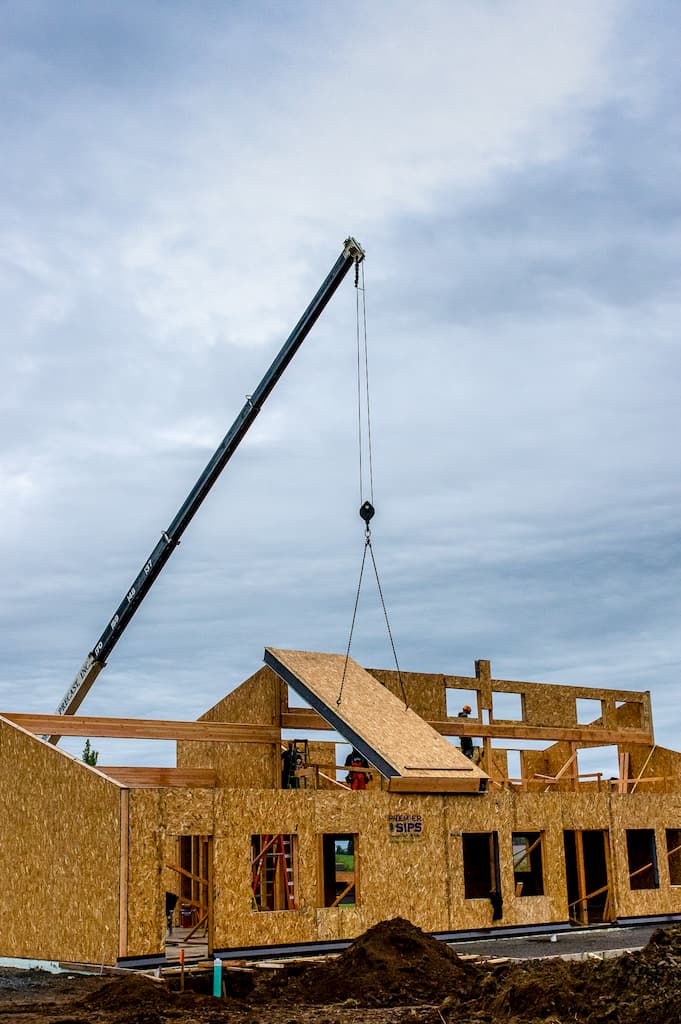
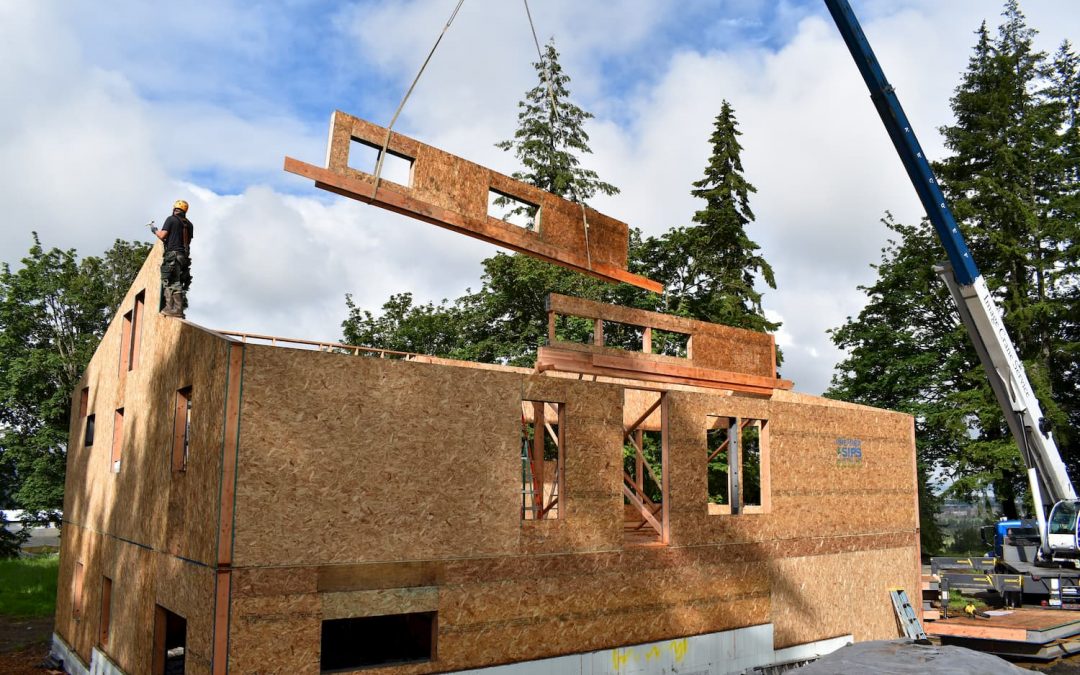
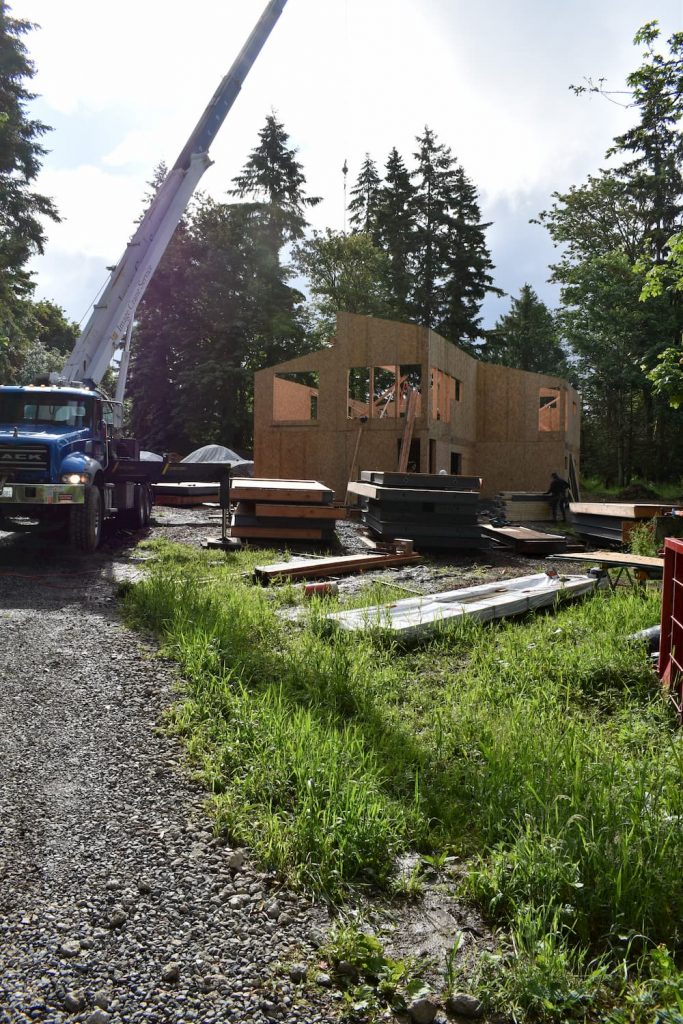
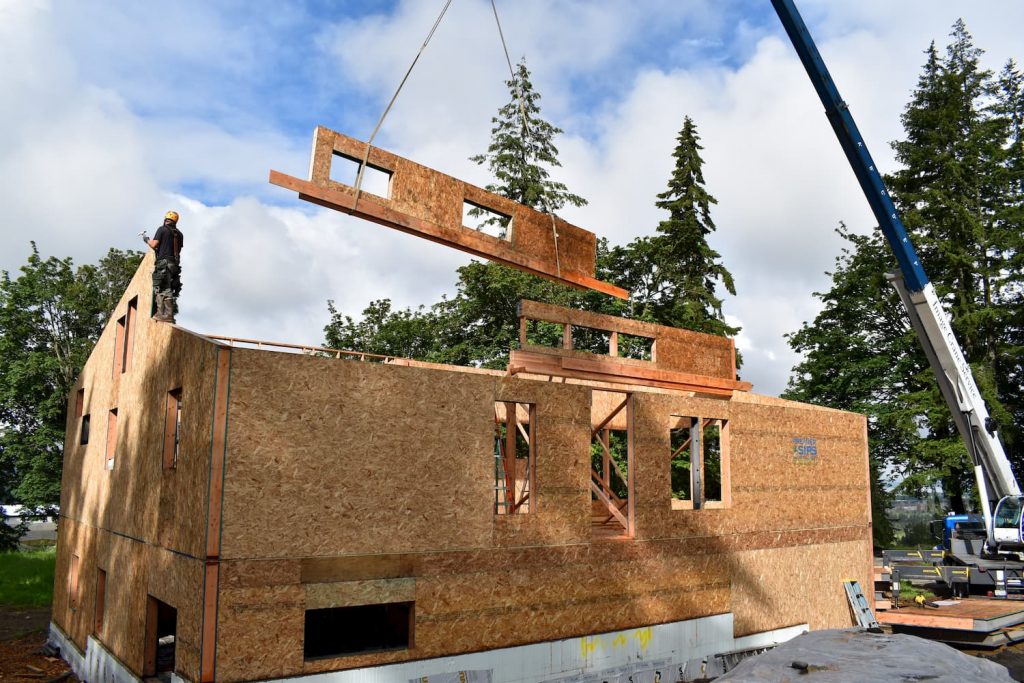
Because TC Legend Builds affordable Net Zero energy houses, we use our crew to assemble the wall panels, man-handling them into place, but a crane can be used for walls. We do use the crane to set to thicker, heavier roof panels.
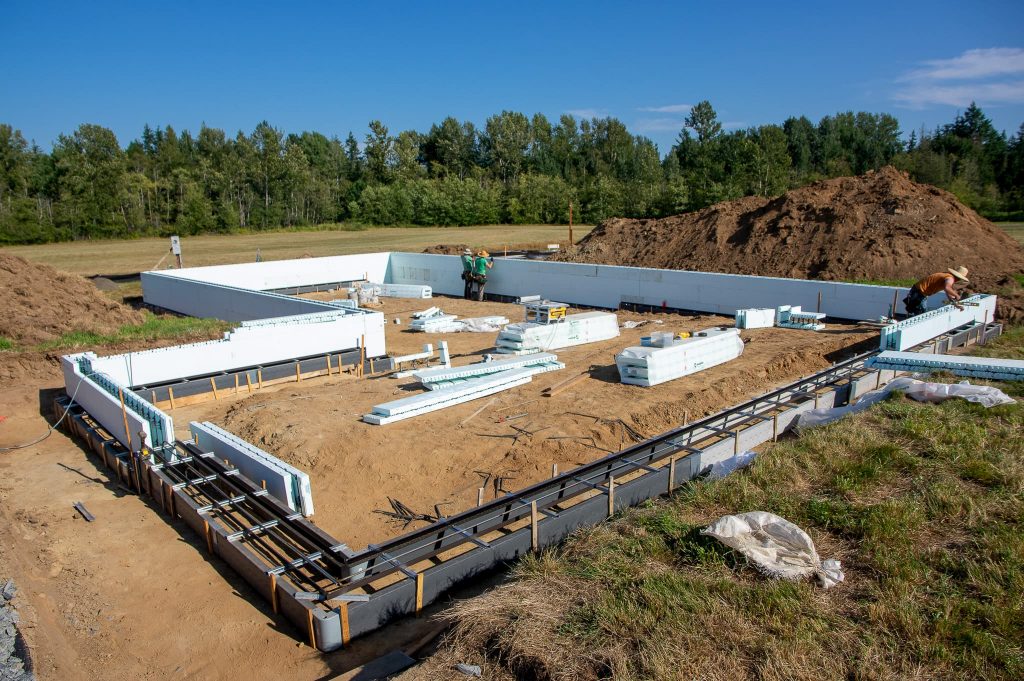
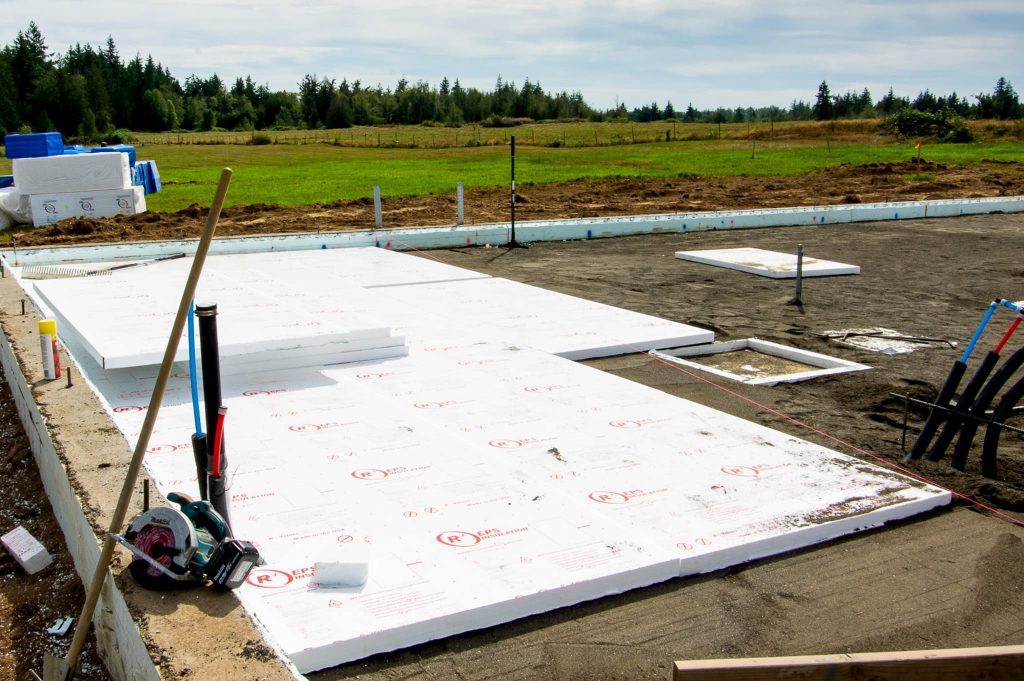
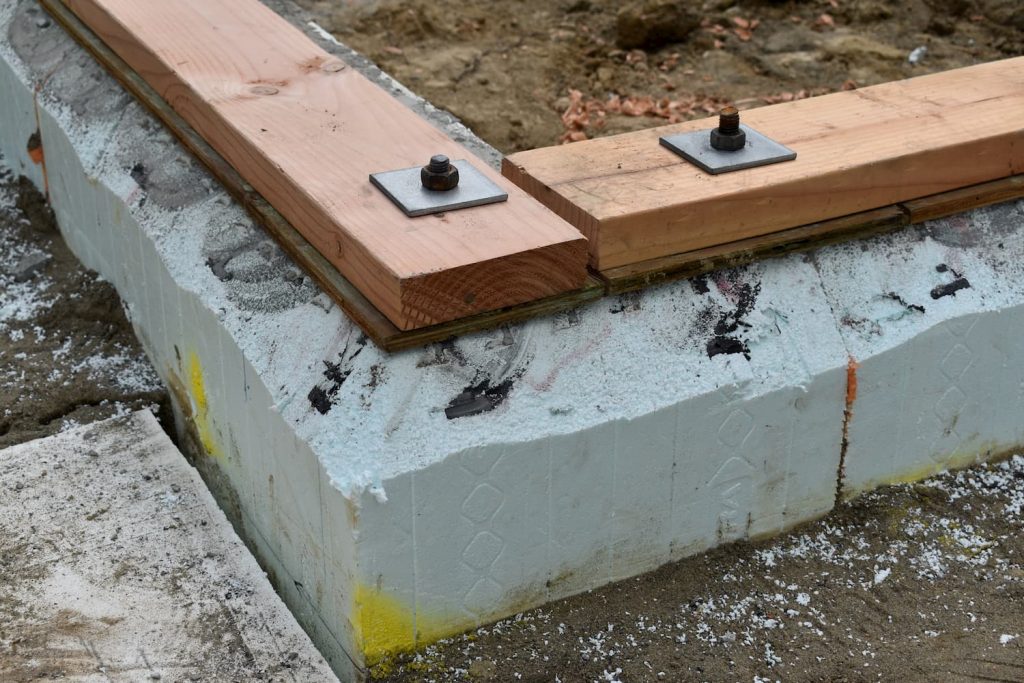
Our goal with SIPs panels is to create a continuous foam box, surrounding the inside of the home. When you remember that there’s 4” foam under the concrete slab, the 6” foam walls and 10” foam roof trap all the heat inside the house.
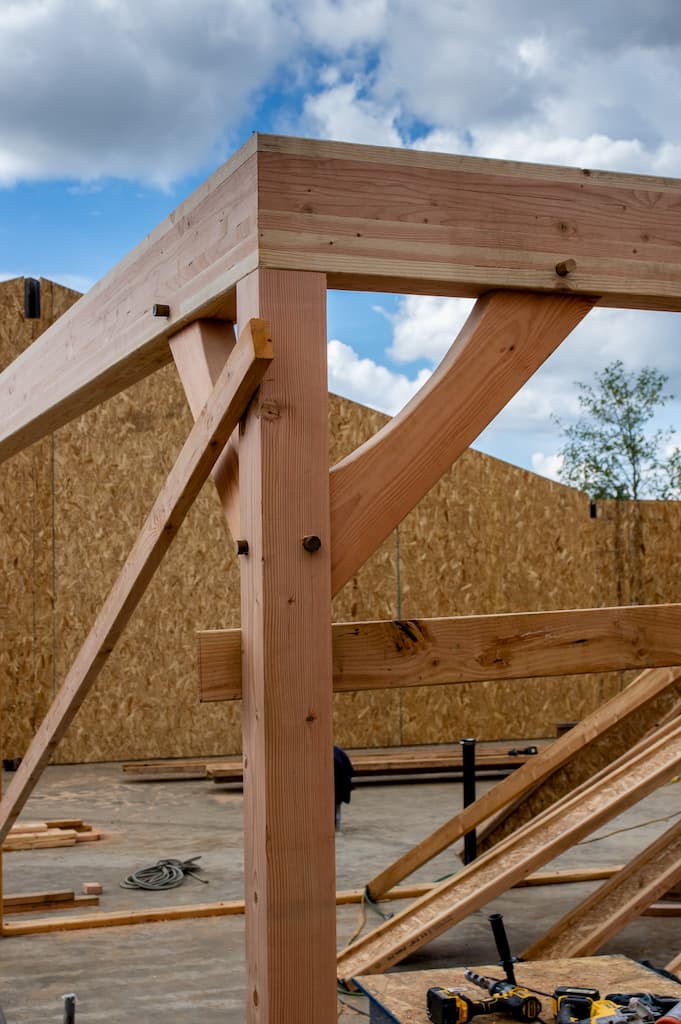
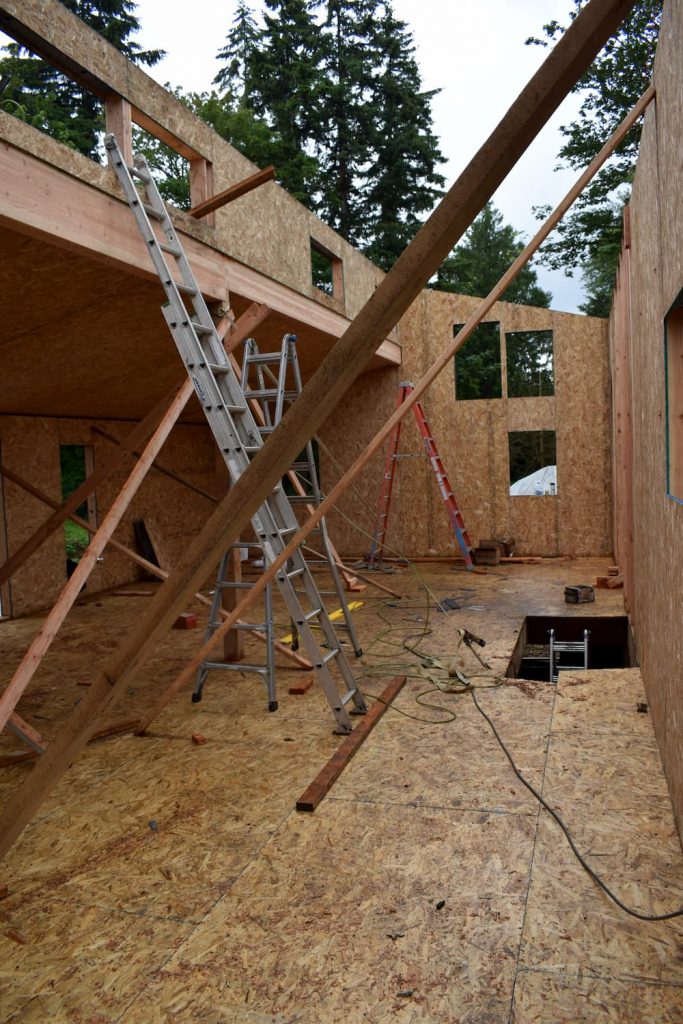
The ‘S” in ‘SIP’ stands for structural and the panel-system carries the load of the house, floors and roof, and does not need the sticks of vertical lumber you see in the walls of a conventionally framed house.
How are SIP panels joined? We’ll use the walls as an example:
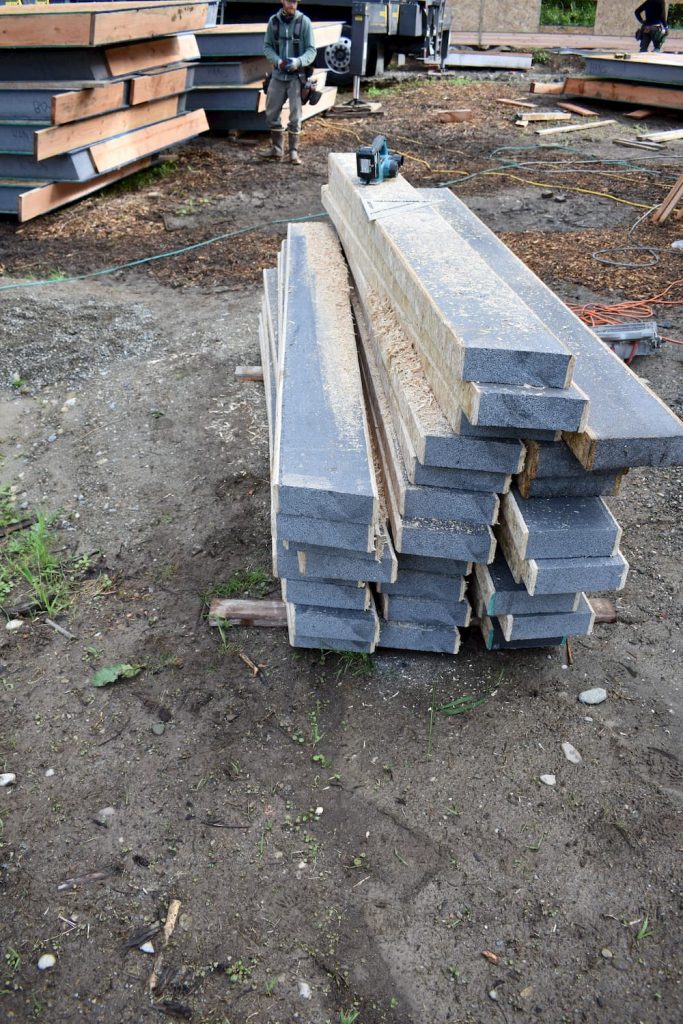
The SIPs panels typically have the interior foam held-back to form a 1.5” gap at the panel edges. Two panels are joined by setting a ‘spline’ into the recessed gap on one panel, then sliding the second panel over the spline, nailing the connecting spline in place through all four edges. Splines can be made of 2×6 lumber (L-spline), foam mini-SIPs (called S-splines), or an insulated TJI spline (called an I-spline).
Because a 2×6 lumber splines touches both the warm inside of the house wall, and the cold exterior of the house wall, they are said to cold-bridge. A cold-bridge creates a poorly insulated pathway for the warm inside energy to travel to the cold exterior. There a many cold-bridges in conventional framing and that’s why we don’t do it. We aim to minimize L-splines as they have an insulating value of R7.8, compared to R29 for our Neopor graphite foam 6.5” Premiere SIPs wall panels.
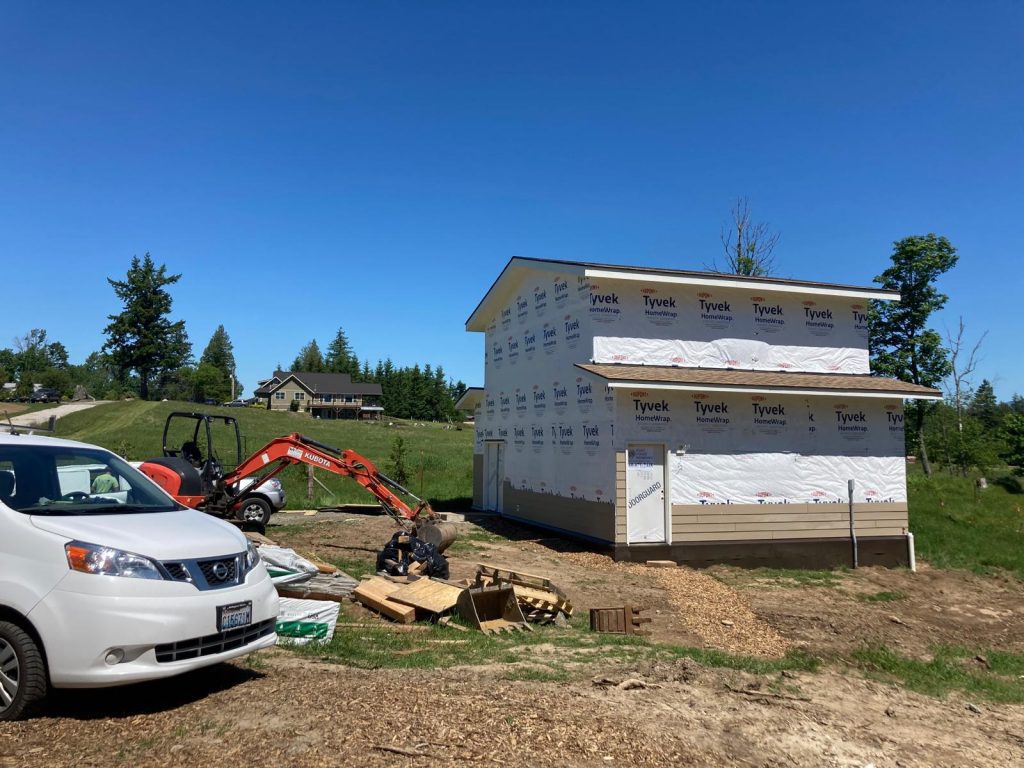
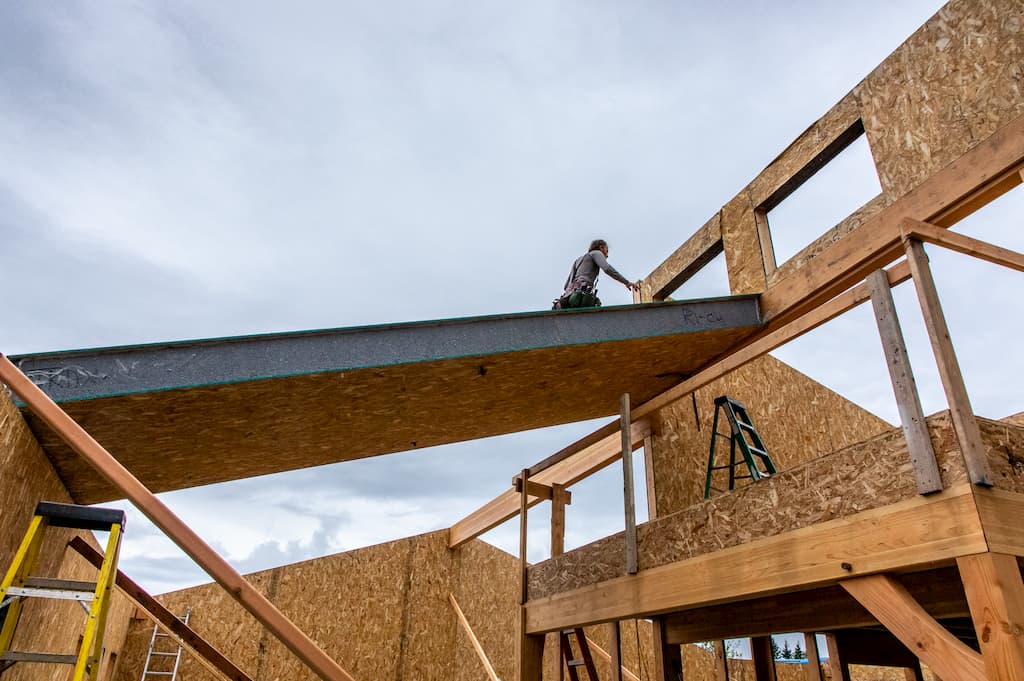
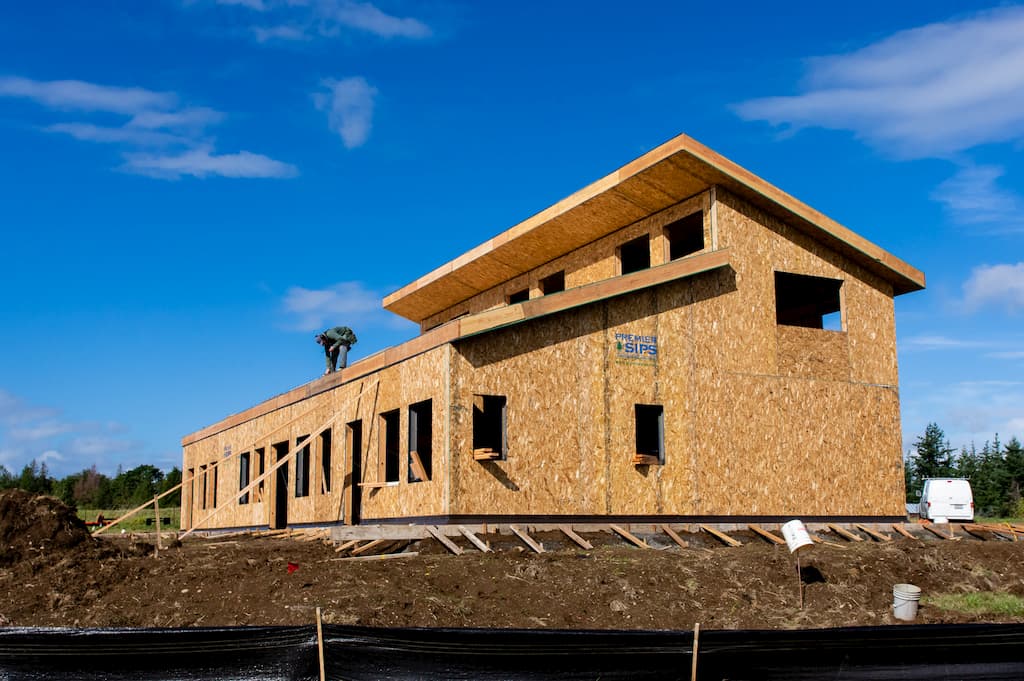
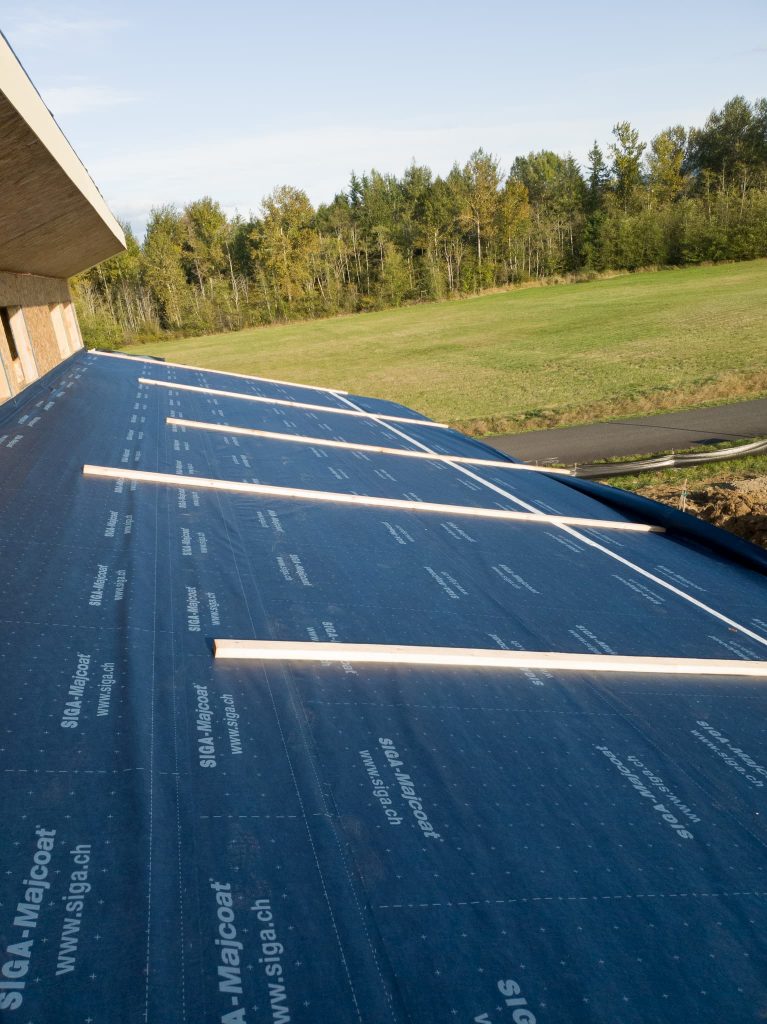
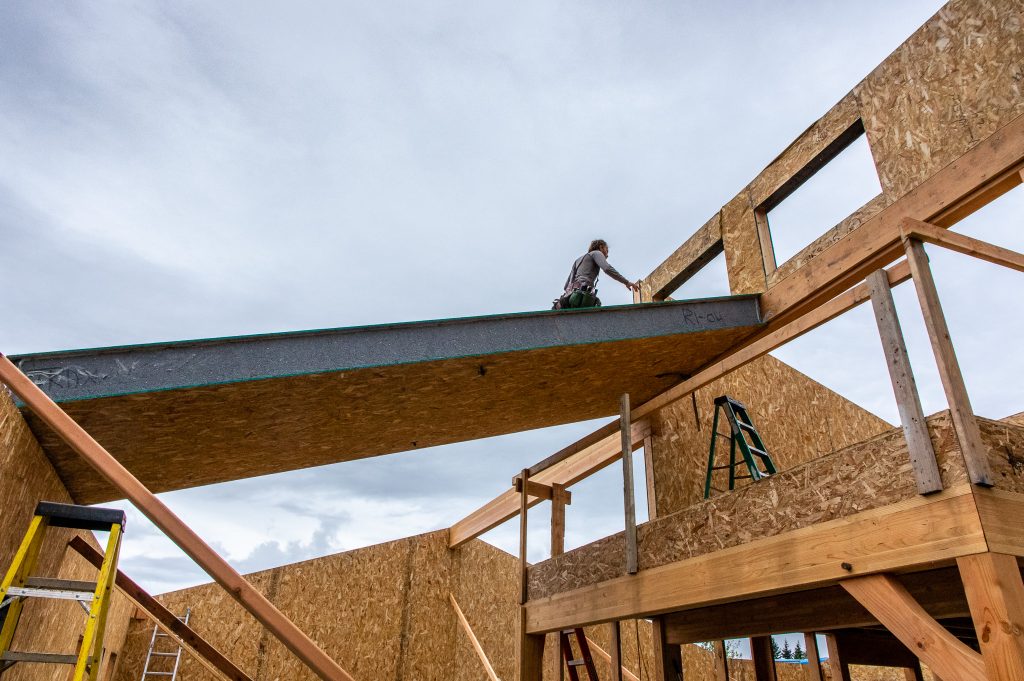
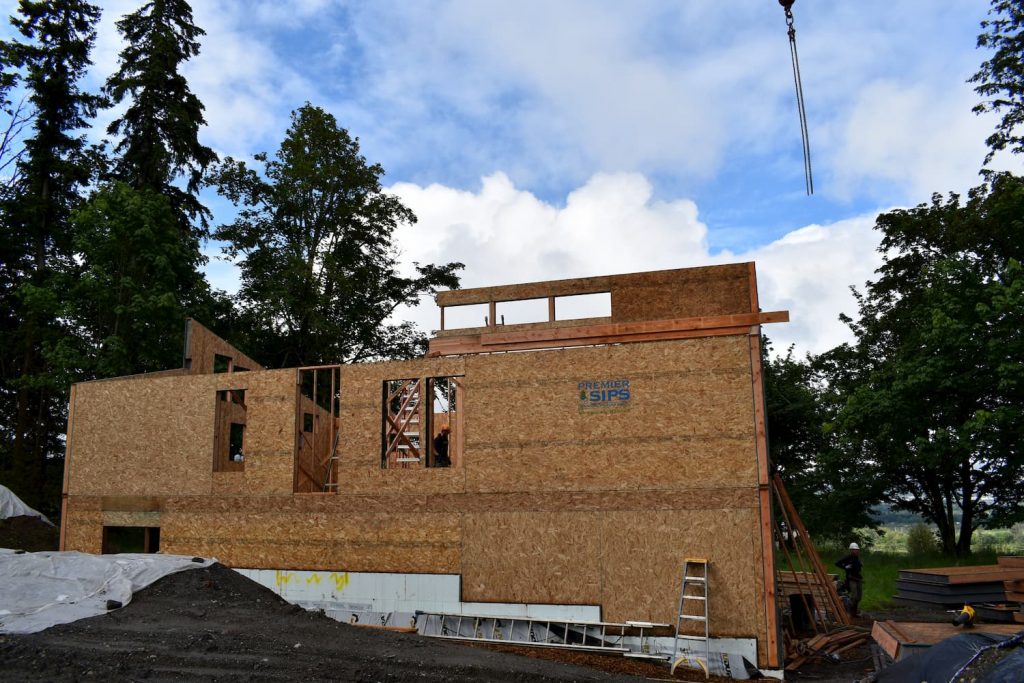
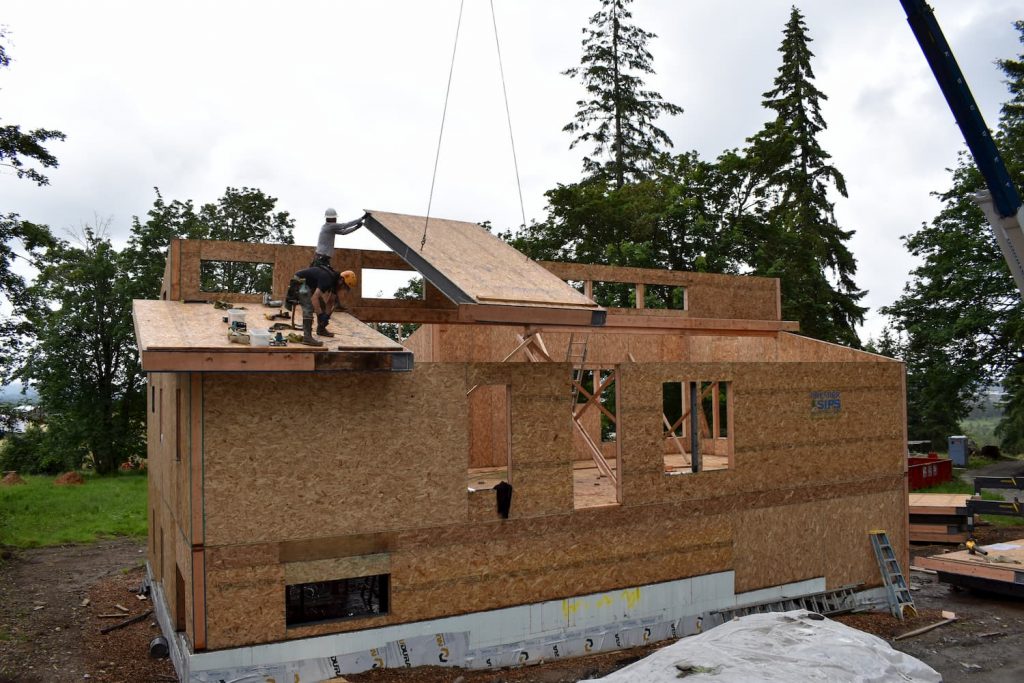
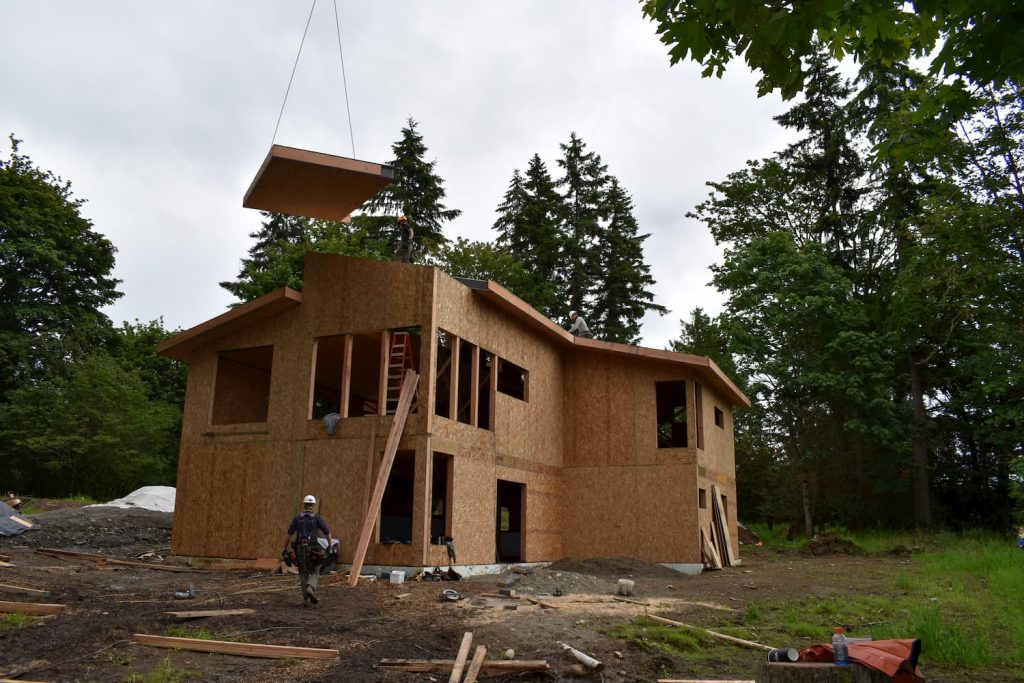
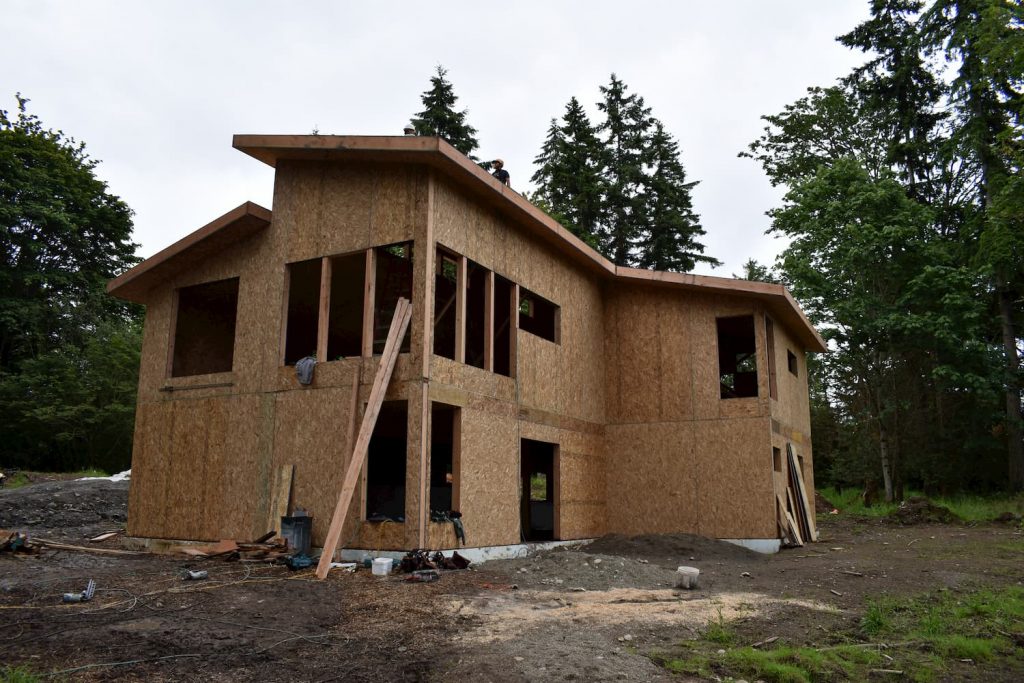
Last week the TC Legend Homes crew finished off the SIPs roof structure on the Lake Stevens house.
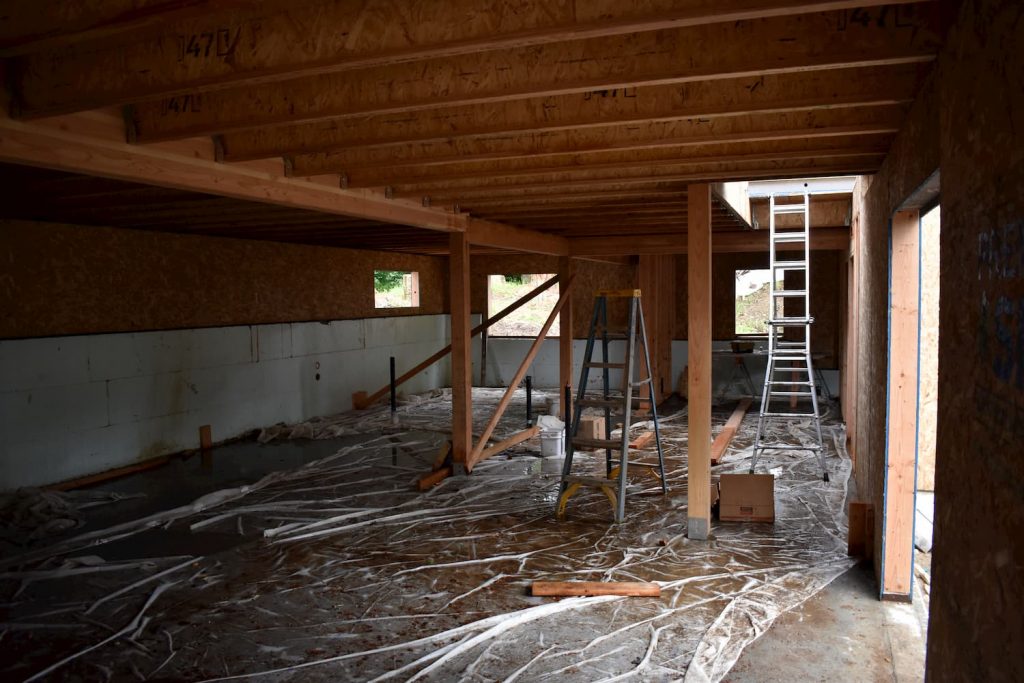
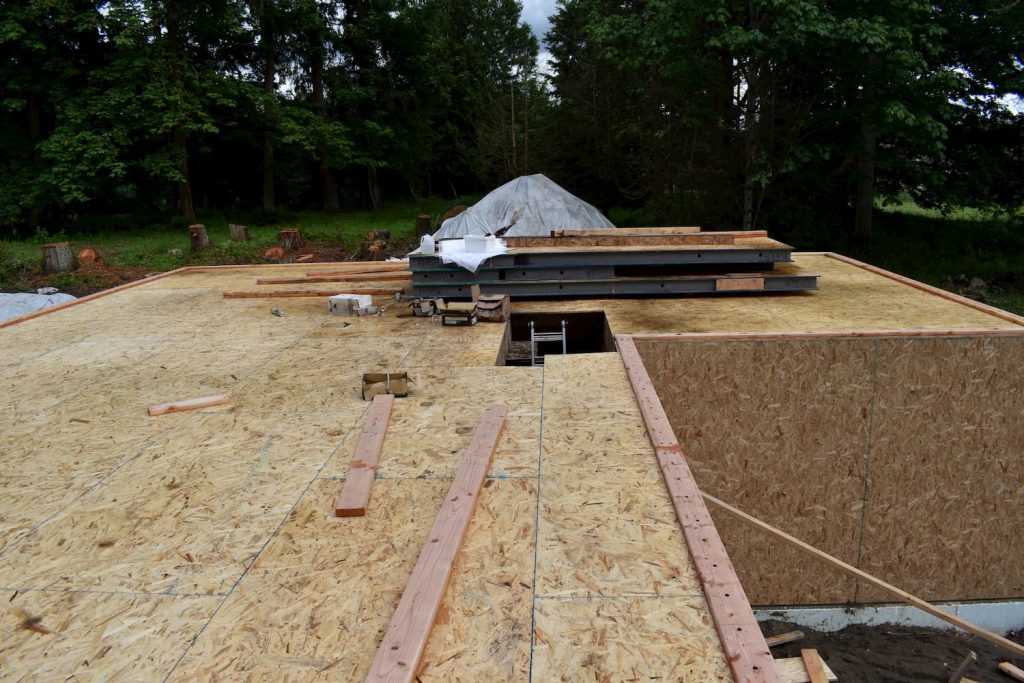
On average we take about (2) days to assemble the 1st floor SIP wall panels. We build the 2nd floor-level TJI and sheeting floor system over the succeeding (2) days. The upper level walls take a day or so, and then it’s roof-day!
On roof-day the crane arrives early, and the roof panels are rigged, swung up, and screwed in-place by Ted and Norm. The crew have pre-assembled the boundary supports, so we don’t use more crane time and belch more diesel than necessary. The boundary support is a continuous 2×10 that seats into the 1.5” perimeter recess & connects together the outside edge of the roof panels.
SIPs are very fast to assemble and incur almost no waste material onsite because everything arrives pre-cut. Most excess off-cut foam is recycled back into the process during factory fabrication and the Premiere software nests the required panel shapes for maximum efficiency, making Premiere more streamlined, more profitable and more environmentally responsible.
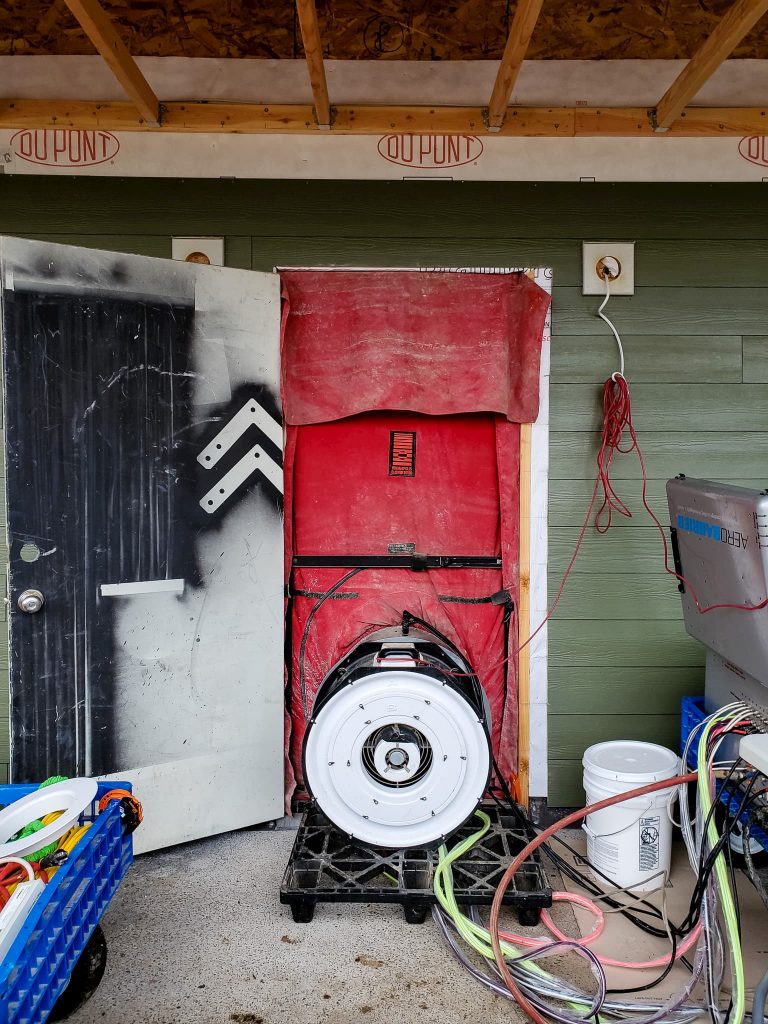
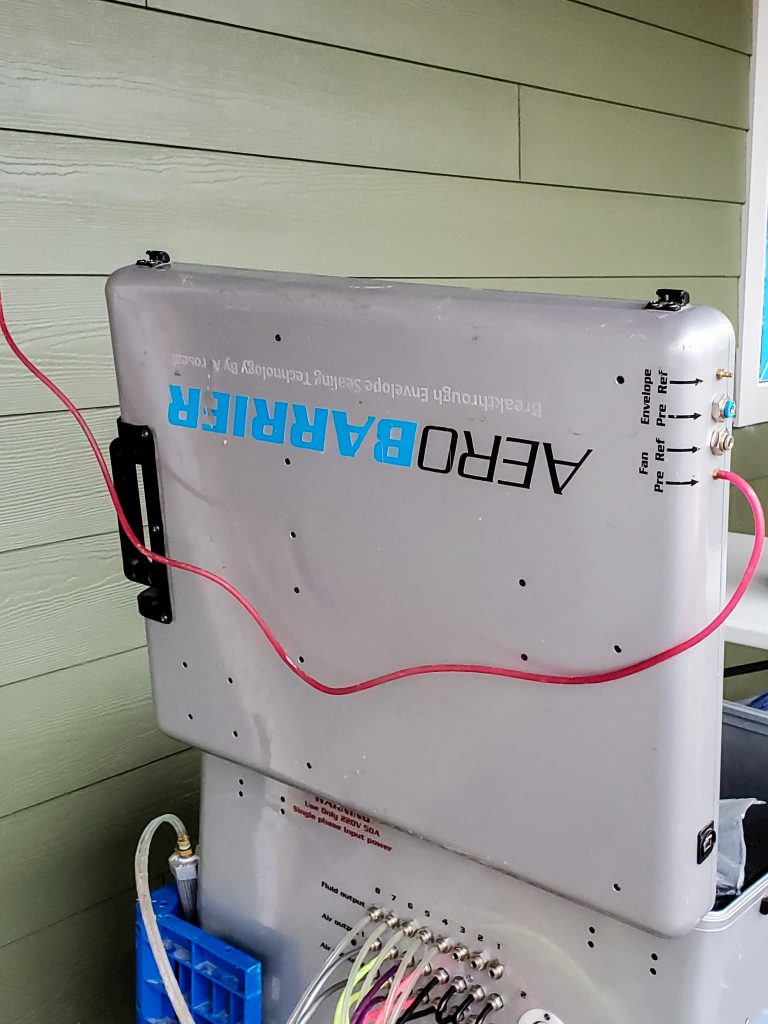
Air sealing is very, very important for energy efficiency.
Imagine a fast, cold wind blowing over the building and all the warm air streaming out through the construction cracks. The Lake Stevens house is modeled to need a maximum of 12,500Btu/ hour to heat in midwinter, if we air-sealed the envelope to 0.6 air-changes per hour. (Note: (1) air-change-per hour assumes the entire volume of the house has the air replaced once within (1) hour).
If we air-sealed the Lake Stevens house to 5.0 air changes per hour, code minimum, we’d need 19,000Btu/h of heating for midwinter! So you can see that air sealing to reduce the air-changes per hour can give over 35% reduction in heating load.
SIPs are a pre-sealed sandwich, and compared to typical construction there are far fewer construction-joints in a SIPs building due to the large SIPs panel size. The standard SIPs assembly process includes installing beads of specialist mastic to air-seal and adhere the panels to each-other. SIPs have a measurable dollar advantage with that high level of pre-sealing and easy panel-to-panel air sealing. Meaning you can buy and run a smaller heat pump. And we haven’t yet examined the standard R29 insulation in the equivalent 2×6 wall!










Recent Comments