Which way do you run the streets to maximize solar exposure for dense Net Zero development?
Common wisdom states that the optimal streets run east west, which makes sense if you’re the house on the north side of the street, because there’s nothing shading your house, garden or solar panels. However, living on the south side of the street, you suffer from north facing gardens and probably some shading unless the lots are 5000sf or greater.
Critically, 10 dwelling units (du) per acre is the density with enough inhabitants to support a bus service (*1), a key part of the sustainable urbanist vision for transit, pedestrian & bike use, rather than private cars. An acre is 43500sf.
My conclusion is that the common wisdom is wrong for dense, Net Zero development, that the streets should run north-south.
A Net-Zero house has most of the windows on the south side of the house because south facing windows can be effectively shaded from summertime overheating, and can harvest wintertime solar energy.
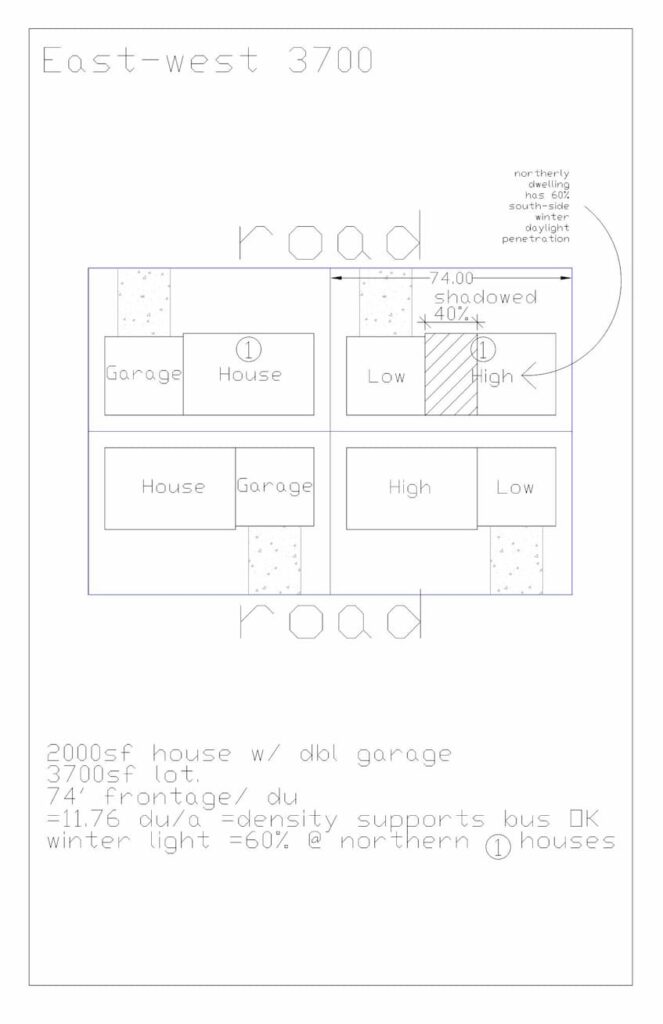
Because all the windows are on the south walls, we can’t have another 2-story house immediately to the south as shown in ‘East-West 3700’ below, or the valuable direct wintertime sunlight will be prevented from entering & you’ll have a house that is gloomy all winter.
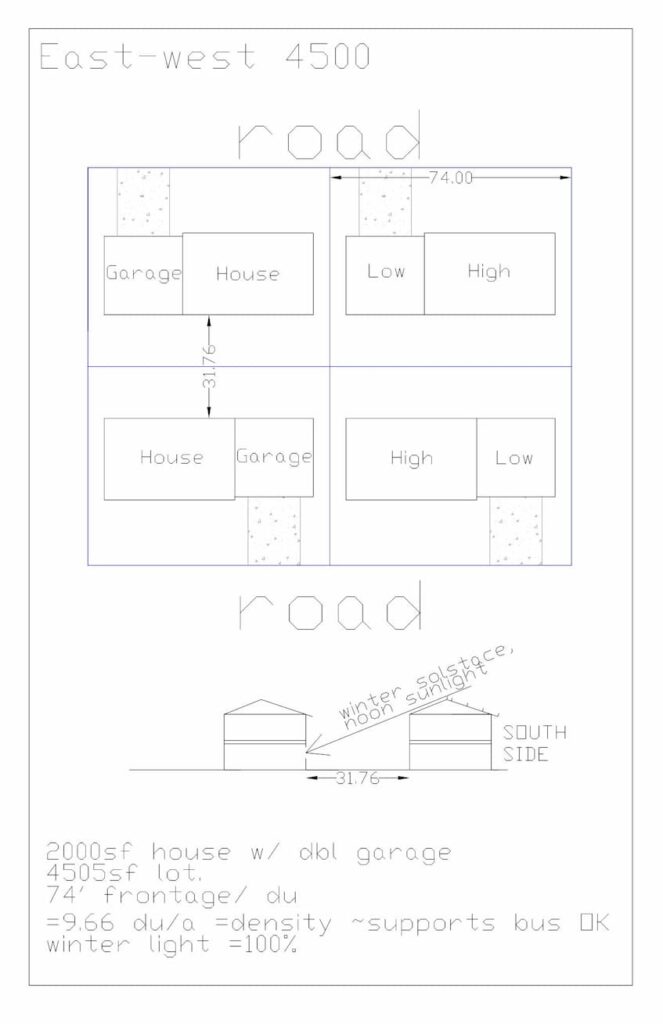
Sure, if the lots are big, we can keep the southern house away, as shown in ‘East-West 4500’ below, but then we end up with less than 10 du/ acre (du/a) and there’s no bus & everyone’s driving cars.
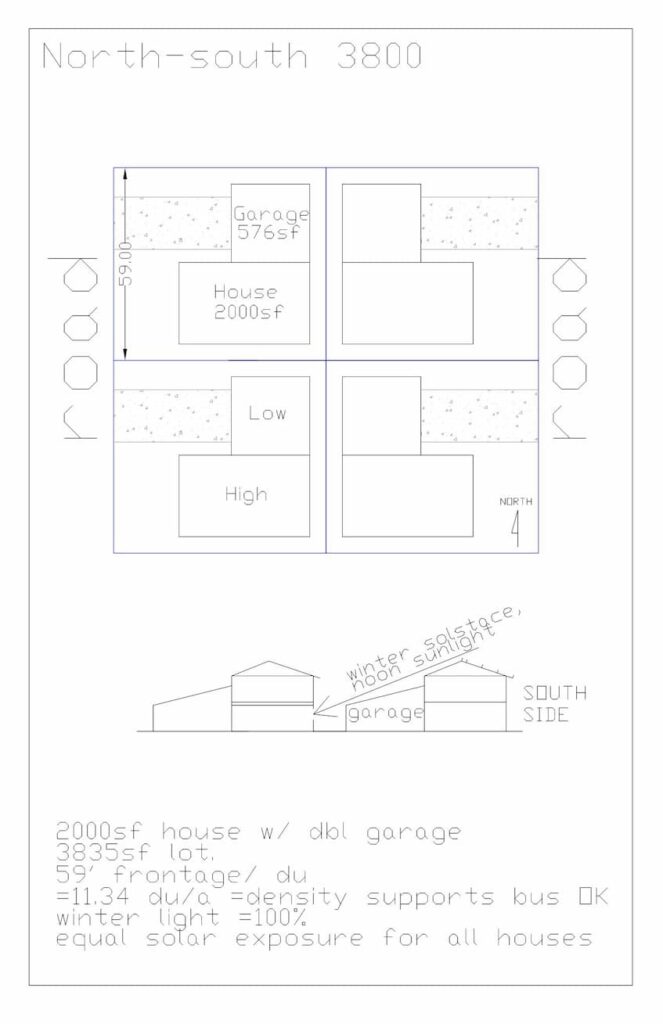
The ‘North-South 3800’ drawing below shows a 1-story neighbor garage to the south, avoiding shade. Bingo! That’s a 3800sf lot, and offers 11.34 du/a. Additionally the frontage length is reduced which lowers roadway & utility development costs.
(*1) Transit modes related to residential density (Boris Pushkarev & Jeffry M Zupan).
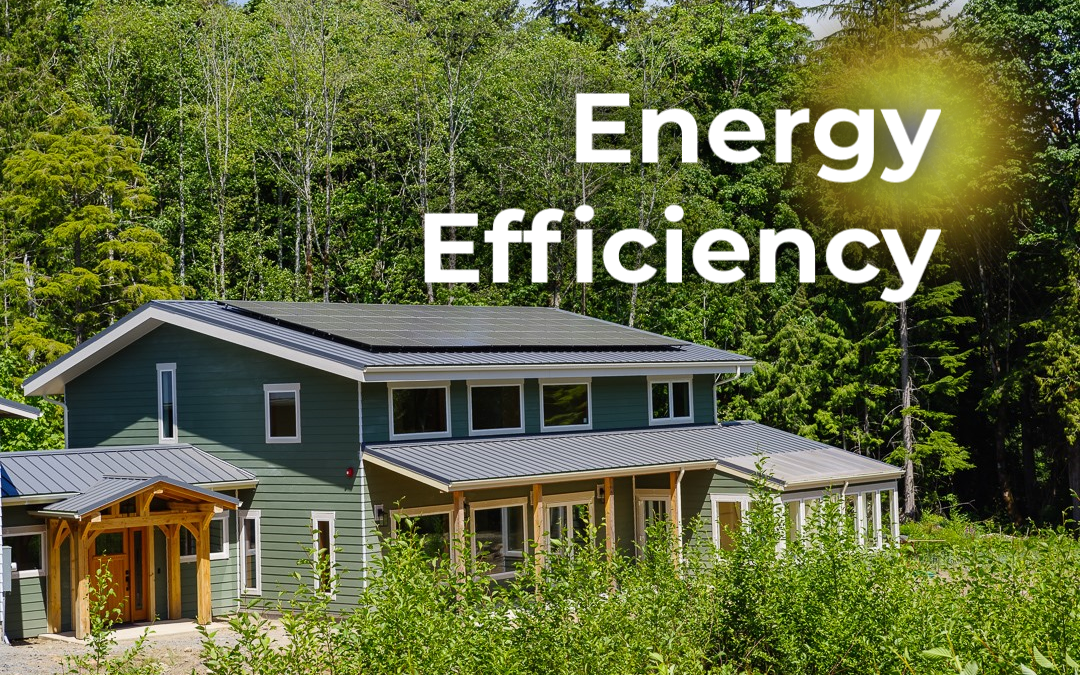
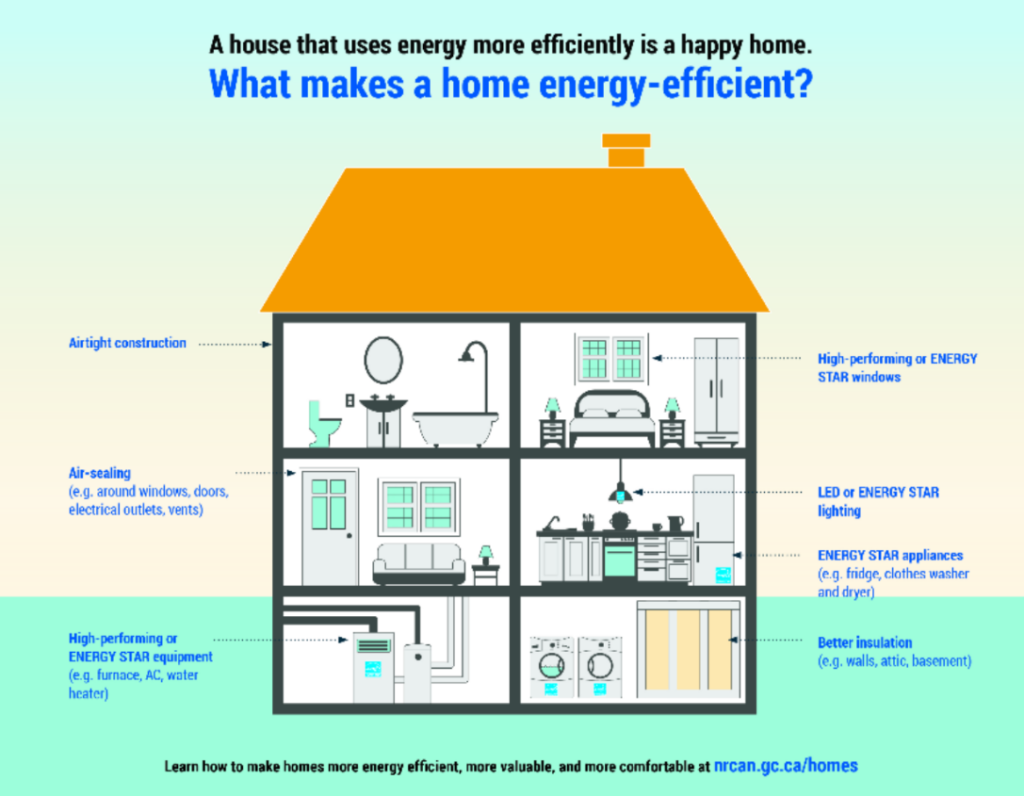
There are many ways to achieve energy efficiency in a home, from using energy efficient products like Energy Star appliances or energy efficient windows, to designing your home with passive heating and cooling in mind.
While energy efficiency can mean lower utility bills, the results also have a great impact on the environment. Unless you are using solely renewable energy to run your house, the energy you use will be produced mostly from coal and natural gas in the majority of the USA.
In Washington state, while energy is mainly generated from hydro-electric, ~15% is still produced using fossil fuels.3 Energy derived from these fossil fuels produce greenhouse gases as well other pollutants such as nitrogen oxides, sulfur dioxide, and particulate matter.2 According to the EPA, 31% of the total CO2 emitted by the USA in 2019 came from fossil fuel combustion for energy production and accounted for 24% of the total greenhouse gas emission in the USA.1
Greenhouse gases are the main contributor to climate change, as they trap heat in our atmosphere and raise global temperatures. Climate change is not to be disregarded as it is already having major implications across the globe and will continue to have even more extreme impacts to come if we don’t stop it. If you want to learn more about climate change and its effects, visit https://www.un.org/en/climatechange/science/key-findings#physical-science.
While we know that fossil fuel use is an obvious bad choice, Hydroelectric, while considered a renewable and generally “eco-friendly” energy option, is not as environmentally friendly as we like to think as well.
While there are plenty of debates within the environmental community on what the “best” renewable energy production method is, the facts are that none of them are perfect and all of them produce some kind of pollution or harmful effects. Looking at hydroelectric as an example, the renewable energy requires a massive amount of concrete to make the dams, while concrete is known to be a huge greenhouse gas emitter. Dams also have disastrous effects on the health of the rivers and the surrounding ecosystem, including our salmon populations which are a keystone species. Not to mention the people that get displaced due to the reservoir that’s created. Then when a dam breaks, it causes even more damage downstream as it tears apart the ecosystem and towns that has grown in the absence of the natural river.
All of this is to say, that in order to lessen our impacts on the environment, we have to lessen our energy consumption and choose which energy source we use wisely. In the instance of TC Legend Home’s net zero homes that utilize solar energy, with less overall energy usage, less solar panels will be needed on your array, saving precious materials needed to produce the panels themselves.
This will lessen your house’s overall energy carbon footprint. On the other hand, if you are producing more energy than your house consumes, then the excess electricity produced will transfer onto the grid for others to use, thereby reducing the amount of fossil fuels used by someone else. Of course, the local energy company may also reimburse you for this addition as well.
At TC Legend Homes, in order to build highly energy efficient homes, we take a few different approaches.
Firstly, in the design of the home drafted up by our design company, Powerhouse Designs, we place the mechanical room in a central location and plan ahead to add extra space for the HRV air ducting that traditional HVAC systems don’t need.
TC Legend’s houses are designed to allow for passive solar heating in the winter and solar shade in the summer, cutting down on the need for the heating/cooling system. Instead of a traditional leaky envelope, TC utilizes high efficiency windows, SIPs and ICFs paired with aerobarrier aerosol sealant to create a super tight envelope, keeping the heated and cooled air in.
For heating, cooling and domestic hot water, TC opts for high efficiency heatpumps such as those from the Chiltrix line. For ventilation the Fantech Hero HRV is the choice as it’s also incredibly efficient. In the selection phase, TC requires appliances be Energy Star rated and lighting be LED. All of this in combination allows us to build exceptionally energy efficient, Energy Star certified homes, cutting back on the home’s energy carbon footprint.
Want to learn more about our energy efficient designs and net-zero energy formula? Check out our Plans For Sale website to see available plans for purchase!
SOURCES:
1“Overview of Greenhouse Gases.” United States Environmental Protection Agency (EPA), EPA.gov, https://www.epa.gov/ghgemissions/overview-greenhouse-gases. 2/14/22.
2“What is Energy Efficiency?.” Energy Star, https://www.energystar.gov/about/about_energy_efficiency. 2/14/22
3“Profile Analysis.” U.S. Energy Information Administration (EIA), EIA.com, https://www.eia.gov/state/analysis.php?sid=WA.
Water is often thought of as an infinite resource because of the vastness of the oceans, lakes and rivers and the great quantities of rainfall across the land.
In actuality, of all the water on this planet, less than 0.3% of it is accessible for human consumption.2 Of that 0.3% of accessible water, many regions are battling pollution in their local tap water, as well as water shortages.
In fact, in a 2014 study by the U.S. Government Accountability Office, “40 of 50 state water managers expected shortages in some portion of their states under average conditions in the next 10 years”1.
This is a reality that we are seeing ring true 8 years later.
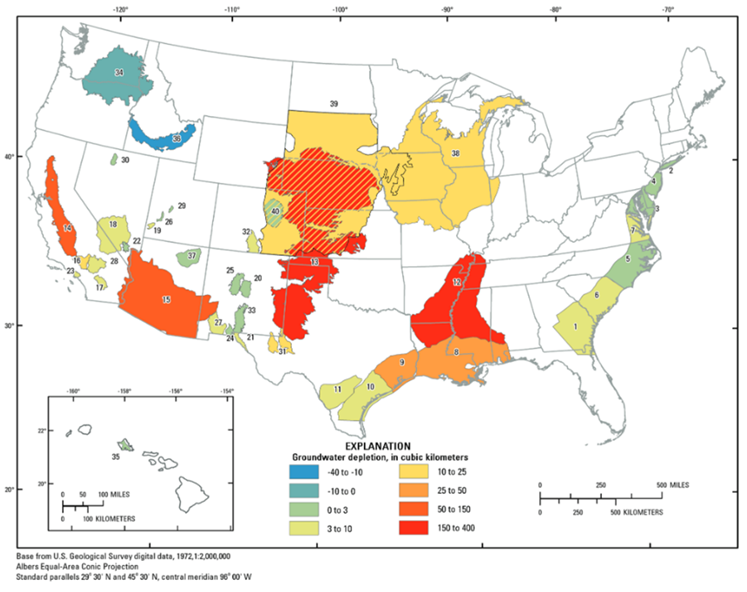
Groundwater in the USA is the main source of drinking water for almost 50% of the total population and “provides over 50 billion gallons per day for agricultural needs.”4 However, as shown in Figure 1 and described by USGS in “Groundwater Decline and Depletion,” many of the USA’s largest aquifers are depleting due to the outweighed removal of water from natural replenishing4.
1 "Map of the United States (excluding Alaska) showing cumulative groundwater depletion, 1900 through 2008, in 40 assessed aquifer systems or subareas....Colors are hatched in the Dakota aquifer (area 39) where the aquifer overlaps with other aquifers having different values of depletion.”4
Although, this is not just an issue with large aquifers and the ramifications on one side of the country will inevitably affect the country as a whole, as we share resources throughout from bottled water to crops and livestock watered with local aquifers. Not to mention, as we deplete our own resources, we are simultaneously depleting the resources for our surrounding ecosystems, which require clean water just as we do.
As with all environmental issues, there is a trickle-down effect that must be taken into consideration.
But as a society or individual, what can we do to help?
Firstly, if your local tap water is safe to drink, then choose that option before purchasing bottled water and taking away the local tap water from others. You can also install a whole-house water filter if worried about certain pollutants in the local tap water.
Secondly, opt to use a dishwasher and heated dry option instead of handwashing your dishes where applicable.3 Unless you are correctly hand washing dishes in a two-basin setup as described in Porras, Gabriela Y, et al article, it is more efficient in both greenhouse gas emissions and water usage, to use a dishwasher (with the only pre-treatment being scraping off food particles).3
Thirdly, when purchasing appliances and plumbing fixtures, only purchase those that are WaterSense® labelled. This ensures they are water efficient. Also opt for dual flush toilets if composting toilets are not an option.
Fourth, do not plant grass for landscaping and instead plant native flora that doesn’t require extra watering. If some form of grass is desired, try planting an alternative like wildflowers, clover, moss or sedum. These can give a similar visual and functional effect as grass but promote a more biodiverse ecosystem while also requiring little to no manual watering.
Lastly, if you do choose a landscape that requires manual watering, install a rain catchment system to supply the water instead of using potable water out of the hose bib. There is no reason to use clean drinking water on plants and lawns, when they will fair just fine with rainwater.
There are many other ways to increase water efficiency and reduce water consumption, however these listed are some of the easiest and best ways that you can make a difference just in your home.
At TC Legend Homes we understand the importance of water conservation through efficiency, which is why we have made it our standard to require WaterSense® labelled fixtures. We also encourage clients to landscape with only native flora and add rain catchment systems to their yard.
In actively reducing our water consumption and using water efficient solutions, we can help reduce the rate at which we are depleting the world’s accessible water, leaving more time to find a solution to the water crisis and help reverse the impact we’ve already had.
This in turn, will also reduce the impact that our water depletion is having on the ecosystems around us, as well as help reduce the inequity that comes with competition for draining resources.
SOURCES:
“Freshwater: Supply Concerns Continue, and Uncertainties Complicate Planning.” GAO, U.S. Government Accountability Office, https://www.gao.gov/products/gao-14-430. 2/21/22.
2 Kimberly Mullen. “Information on Earth’s Water.” NGWA, National Ground Water Association, https://www.ngwa.org/what-is-groundwater/About-groundwater/information-on-earths-water. 2/21/22.
3Porras, Gabriela Y, et al. “A Guide to Household Manual and Machine Dishwashing through a Life Cycle Perspective.” Environmental Research Communications, vol. 2, no. 2, 12 Feb. 2020.
4Water Science School. “Groundwater Decline and Depletion.” USGS, United States Geologic Survey, https://www.usgs.gov/special-topics/water-science-school/science/groundwater-decline-and-depletion. 2/21/22.
At TC Legend Homes, we have dedicated ourselves to pursing the vision of zero-energy homes for all. We strive to be pioneers in energy efficiency, seeking to create a healthy and clean carbon neutral future that allows the next generation to thrive. Our history of excellence in reducing or eliminating the operational emissions of our homes speaks for itself. Through extensive energy efficiency measures, quality craftsmanship, and a combination of passive solar design and rooftop photovoltaic, we have created a building model that allows us to make our affordable, zero-energy home vision a reality. Over the past 7 years, we have built more than 20 homes and ADU’s that are zero energy ready at a minimum with more than 12 of the 20 being net positive homes. Now it is time for TC Legend to expand our focus to address the other element of emissions in buildings, the embodied carbon.
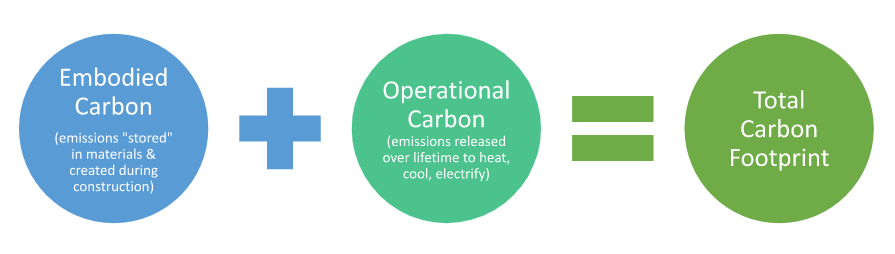
The carbon footprint of any building is comprised of two elements: the commonly focused upon operational carbon and the less commonly addressed embodied carbon. Since our building model has successfully addressed the operational aspect of this footprint, we are now expanding our focus to addressing the embodied component while still maintaining excellence within the operational emissions.
What is Embodied Carbon and Why does it Matter?
You might ask, “What exactly is embodied carbon and why do we care about it?” Simply put, embodied carbon is the upfront “carbon footprint” of a product. For buildings, you can think of it as the emissions that are produced to create the parts of the building, encompassing all emissions that occur before it is functioning as a home. This includes all emissions from material production and those produced during construction. In contrast the operational carbon of a home is the emissions released to heat, cool, and electrify the home over its lifetime.
Figure 1: Carbon Foot Print Formula
Since embodied carbon emissions are “stored” in the home before it is operating, the embodied carbon sets the baseline for the total footprint of the home. Even if a house is exceptionally efficient, producing little to no operational emissions, the total carbon footprint of the house is not zero because of the upfront emissions. This is why embodied carbon matters. If we solely focus on operational carbon and the future emissions of the home, we do not consider the significant portion of emissions being released NOW. And, according to the 2022 Intergovernmental Panel on Climate Change (IPCC) report, drastically reducing emissions now is what will have the greatest impact on avoiding the most severe elements of climate disaster. For years, scientists have warned of the catastrophic results to the climate and environment if the world reaches an average temperature of 1.5-2° C above prehistoric levels. The 2022 IPCC report notes that we are on a trajectory to reach the 1.5° C in the next two decades, highlighting the only way to stop this impending disaster is to focus on emission on the today-10 year timeline. Since the majority of building emissions occurring in the first 10-15 years of a highly efficient or zero-energy home are embodied emissions, these need to be our focus moving forward. While we do not want to give up operational efficiency, we need to focus on reducing the embodied carbon emissions that are produced now, and work to reduce the overall emissions of our buildings.
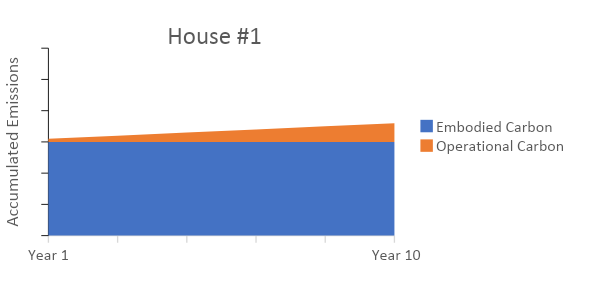
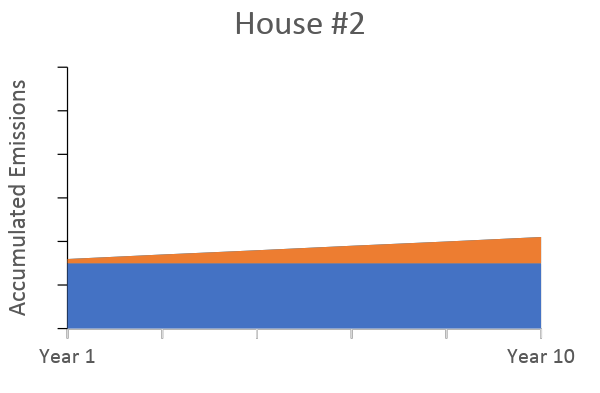
The below graphs illustrate how a reduction in the embodied carbon has a significant impact on the total emissions of a home on the ten year time horizon, given that the majority of emissions on this time scale are from embodied carbon. House #1 and House #2 demonstrate two houses with the same design, producing similar operational emissions. However, if we are careful in selecting materials with lower embodied carbon, we can see a significant difference in the total emissions of a house, as demonstrated by the house #2 graph. These two graphs illustrate a high efficiency home designed without a focus on embodied carbon (house #1) vs one where there is attention given to reducing embodied carbon (house #2).
Figure 2: Total Emissions of a Home on the Ten Year Time Horizon
Our Objective
As a company that strives to create a healthy future for all, it is our responsibility to do our part in the next 10 years. By expanding our focus to better address our homes “now” emissions through modeling and decreasing our embodied carbon, we are working to be part of the necessary change. Tackling the biggest issues and working to refine our model to achieve excellence in both areas of home emissions is our newest goal, and one we hope that through education of the public and adjustment without our own building model, we can help lead the building industry in the right direction.
We will share additional posts on the topic of embodied carbon with more details on what embodied carbon is, how its calculated, and how we are making changes in the coming weeks so stay tuned!
In our last blog about indoor air quality (IAQ), we discussed what influences IAQ, what effects it has on humans and nature, and how to create healthier IAQ in your home.
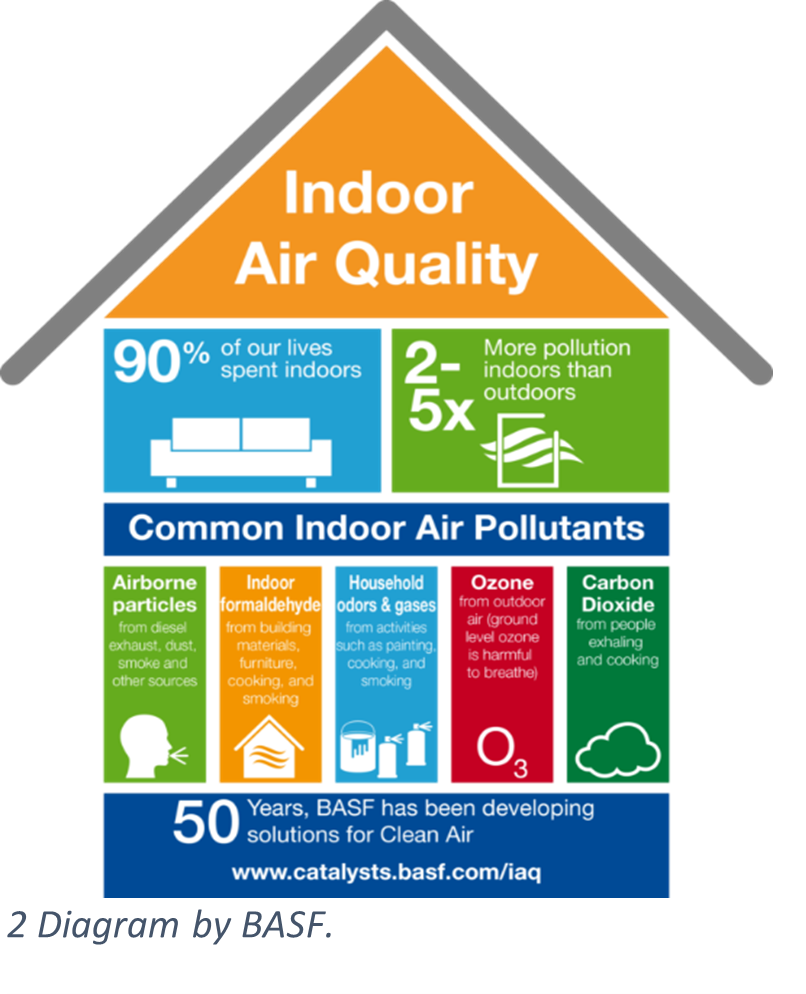
As a recap, IAQ is measured by the quantity and type of pollutants in the air within a building. The pollutants that decrease the IAQ (make the quality worse) can be anything from biological pollutants such as mold and mildew, bacteria, dust or pollen, to carbon monoxide or volatile organic compounds (VOC’s)4. These pollutants can cause a wide variety of health problems for humans and animals, from mild skin irritations all the way to damaging internal organs and causing cancer.2,5
While ventilation is just one of the many factors that affect IAQ mentioned in our previous blog, it is a multifaceted topic and requires a deeper dive than we were able to give.
We’ve already established that healthy IAQ is important, but how does ventilation impact it and what are the current shortcomings of code-standard ventilation systems?
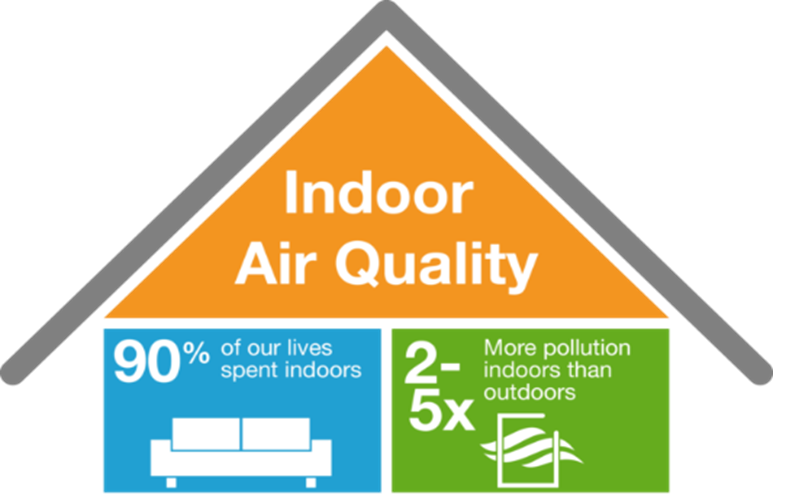
Firstly, IAQ can be 2-5 times more polluted than outdoor air quality6; therefore, it is vital to expel a greater quantity of indoor air and intake more outdoor air to increase a building’s overall IAQ.
However, not all ventilation systems are made equally. Often, with forced air-heating and traditional air-conditioning systems, the main method of ventilation is infiltration or purely natural ventilation (opening windows)3.
This is problematic, because there will not be a great enough flow of air to expel the polluted indoor air and the outdoor air comes into the building’s envelope untreated. While outdoor air is generally less polluted than indoor air, it would be counterproductive to bring in smoky, smoggy or pollen filled air, for example, and should still be filtered before entering the building.
When mechanical ventilation is installed in a simply code-standard building, the typical system must be manually turned on and off and doesn’t have the capacity for higher airflows or continual airflows. For this reason, conscious builders like TC Legend Homes go above and beyond the less-than-optimal code-standard systems and always uses a Heat Recovery Ventilator (HRV).
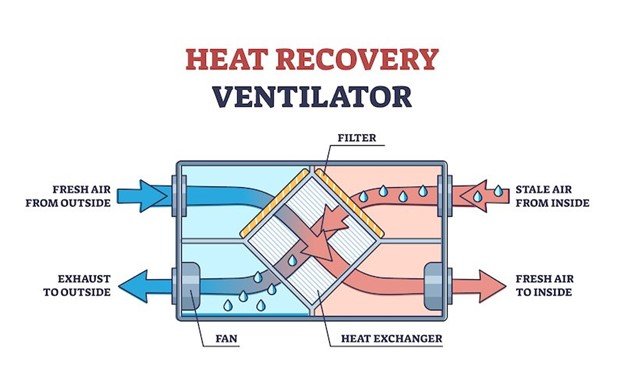
HRV units allow for continual filtered airflow. They are also capable of utilizing smart technology with sensors to detect CO2 and humidity within the house, allowing the system to automatically adjust air flow.
The humidity tracking and management is a huge advantage because it creates a more comfortable environment to people, pets and indoor plants alike and helps keep mold and mildew growth in check. On top of increasing airflow and managing humidity, the HRV also contains HEPA air filters to ensure the incoming air is stripped of as many pollutants as possible.
Of course, the extra benefit to these systems beyond increased IAQ is that they “recover up to 90% of the heat and contribute to an energy savings of up to 50%.”1
This means HRV systems save money by lowering the overall energy bill, as well as decrease the building’s carbon footprint by using energy more consciously resulting in less consumption of energy, fossil fuels and other precious materials.
In all, choosing the best ventilation system can mean creating a healthier home, as well as reducing your wasted energy consumption and having a lesser impact on the environment.
Interested in learning more? Check out EPA's Indoor airPLUS program HERE.
1. Diagram depicting how a Heat Recovery Ventilator transfers heat and air. Source: AttainableHome (https://www.attainablehome.com/the-10-best-heat-recovery-ventilators/).
2“Biological Pollutants' Impact on Indoor Air Quality.” United States Environmental Protection Agency (EPA), EPA.gov, https://www.epa.gov/indoor-air-quality-iaq/biological-pollutants-impact-indoor-air-quality. 2/10/2022.
3“Improving Indoor Air Quality.” United States Environmental Protection Agency (EPA), EPA.gov, https://www.epa.gov/indoor-air-quality-iaq/improving-indoor-air-quality. 4/14/2022.
4“Indoor Pollutants and Sources.” United States Environmental Protection Agency (EPA), EPA.gov, https://www.epa.gov/indoor-air-quality-iaq/indoor-pollutants-and-sources. 2/10/2022.
5“Volatile Organic Compounds' Impact on Indoor Air Quality.” United States Environmental Protection Agency (EPA), EPA.gov, https://www.epa.gov/indoor-air-quality-iaq/volatile-organic-compounds-impact-indoor-air-quality. 2/10/2022.
6 Wallace, Lance A., et al. Total Exposure Assessment Methodology (TEAM) Study: Personal exposures, indoor-outdoor relationships, and breath levels of volatile organic compounds in New Jersey. Environ. Int. 1986, 12, 369-387. https://www.sciencedirect.com/science/article/pii/0160412086900516.
Just as you may think about the poor outdoor air quality on a smoky day or the smog that surrounds large cities, every building has its own body of air with varying degrees of quality and pollution that make up the indoor air quality (IAQ). IAQ is incredibly important for your own health and is, unfortunately, frequently under accounted for by mainstream building practices. It is, however, an attribute of eco-conscious building techniques for its impact on human and animal health, interlinked outcome of house longevity, and subsequent decrease in environmental footprint.
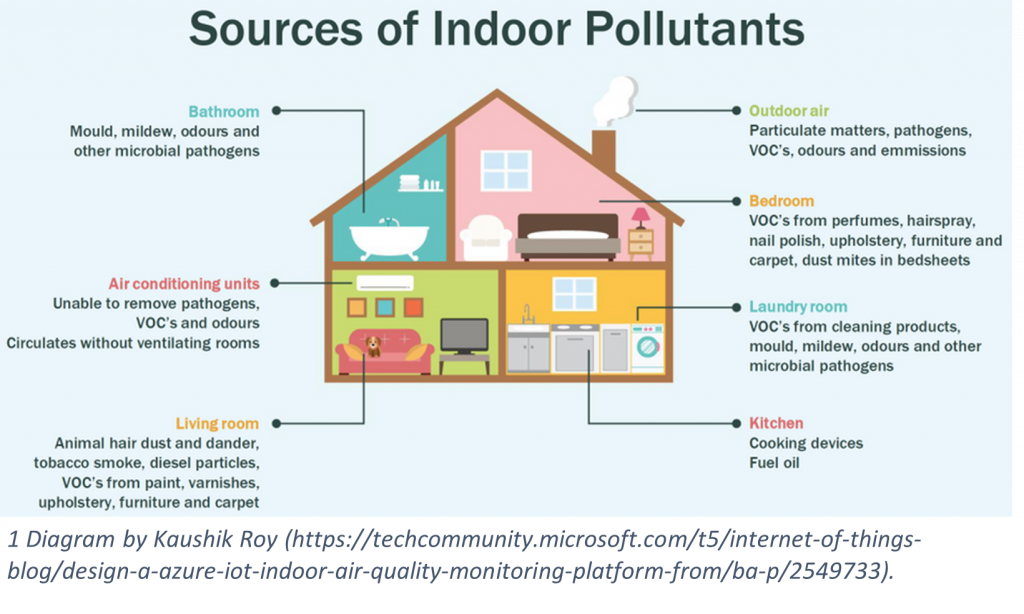
Taking a deeper dive into what IAQ actually is, IAQ can be anything from biological pollutants such as mold and mildew, bacteria, dust or pollen, to carbon monoxide or volatile organic compounds (VOC’s)5. Each pollutant effects humans, animals and the environment differently and the effects on humans can also vary depending on personal sensitivities. Exposure to just biological pollutant could lead to “skin irritation, sneezing, watery eyes, coughing, shortness of breath, dizziness, lethargy, fever, and digestive problems”1. Other pollutants, such as VOC’s, can cause more severe symptoms such as “eye, nose and throat irritation, headaches, loss of coordination and nausea, damage to liver, kidney and central nervous system,” with some VOC’s known or suspected to even cause cancer in humans or animals6. For information about all the individual indoor pollutants and their sources, visit https://www.epa.gov/indoor-air-quality-iaq/indoor-pollutants-and-sources.
Many of these pollutants are unavoidable as they can occur naturally, but we can take steps to reduce them to levels that will be less harmful or eliminate them almost entirely. If you hire TC Legend Homes, then before you even step into your house, we have already been working on increasing your home’s IAQ by using low toxicity products such as SIPs, low/zero VOC paints and finishes, low toxicity flooring and more. The SIPs we use eliminate the ozone depleting chemicals HCFCs and CFCs, as well as reduce moisture in between the walls that lead to mold growth.2 This, accompanied by the superior heating and ventilation installed, will set your home up for much healthier air. The next blog post in this series will discuss the details of ventilation and its impact.
Once moved into your new home, it is still important to take daily steps to maintain a healthier IAQ. Be sure to vacuum and dust regularly, clean fabric items frequently, reduce household clutter3, avoid harsh cleaning products, maintain a lower humidity level, repair leaks, run your exhaust fan during and after showering, maintain your ventilation system and change the filters frequently4.
Many eco-conscious building methods and results are interconnected, including IAQ, house longevity and environmental footprint. The nature of obtaining and maintaining good IAQ, means ensuring your home is being fixed of any issues which will result in the deterioration of your home and therefore cause indoor pollutants such as mold and mildew. Immediately fixing smaller issues that come up, like leaks or a filter in need of changing, will decrease the likelihood of the issues becoming so large that it is irreversible or will require more replacements to the system or surrounding area in the future. To this same note, upkeeping your home regularly and fixing issues as soon as they turn up, means using less resources in the long run, as replacement will be less frequent. As we know, using less resources helps to lower your overall carbon footprint. Moreover, maintaining good IAQ requires use of less toxic materials including those containing toxins and pollutants that are harmful to the environment such as greenhouse gases like VOCs or potent chemicals like pesticides. This in turn reduces the negative impact on the environment.
Taking all these steps to obtain and maintain your IAQ, will not only help you and your family’s health, but help reduce pollution outdoors and increase the longevity of your home.
Want to learn more about how smoke affects indoor air quality? Check out EPA Indoor Air Quality information and their recommendations for wildfire season HERE.
Written by: Nicole Miller
Sources:
1“Biological Pollutants' Impact on Indoor Air Quality.” United States Environmental Protection Agency (EPA), EPA.gov, https://www.epa.gov/indoor-air-quality-iaq/biological-pollutants-impact-indoor-air-quality. 2/10/2022.
2“Building With Sips Creates Healthier, More Comfortable Interiors.” Insulspan, https://www.insulspan.com/advantages/health-comfort/. 3/2/2022.
3“Easy ways you can improve indoor air quality.” Harvard Health Publishing, Harvard Medical School, https://www.health.harvard.edu/staying-healthy/easy-ways-you-can-improve-indoor-air-quality. 2/10/2022.
4“Improve Indoor Air Quality to Set Up a Healthier Home Environment.” AAFA, Asthma and Allergy Foundation of America, https://www.aafa.org/healthier-home-indoor-air-quality.aspx. 2/10/2022.
5“Indoor Pollutants and Sources.” United States Environmental Protection Agency (EPA), EPA.gov, https://www.epa.gov/indoor-air-quality-iaq/indoor-pollutants-and-sources. 2/10/2022.
6“Volatile Organic Compounds' Impact on Indoor Air Quality.” United States Environmental Protection Agency (EPA), EPA.gov, https://www.epa.gov/indoor-air-quality-iaq/volatile-organic-compounds-impact-indoor-air-quality. 2/10/2022.



Recent Comments