Which way do you run the streets to maximize solar exposure for dense Net Zero development?
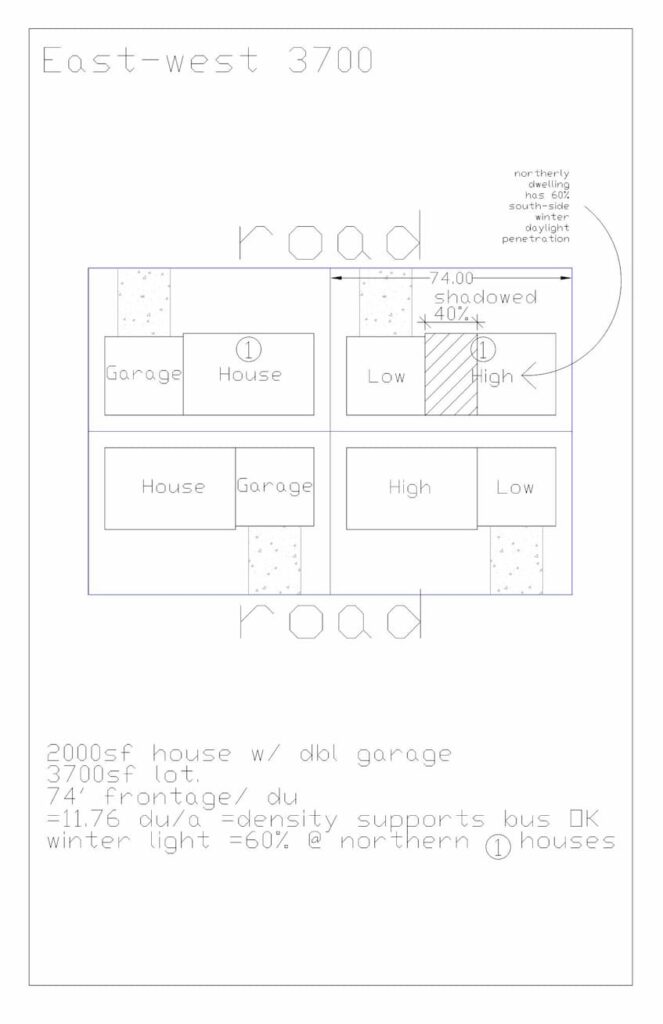
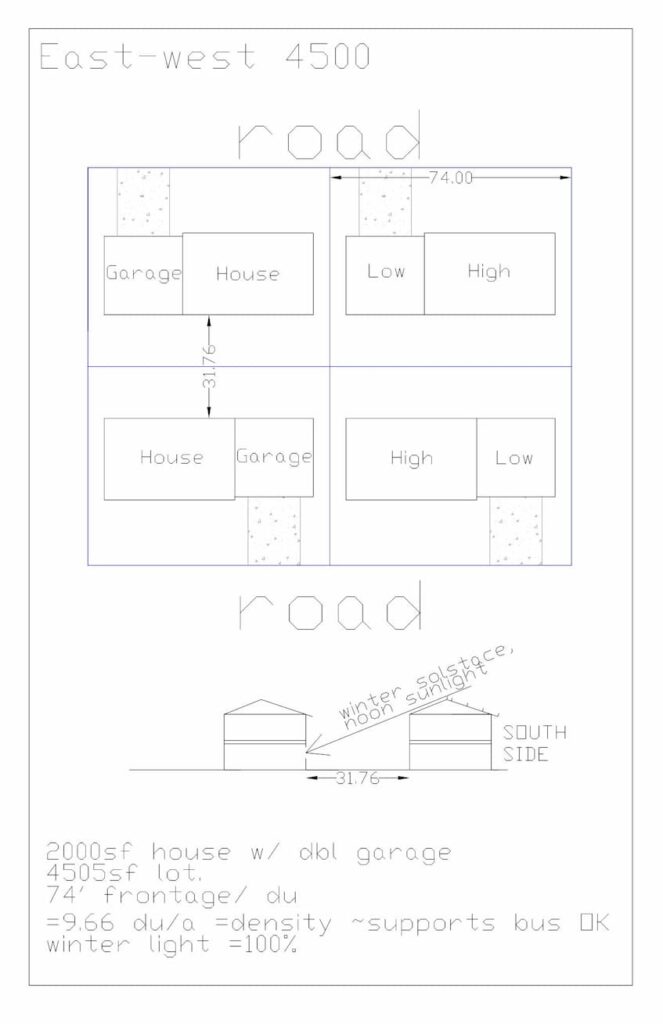
Common wisdom states that the optimal streets run east west, which makes sense if you’re the house on the north side of the street, because there’s nothing shading your house, garden or solar panels. However, living on the south side of the street, you suffer from north facing gardens and probably some shading unless the lots are 5000sf or greater.
Critically, 10 dwelling units (du) per acre is the density with enough inhabitants to support a bus service (*1), a key part of the sustainable urbanist vision for transit, pedestrian & bike use, rather than private cars. An acre is 43500sf.
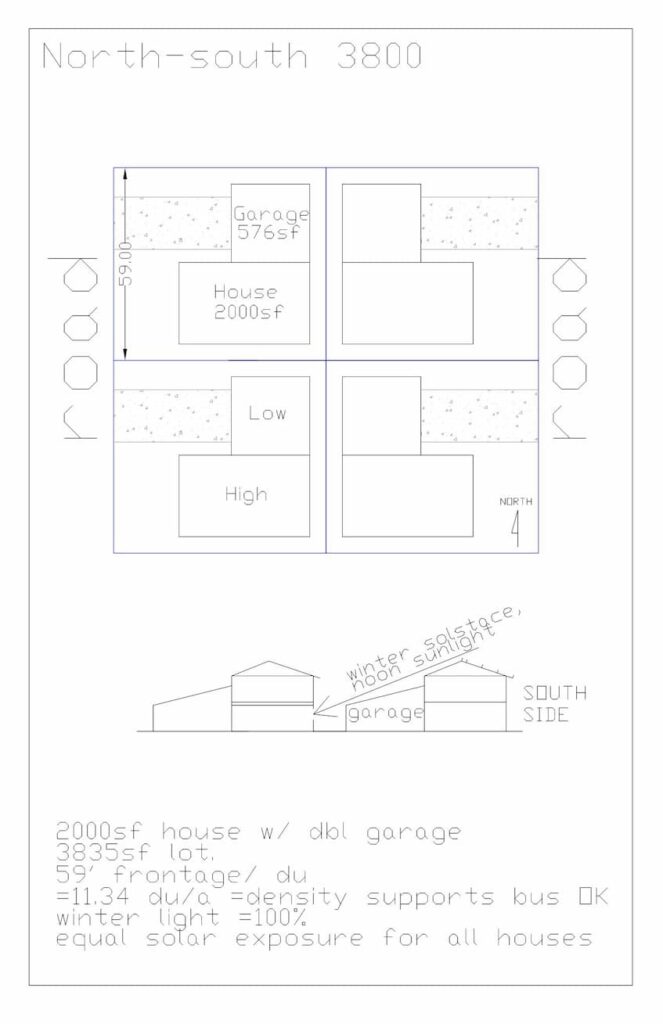
My conclusion is that the common wisdom is wrong for dense, Net Zero development, that the streets should run north-south.
A Net-Zero house has most of the windows on the south side of the house because south facing windows can be effectively shaded from summertime overheating, and can harvest wintertime solar energy.
Because all the windows are on the south walls, we can’t have another 2-story house immediately to the south as shown in ‘East-West 3700’ below, or the valuable direct wintertime sunlight will be prevented from entering & you’ll have a house that is gloomy all winter.
Sure, if the lots are big, we can keep the southern house away, as shown in ‘East-West 4500’ below, but then we end up with less than 10 du/ acre (du/a) and there’s no bus & everyone’s driving cars.
The ‘North-South 3800’ drawing below shows a 1-story neighbor garage to the south, avoiding shade. Bingo! That’s a 3800sf lot, and offers 11.34 du/a. Additionally the frontage length is reduced which lowers roadway & utility development costs.
(*1) Transit modes related to residential density (Boris Pushkarev & Jeffry M Zupan)
Plans-for-Sale Powerhouse Designs Website is Now LIVE
Written by: Senna Scott
You asked and we listened!
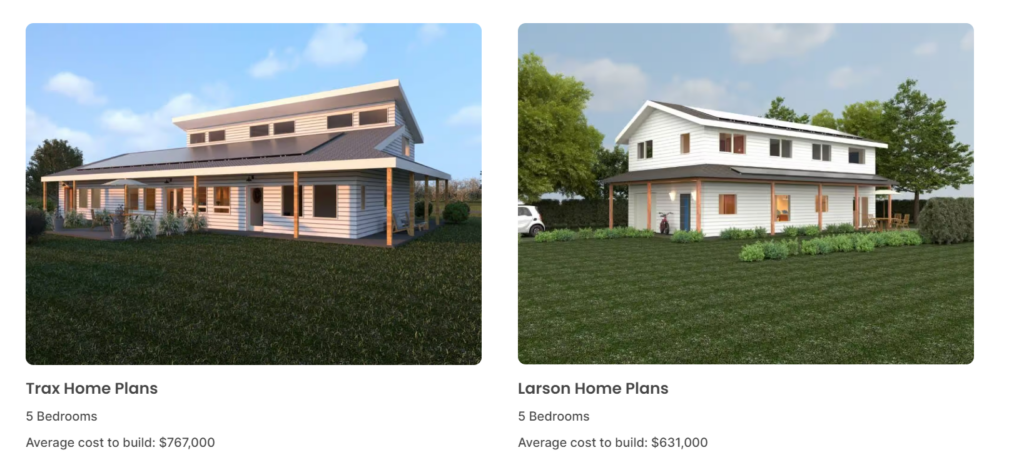
We are so excited to announce that our Plans for Sale website in now officially LIVE!
Our Design team, Powerhouse Designs, have been working tirelessly at rendering our old & new plans, and working out the bugs back end to make a smooth purchasing experience!
Know of anyone looking to build a net-zero energy home? They can now skip the design phase by purchasing one of our plan-sets and get to building! Saving them thousands on design and getting to shovel-ready even quicker! If local to Bellingham, TC Legend Homes has availability for 2024 – 2025 home builds!
Powerhouse Designs now offers consultation and design services on purchased plans, helping you to customize the plans for your needs! Consultation slots are purchasable on the website.
In addition, Powerhouse Designs now offers NEW SERVICES!
Embodied Carbon Calculations
Built Green Certification Consultation
Net-Zero Design Consultation
Are you looking to calculate your carbon footprint or apply for a certification? Are you a contractor that needs to outsource this work for your clients or need support on making your plans more green? Our staff at Powerhouse Designs now offers Embodied Carbon Calculation Consultations, Built Green Certification and Net-Zero Design Consultation services!
Obtaining Built Green certifications and implementing Embodied Carbon calculations have become a rapidly changing part of the industry. Our team has been up-to-speed and pioneering this process! They will walk you step by step through the process for a stress-free experience!
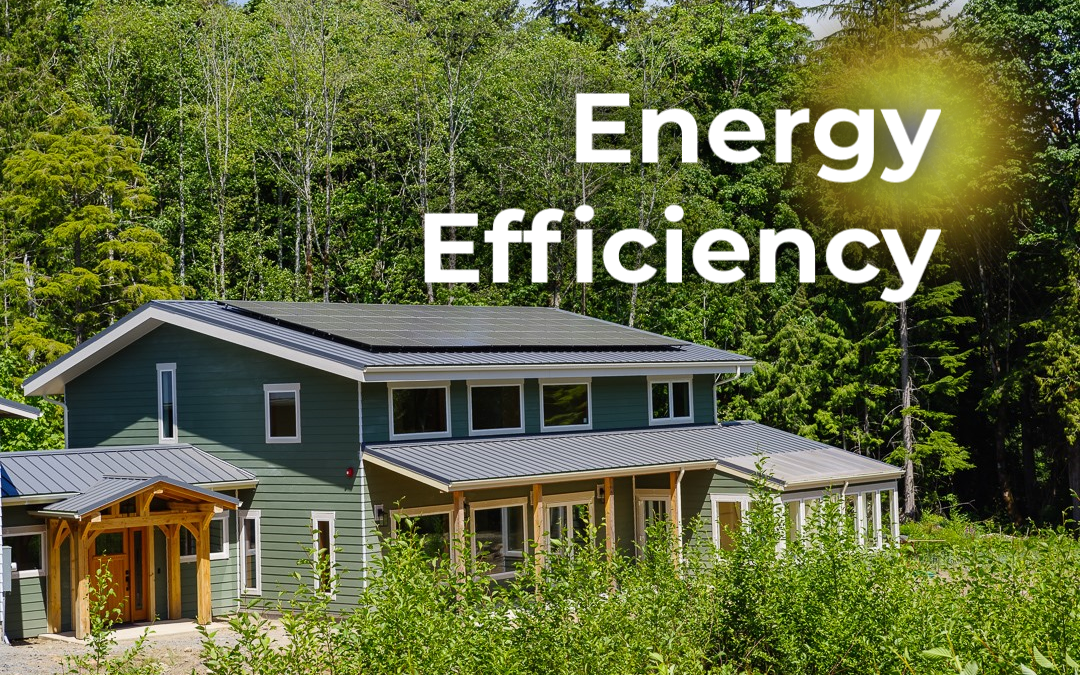
Impact of Eco-Conscious Living Series: Energy Efficiency
Written by: Nicole Miller
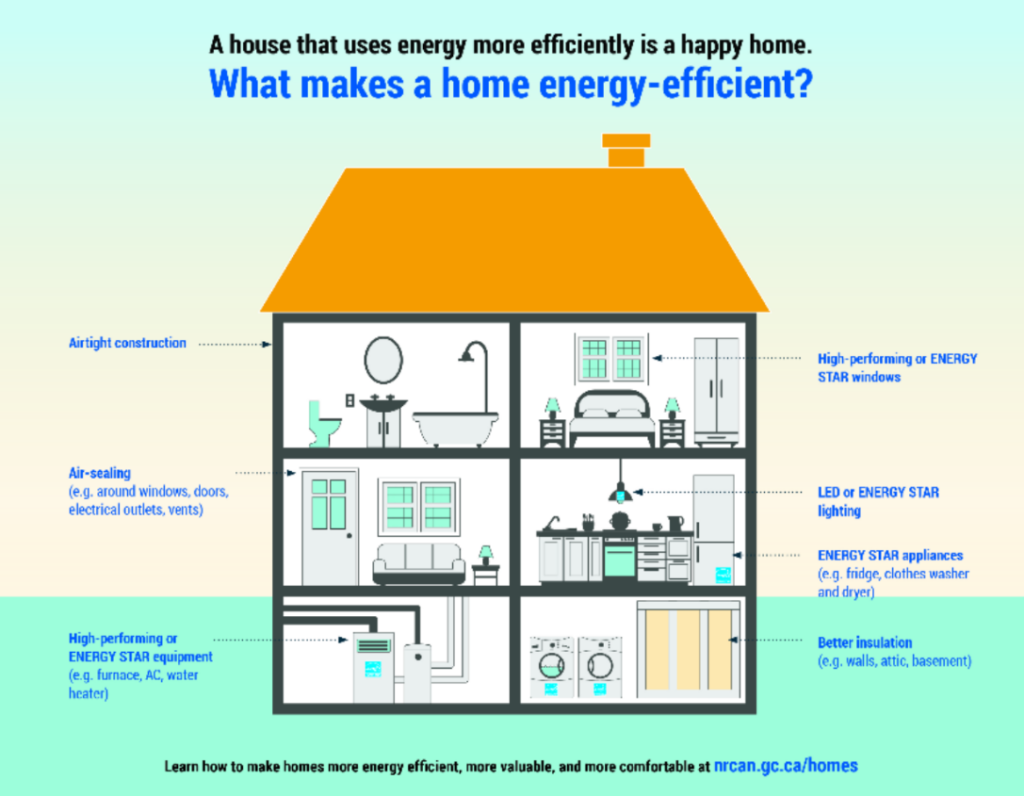
There are many ways to achieve energy efficiency in a home, from using energy efficient products like Energy Star appliances or energy efficient windows, to designing your home with passive heating and cooling in mind.
While energy efficiency can mean lower utility bills, the results also have a great impact on the environment. Unless you are using solely renewable energy to run your house, the energy you use will be produced mostly from coal and natural gas in the majority of the USA.
In Washington state, while energy is mainly generated from hydro-electric, ~15% is still produced using fossil fuels.3 Energy derived from these fossil fuels produce greenhouse gases as well other pollutants such as nitrogen oxides, sulfur dioxide, and particulate matter.2 According to the EPA, 31% of the total CO2 emitted by the USA in 2019 came from fossil fuel combustion for energy production and accounted for 24% of the total greenhouse gas emission in the USA.1
Greenhouse gases are the main contributor to climate change, as they trap heat in our atmosphere and raise global temperatures. Climate change is not to be disregarded as it is already having major implications across the globe and will continue to have even more extreme impacts to come if we don’t stop it. If you want to learn more about climate change and its effects, visit https://www.un.org/en/climatechange/science/key-findings#physical-science.
While we know that fossil fuel use is an obvious bad choice, Hydroelectric, while considered a renewable and generally “eco-friendly” energy option, is not as environmentally friendly as we like to think as well.
While there are plenty of debates within the environmental community on what the “best” renewable energy production method is, the facts are that none of them are perfect and all of them produce some kind of pollution or harmful effects. Looking at hydroelectric as an example, the renewable energy requires a massive amount of concrete to make the dams, while concrete is known to be a huge greenhouse gas emitter. Dams also have disastrous effects on the health of the rivers and the surrounding ecosystem, including our salmon populations which are a keystone species. Not to mention the people that get displaced due to the reservoir that’s created. Then when a dam breaks, it causes even more damage downstream as it tears apart the ecosystem and towns that has grown in the absence of the natural river.
All of this is to say, that in order to lessen our impacts on the environment, we have to lessen our energy consumption and choose which energy source we use wisely. In the instance of TC Legend Home’s net zero homes that utilize solar energy, with less overall energy usage, less solar panels will be needed on your array, saving precious materials needed to produce the panels themselves.
This will lessen your house’s overall energy carbon footprint. On the other hand, if you are producing more energy than your house consumes, then the excess electricity produced will transfer onto the grid for others to use, thereby reducing the amount of fossil fuels used by someone else. Of course, the local energy company may also reimburse you for this addition as well.
At TC Legend Homes, in order to build highly energy efficient homes, we take a few different approaches.
Firstly, in the design of the home drafted up by our design company, Powerhouse Designs, we place the mechanical room in a central location and plan ahead to add extra space for the HRV air ducting that traditional HVAC systems don’t need.
TC Legend’s houses are designed to allow for passive solar heating in the winter and solar shade in the summer, cutting down on the need for the heating/cooling system. Instead of a traditional leaky envelope, TC utilizes high efficiency windows, SIPs and ICFs paired with aerobarrier aerosol sealant to create a super tight envelope, keeping the heated and cooled air in.
For heating, cooling and domestic hot water, TC opts for high efficiency heatpumps such as those from the Chiltrix line. For ventilation the Fantech Hero HRV is the choice as it’s also incredibly efficient. In the selection phase, TC requires appliances be Energy Star rated and lighting be LED. All of this in combination allows us to build exceptionally energy efficient, Energy Star certified homes, cutting back on the home’s energy carbon footprint.
Want to learn more about our energy efficient designs and net-zero energy formula? Check out our Plans For Sale website to see available plans for purchase!
SOURCES:
1“Overview of Greenhouse Gases.” United States Environmental Protection Agency (EPA), EPA.gov, https://www.epa.gov/ghgemissions/overview-greenhouse-gases. 2/14/22.
2“What is Energy Efficiency?.” Energy Star, https://www.energystar.gov/about/about_energy_efficiency. 2/14/22
3“Profile Analysis.” U.S. Energy Information Administration (EIA), EIA.com, https://www.eia.gov/state/analysis.php?sid=WA.
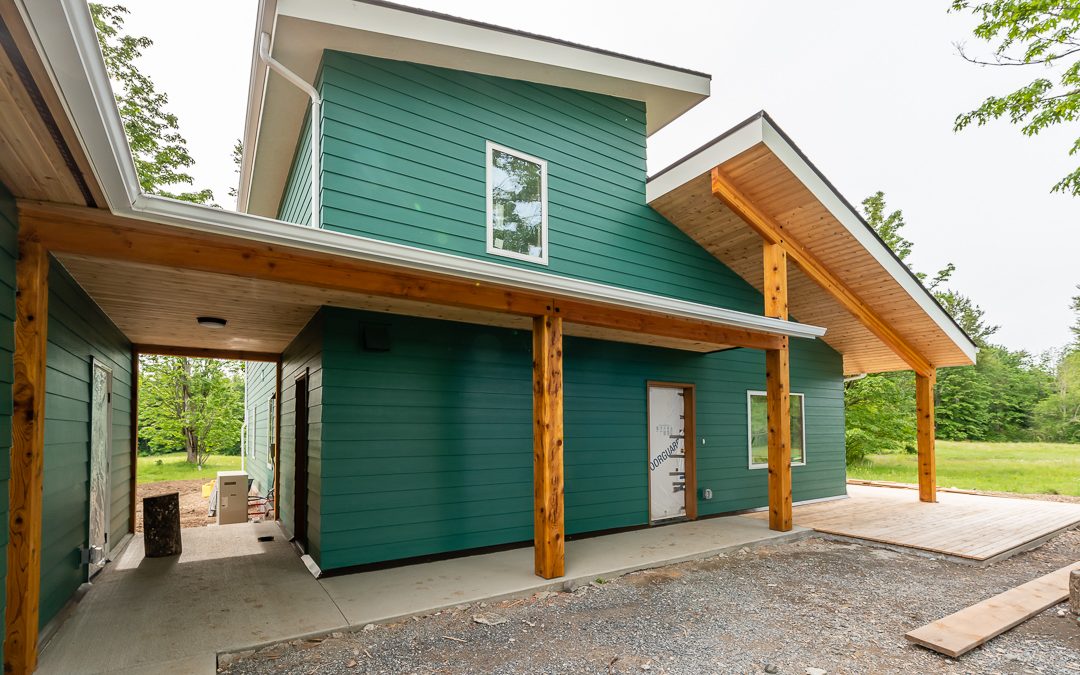
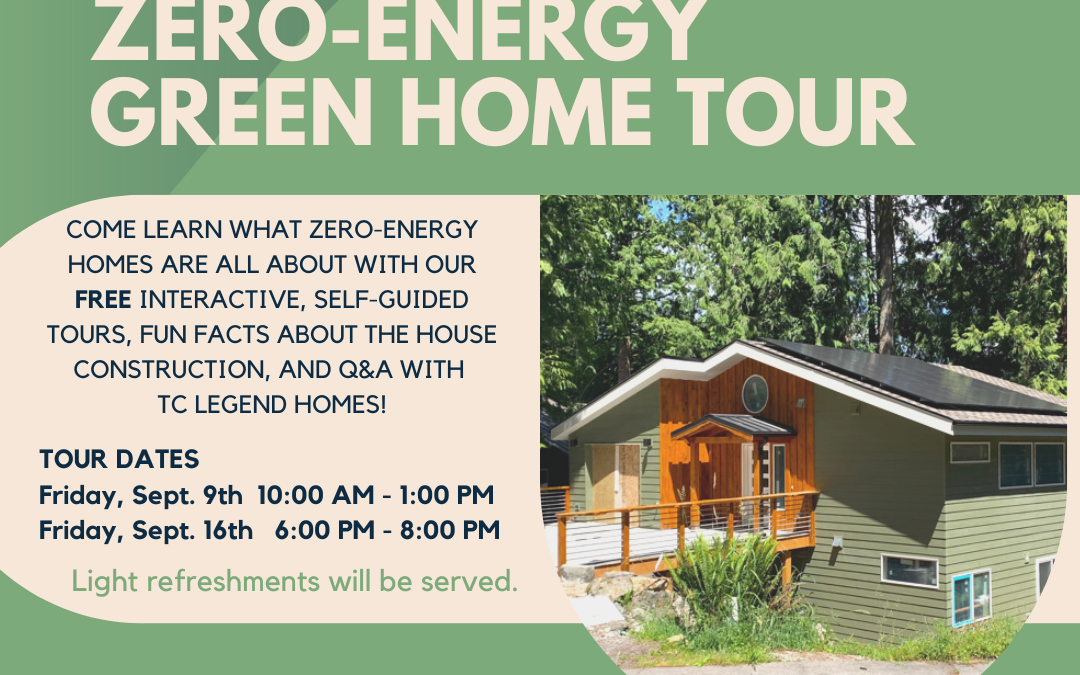
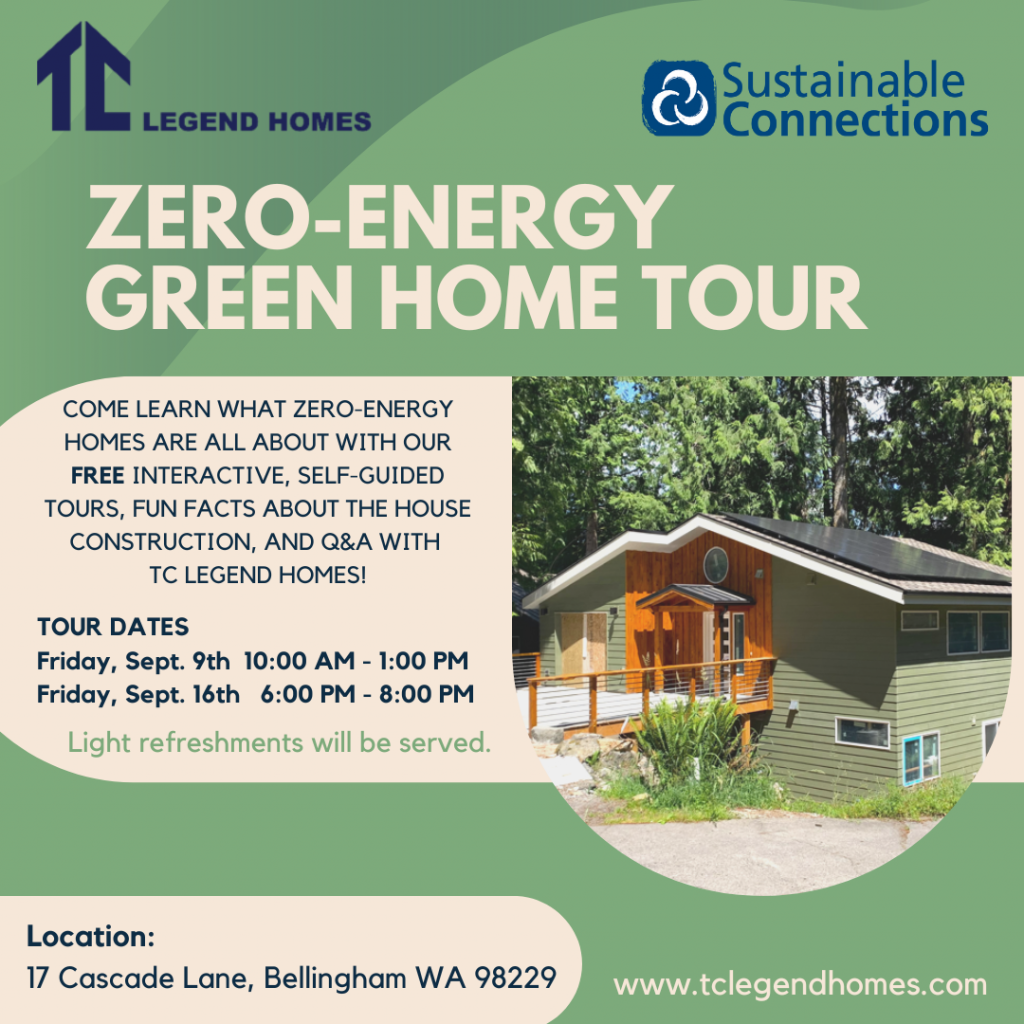
This just in and hot off the press – the House in the Hollow Case Study! TC Legend built this net-zero house through the winter of 2020/ 2021.
The house-in-a-hollow isn’t really in a hollow, it’s on a knoll, above protected wetlands, northeast of Bellingham. The hollow is formed by the trees, which were preserved to shield the house from overheating, and to conserve the flora of the native wetlands.
Measuring 1950 square feet, this Department-of-Energy certified Net Zero clerestory design has a central kitchen and a 1st floor aging-in-place floorplan. Designed for an Alaskan couple whose love of the outdoors demanded a house that fully engaged with the landscape, plenty of daylight is admitted & access to outdoor living is easy.
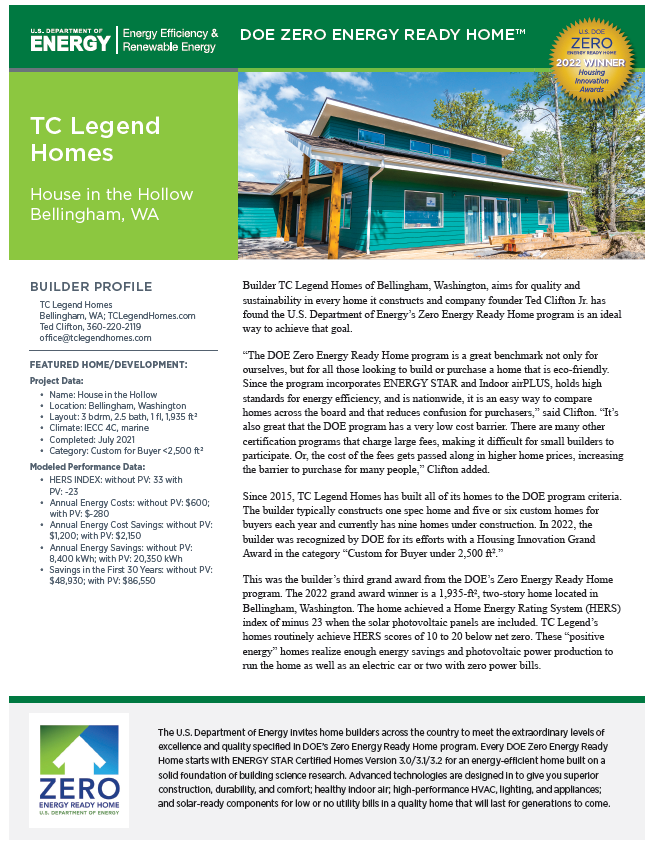
“Builder TC Legend Homes of Bellingham, Washington, aims for quality and sustainability in every home it constructs and company founder Ted Clifton Jr. has found the U.S. Department of Energy’s Zero Energy Ready Home program is an ideal way to achieve that goal.”
“The DOE Zero Energy Ready Home program is a great benchmark not only for ourselves, but for all those looking to build or purchase a home that is eco-friendly. Since the program incorporates ENERGY STAR and Indoor airPLUS, holds high standards for energy efficiency, and is nationwide, it is an easy way to compare homes across the board and that reduces confusion for purchasers,” said Clifton.
“It’s also great that the DOE program has a very low cost barrier. There are many other certification programs that charge large fees, making it difficult for small builders to participate. Or, the cost of the fees gets passed along in higher home prices, increasing the barrier to purchase for many people,” Clifton added.
Since 2015, TC Legend Homes has built all of its homes to the DOE program criteria. The builder typically constructs one spec home and five or six custom homes for buyers each year and currently has nine homes under construction. In 2022, the builder was recognized by DOE for its efforts with a Housing Innovation Grand Award in the category “Custom for Buyer under 2,500 ft2.”
Modeled Performance Data of House in the Hollow:
• HERS INDEX: without PV: 33 with PV: -23
• Annual Energy Costs: without PV: $600; with PV: $-280
• Annual Energy Cost Savings: without PV: $1,200; with PV: $2,150
• Annual Energy Savings: without PV: 8,400 kWh; with PV: 20,350 kWh
• Savings in the First 30 Years: without PV: $48,930; with PV: $86,550

Recent Comments